Age has a way of making itself known—on our faces, in our routines, and unmistakably in the way our vehicles behave. As conversations around aging and longevity trend online—echoed in viral pieces like “31 Random Facts That Show How Cruelly Fast Time Flies By”—there’s a parallel we rarely acknowledge: the quiet, cumulative effect of time on our cars’ most critical safety system—the brakes.
While social media reflects on how quickly years pass, many drivers underestimate just how much those same years reshape the reliability, feel, and safety margin of their braking systems. Time, more than mileage alone, is becoming a defining factor in brake performance—especially as modern vehicles are kept on the road longer than ever.
This is the moment to look at your brake maintenance with the same seriousness you reserve for your own long‑term health.
1. Why “Garage Age” Matters More Than Odometer Age
Most owners obsess over mileage intervals—30,000, 60,000, 90,000 miles—while quietly ignoring the calendar. Yet braking components are not merely “used up”; they also age out. Rubber seals harden, brake fluid absorbs moisture, and rotors corrode internally even when the car barely moves. A low‑mileage vehicle from 2015 can be less safe than a higher‑mileage, carefully maintained 2021 model.
As vehicles stay in service well past the ten‑year mark, overlooked age‑related degradation can create a false sense of security: pads may look thick, but the caliper piston seals behind them may be stiff, sticking, or leaking. The refined owner treats time as a co‑equal maintenance metric: if a car is five to seven years old and the brake fluid, caliper service, or hardware have never been addressed, that is no longer “normal”—it’s a safety liability. A premium maintenance mindset asks not only, “How far have I driven?” but “How long have these components been quietly aging?”
2. The Hidden Corrosion Problem You Can’t See from the Outside
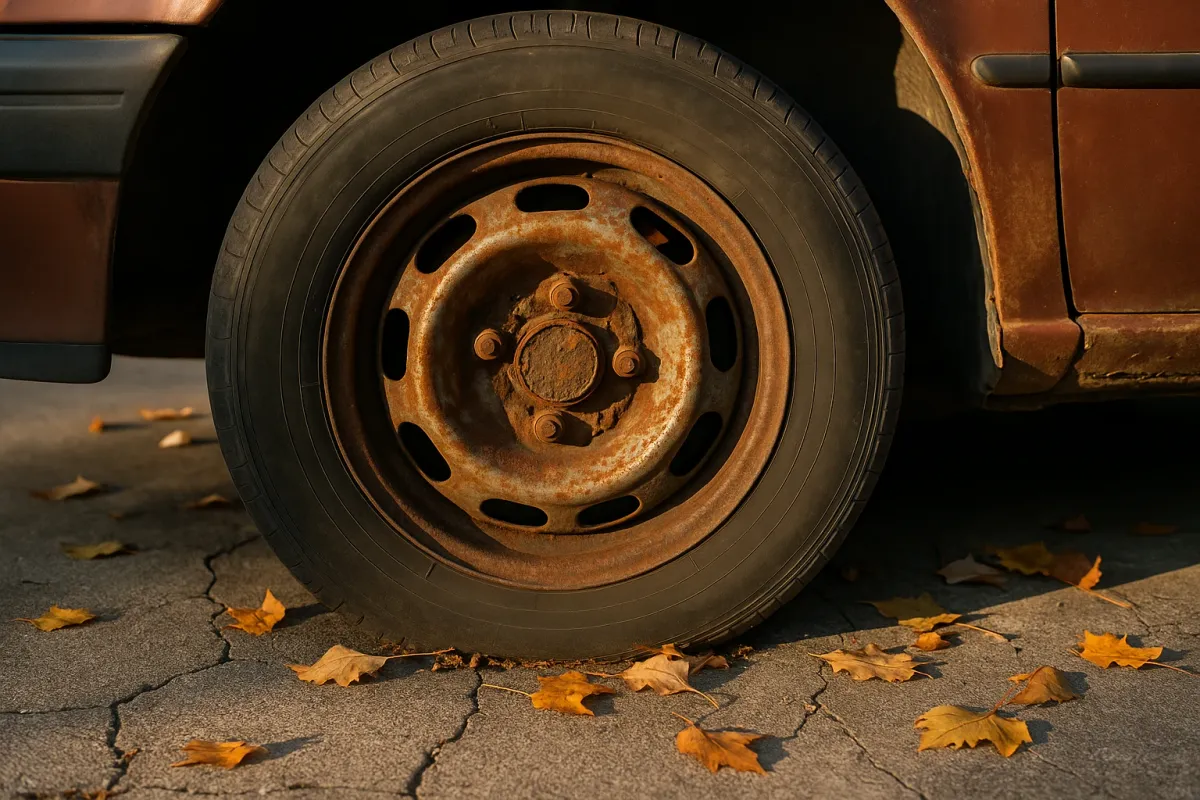
Social feeds are full of dramatic “before and after” transformation photos, but corrosion in your brake system stages its transformation in silence. Road salt, coastal humidity, and even overnight condensation attack brake lines, caliper brackets, backing plates, and the inner rotor surfaces—areas you rarely see from a quick glance through the wheel.
The sophisticated approach is to insist on inspection depth, not just inspection frequency. That means wheels off, caliper removed, and a careful look at slider pins, pad backing plates, and the inner rotor faces. A rotor that looks acceptable on the outside can be severely pitted on the inside, compromising stopping power and creating uneven pad wear. Owners in rust‑prone regions should view periodic anti‑corrosion treatment (e.g., cleaning and lubricating slide points, addressing surface rust early) as a form of “brake preservation,” not cosmetic fuss. On a well‑kept car, the most luxurious feature is often invisible: clean, freely moving brake hardware.
3. Brake Fluid: The Quiet Aging Factor That Separates Average from Exceptional
In an era when health trends focus on hydration and internal balance, brake systems face their own internal threat: moisture. Brake fluid is hygroscopic—it absorbs water over time. Even if you drive modestly, fluid age alone raises its water content, lowers its boiling point, and quietly increases internal corrosion. This is particularly critical in modern vehicles with ABS and stability control, where brake fluid flows through intricate valves and channels that are easily damaged by contamination and rust.
Discerning owners treat brake fluid flushes not as optional add‑ons but as foundational maintenance, much like annual checkups. A two‑ to three‑year fluid replacement interval is a refined standard, not an indulgence. Request a measured brake fluid moisture test or boiling point check rather than a vague “it looks dark” assessment. The difference between an adequate system and an exceptional one often comes down to the clarity, freshness, and consistency of the fluid moving behind every pedal press.
4. The “Feel” Test: How Subtle Changes Reveal Emerging Problems
We live in a culture increasingly attuned to subtle signals—tiny shifts in wellness, mood, or performance. Your brake pedal is equally communicative, if you’re willing to listen with the same sensitivity. A slightly longer pedal travel, a faint pulsing at highway speeds, a momentary delay before the brakes bite, or a soft “catch” after hard braking are all early indicators that time and wear are combining against you.
Sophisticated drivers document sensations, not just sounds. If your brake pedal used to feel firm high up in its travel and now feels spongy or vague, that’s a data point to share with a qualified technician, not something to adapt to. Keep mental track of how your car responds in familiar situations: the same downhill on your commute, the same gentle stop at a familiar intersection. Any requirement to “press earlier” or “press harder” than you did a year ago is a sign that your safety margin is shrinking—long before warning lights appear or pads reach minimum thickness.
5. Elevating Brake Service from Repair to Preservation
The most discerning car owners are reframing brake work from “I’ll fix it when it squeals” to “I’ll preserve performance before it degrades.” That shift mirrors the broader cultural move from crash dieting to long‑term wellness. Instead of waiting for grinding noises, they schedule periodic brake system evaluations that include pad wear pattern analysis, rotor runout measurement, hardware refresh, and fluid diagnostics.
Choosing a shop becomes less about the lowest quote and more about the depth of their process. Do they measure rotor thickness instead of guessing? Do they clean and lubricate hardware properly, or simply swap pads and send you out the door? Do they discuss your driving environment—mountain roads, urban congestion, coastal humidity—and tailor recommendations accordingly? A preservation‑minded owner understands that premium safety is built in layers: quality parts, meticulous installation, thoughtful inspection, and a maintenance cadence that respects not just miles, but years, climate, and usage.
Conclusion
As online conversations remind us how swiftly time passes, it’s worth recognizing that the same invisible clock is quietly reshaping the safety and precision of your brake system. Aging components, hidden corrosion, neglected brake fluid, and subtle changes in pedal feel are not abstract technicalities—they are early chapters in a story that ends either with confident, controlled stops or with compromised safety when you most need stability.
Treat your brakes the way you treat your long‑term health: with attention to detail, respect for time, and a preference for prevention over crisis. In a world fascinated by visible transformations, the most refined upgrade you can make is one no one else sees—but everyone in your car benefits from every time you press the pedal.
Key Takeaway
The most important thing to remember from this article is that this information can change how you think about Maintenance.