Tiny mistakes don’t always look dangerous—until you see the consequences.
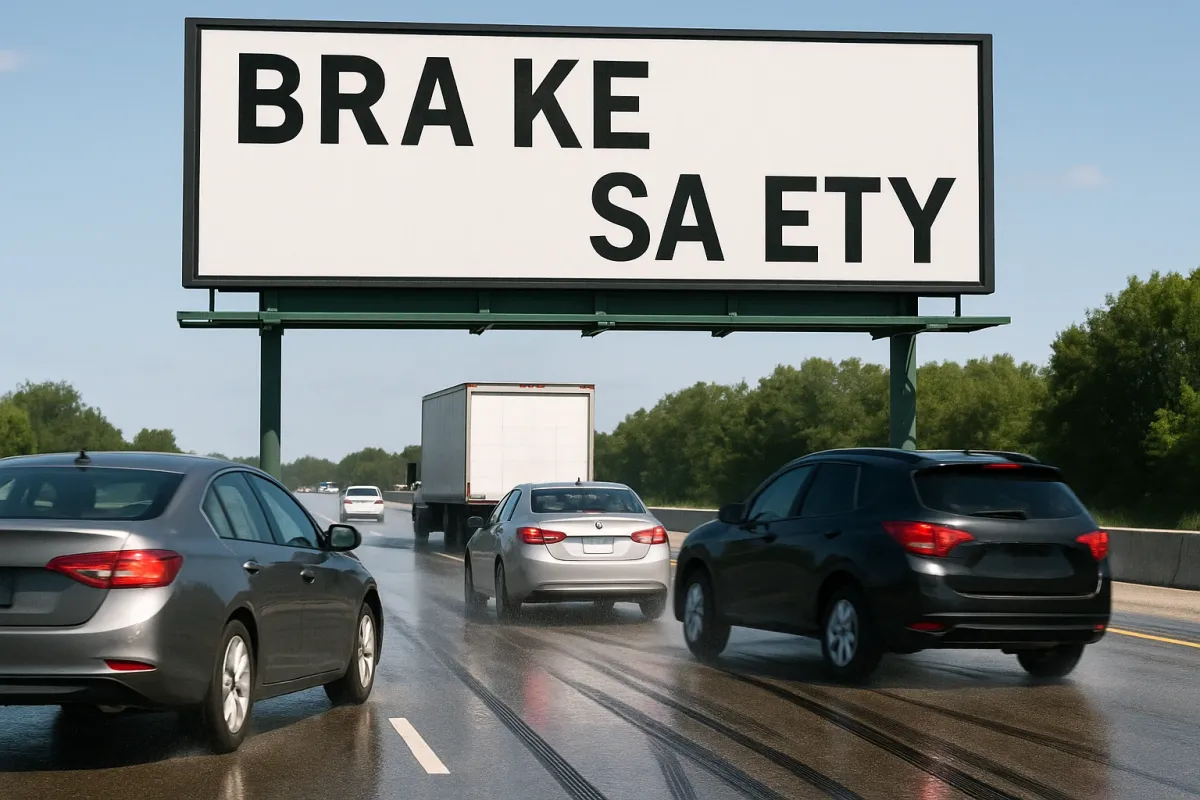
A recent viral piece on Bored Panda highlighted hilariously disastrous design flubs where poor spacing and kerning transformed simple phrases into something wildly different. It was entertaining, but also quietly unsettling: a few misplaced millimeters turned meaning on its head. For drivers, the parallel is unmistakable. On your car, those “tiny” tolerances don’t just change how something looks; they define whether your vehicle stops precisely… or too late.
In a world where we obsess over smartphone bezels and logo spacing, it’s time to bring the same meticulous eye to your brakes. Below are five refined, detail‑driven insights for drivers who understand that true luxury isn’t in the leather—it’s in the way the car comes to a composed, effortless halt.
1. The Hidden Geometry of Safe Stopping: Pad & Rotor “Spacing” Done Right
Just as a designer’s letterspacing can make or destroy clarity, the microscopic gap between your brake pad and rotor determines how cleanly your car responds when you press the pedal.
On a properly maintained system, the pads “kiss” the rotor with minimal, controlled clearance. Too much gap—from worn pads, seized caliper slide pins, or air in the lines—and you feel a soft, delayed response. Too little—from a sticking caliper piston or warped rotor—and you get persistent drag, heat, and accelerated wear. The art is in balance.
Ask your technician to:
- Measure rotor thickness and compare it to the manufacturer’s minimum specification, not just eyeball it.
- Inspect pad wear pattern across the entire friction surface—uneven “spacing” from top to bottom often signals a sticky caliper or misaligned hardware.
- Check caliper slide pins for free, smooth travel; a single bound pin can mimic a serious brake imbalance at speed.
Discerning drivers notice these subtleties long before a warning light appears. If your pedal feel has shifted—even slightly—from what you know as “normal,” treat it the way a typographer treats a misplaced space: as something to correct, not tolerate.
2. Silence as a Safety Feature: Listening Between the Noises
In typography, it’s often the empty space that makes a layout readable. In braking, it’s the subtle quiet between sounds that tells you whether the system is composed or on the brink of protest.
Screeching or metal‑on‑metal grinding is an obvious red flag, but premium brake care means listening for the more discreet cues:
- A faint rhythmic “shhh‑shhh” sound that rises with speed may indicate a lightly warped rotor or uneven pad deposits.
- A single “click” when you change from forward to reverse can reveal slightly loose hardware or a pad that’s not seated perfectly in its bracket.
- A soft, intermittent squeal in damp weather is often surface rust being cleared—but if it persists in dry conditions, it’s time for a closer look.
Instead of dismissing minor sounds as “just a little noise,” treat them as early drafts of a bigger problem. The most elegant safety practice is to intervene while issues exist only as whispers.
3. Pedal Feel as a Fine Instrument: Reading Nuance, Not Just Extremes
The Bored Panda typography examples were absurd precisely because the mistakes were subtle—just enough to twist meaning, but not enough for a casual glance to catch. Brake pedals behave similarly. Catastrophic failure is rare; what you encounter far more often is a creeping shift in feel.
Cultivate a connoisseur’s sensitivity to your pedal:
- Initial Bite: A premium system offers a confident, immediate response with gentle pedal pressure. If that first bite becomes mushy or delayed, air or moisture may have infiltrated the fluid, or the pads may be glazing.
- Progression: As you press harder, the pedal should firm up predictably. A pedal that sinks deeper under steady pressure—especially when stopped at a light—is a serious sign of internal leaks or master cylinder issues.
- Consistency: The pedal should not feel subtly different each morning. Variation day to day can signal temperature‑sensitive problems like marginal fluid, sticky sliders, or calipers just beginning to seize.
Once you learn your car’s “signature” feel, even the smallest deviation is worth attention. Think of it as proofreading your stopping power every time you drive.
4. Clean Lines, Clean Brakes: Why Visual Detail Matters More Than You Think
Bad spacing in graphic design becomes obvious the moment you truly look. Your brake components tell similar visual stories—if you care enough to notice.
When the wheels are off, insist on a visual inspection that goes beyond simply checking pad thickness:
- Pad Edges: Crisp, square edges with even coloring suggest healthy operation. Tapered pads, darkened corners, or visible cracks hint at heat stress or misalignment.
- Rotor Surface: An ideal rotor wears in a smooth, uniform sweep. Deep grooves, spotted discoloration, or alternating light/dark rings reveal uneven contact or localized overheating.
- Hardware Finish: Rusted, flaking clips or shims can compromise pad movement and introduce noise and uneven wear—tiny components with outsized impact.
Even without tools, you can request photos or a short video from your shop during service. A premium relationship with your brakes starts with actually seeing what you’re trusting at 70 mph.
5. The Luxury of Precision Maintenance: Beyond “Good Enough” Intervals
The article on design spacing underscored a truth: we often notice quality only when it’s missing. In braking, “good enough” maintenance schedules are designed for the average driver, not for those who value a genuinely elevated standard of safety and feel.
To move beyond basic compliance:
- Brake Fluid: Instead of waiting for the generic “every 2–3 years,” have your fluid’s moisture content tested annually. Once it creeps above about 2%, your boiling point—and therefore high‑speed braking margin—drops notably.
- Alignment & Suspension: Premium brake performance is inseparable from how your tires meet the road. Even slight alignment issues mean one wheel does more work under braking, upsetting stability and unevenly heating the system.
- Road‑Style Matching: If you often commute in stop‑and‑go traffic or live in a hilly region, ask your technician to tailor pad and rotor selection to your reality, not the catalog default. The correct friction material can mean the difference between confident consistency and progressive fade.
The most refined safety practice is keeping your maintenance philosophy aligned with how and where you actually drive. That’s the difference between brakes that merely pass inspection and brakes that inspire confidence.
Conclusion
Those viral typography mishaps were funny because they were harmless. In print, bad spacing earns a laugh; in traffic, it can cost precious meters of stopping distance. The lesson is timeless: details are not decorative—they’re decisive.
By treating your brake system with the same meticulous respect a designer gives to spacing and layout, you elevate every drive. You’re not just maintaining components; you’re curating the way your car responds in the moments that matter most. And that, more than any option package or trim level, is the most sophisticated luxury a driver can choose.
Key Takeaway
The most important thing to remember from this article is that this information can change how you think about Safety Tips.