The internet is quietly obsessed with getting life “in order” before the holidays. One trending piece on 27 ways to tame the pre‑Christmas chaos at home captures the mood perfectly: drawers decluttered, surfaces cleared, systems tuned before the season’s whirlwind arrives. That instinct—to restore order before pressure hits—is precisely the mindset discerning drivers should bring to their brakes right now.
Just as a meticulously prepared home can gracefully absorb guests, gifts, and late‑night celebrations, a meticulously maintained braking system can absorb the stress of cold starts, wet roads, loaded trunks, and long holiday drives. If your calendar is filling with travel plans and year‑end commitments, this is the moment to give your brakes the same quietly luxurious attention you give the rest of your life.
Below are five exclusive, detail‑driven insights for car owners who regard safety as non‑negotiable—and expect their braking performance to feel as composed and refined as the rest of their driving experience.
The “Invisible Dust” Standard: Keeping Rotors and Calipers Elegantly Clean
Holiday housekeeping articles talk about “visual calm”—surfaces free of clutter, spaces that feel light and ordered. Your brake system deserves an equivalent standard, even if most of its beauty is hidden behind your wheels.
Brake dust and road grime aren’t merely cosmetic. Fine metallic particles can hold moisture, accelerating corrosion on rotors, calipers, and hardware. In regions where winter road salt is already appearing, that contamination can quietly etch into metal surfaces and stiffen moving components. A premium brake maintenance routine includes periodic, controlled cleaning of calipers, pad slides, and rotor hats using purpose‑made, non‑chlorinated brake cleaners and soft brushes—never high‑pressure water blasted directly at seals and boots. The goal is not to make parts “shiny” but to restore their mechanical environment: free‑moving pins, unobstructed pad contact, and clean sensor areas. Think of it as the difference between wiping a surface and resetting a room. The latter is what preserves consistent, silent braking feel over tens of thousands of miles.
The “Pantry Audit” for Your Fluids: Why Brake Fluid Timing Is Everything
That trending home‑order article leans heavily on pantry audits—checking dates, rotating stock, and discarding what’s quietly gone stale. Brake fluid demands the same disciplined, time‑conscious approach, especially heading into winter.
Modern ABS and stability systems rely on brake fluid that can handle rapid, repeated pressure changes without boiling or compressing. Yet DOT 3 and DOT 4 fluids are hygroscopic: they absorb moisture from the atmosphere through seals and hoses over time. This raises the fluid’s water content, lowers its boiling point, and increases internal corrosion—particularly in ABS modulators and caliper bores. The result isn’t a dramatic failure so much as a gradual erosion of precision: a slightly longer pedal stroke, subtle inconsistency during hard stops, or a spongy feel after long downhill braking. A premium maintenance schedule doesn’t wait for symptoms. It follows a disciplined interval—typically every two to three years, or sooner in humid or coastal climates—and uses fresh, sealed fluid from a recent production batch. Like a well‑curated pantry, the value lies in what you don’t see: no internal sludge, no hidden corrosion, and braking performance that feels as crisp on cold mornings as it does in summer.
The Pre‑Holiday “Layout Check”: Pads, Rotors, and the Geometry of Comfort
Home‑organization experts often talk about a room’s “layout” before talking about décor—traffic flow, access, and proportions. Applied to brakes, the equivalent is pad‑to‑rotor geometry: how evenly, squarely, and quietly your pads meet the rotor face under load.
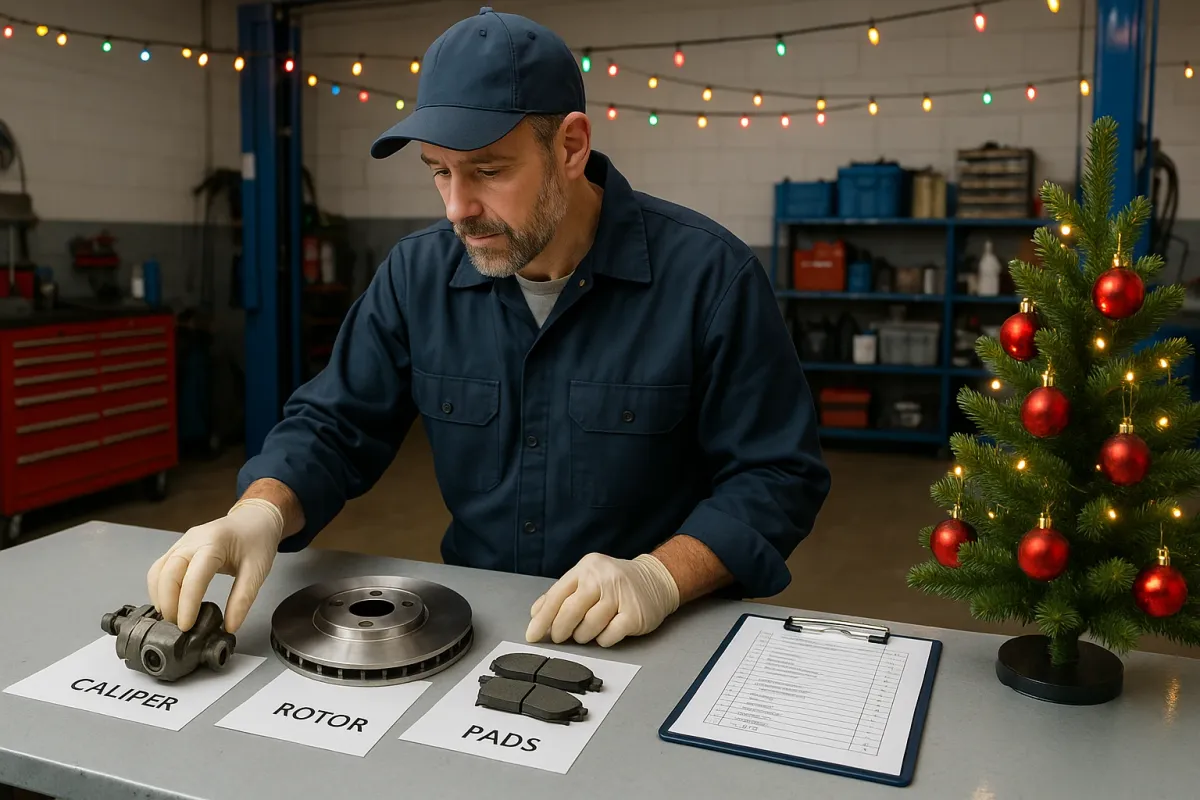
Premium brake maintenance goes beyond measuring pad thickness. It includes inspecting for tapered wear, glazing, heat spotting, and uneven transfer layers on rotors. Minor irregularities that feel tolerable in city driving can become pronounced on a fully loaded vehicle at highway speeds or when descending long grades during holiday travel. A refined brake service will measure rotor runout and thickness variation, verify pad fitment in the bracket (no binding, no rattle), and confirm even contact patterns before calling any setup “complete.” This is also the moment to specify hardware that matches the vehicle’s character: noise‑damped shims, high‑quality anti‑rattle clips, and rotor coatings that resist corrosion on non‑friction surfaces. The outcome is not simply “stopping power”; it’s the kind of poised, vibration‑free deceleration that feels as composed as the cabin you’ve curated for long drives.
The “Quiet House” Test: Subtle Sounds That Sophisticated Drivers Never Ignore
One reason that article on getting the house in order resonates is its emphasis on small signals: a door that doesn’t quite close, a drawer that always sticks, a faint rattle in a cabinet. They are minor—until you realize they point to something more fundamental being off.
Your brakes speak in the same quiet language. A single, soft chirp on the first stop of the day, a light shudder at specific speeds, a brief grind after rain or snow—none should be dismissed as “just a quirk” in a well‑kept vehicle. Early‑stage indicator squeals may be the pad’s wear sensor touching the rotor; a delicate, speed‑linked vibration may be the first sign of rotor thickness variation or uneven pad deposition. Sophisticated brake care means treating these early cues as you would hairline cracks in fine plaster: small today, expensive tomorrow if ignored. A premium shop will road‑test the vehicle under varied conditions (light and firm braking, different speeds, forward and reverse), then correlate each sound or sensation with potential causes before recommending anything. The result is fewer surprises and a driving experience that remains as acoustically calm as a well‑insulated home.
The “Guest‑Ready” Mindset: Preparing Your Brakes for People You Value Most
The pre‑Christmas organization trend is ultimately about hospitality—making a space ready for the people who matter most. Translated to the road, brake maintenance is hospitality for your passengers: your family, your friends, even the stranger who steps into a crosswalk expecting you to stop.
This perspective shifts decisions. You may accept a slightly longer stopping distance for yourself, but not when you imagine your children in the back seat on a wet December night. You may have tolerated a marginally soft pedal, but not when you picture a sudden stop on a crowded freeway. A guest‑ready braking system means verifying tire condition (because no brake can outperform worn rubber in winter), ensuring ABS and stability control warning lights are absent and not simply ignored, and confirming your brake maintenance history before long journeys—not after an incident. It’s the same mindset that drives people, right now, to inspect guest linens and fix that one loose stair tread before relatives arrive. Quiet, thoughtful, and deeply protective.
Conclusion
As year‑end approaches and the internet fills with checklists for tidier closets and calmer living rooms, consider your braking system part of that same pursuit of order. Clean, properly lubricated hardware; fresh, correctly specified brake fluid; geometrically precise pad and rotor contact; attentive listening for early warning sounds; and a guest‑ready mindset together form a standard of care that feels more atelier than assembly line.
In a season defined by haste, your brakes should be the antithesis: measured, predictable, and quietly flawless. Before the holidays truly arrive, give them the same elevated attention you reserve for the rest of your life’s finer details—and let every stop reflect the same standard of care.
Key Takeaway
The most important thing to remember from this article is that this information can change how you think about Maintenance.