Most drivers imagine brake failure as something dramatic: screeching metal, smoking wheels, a pedal that suddenly drops to the floor. In reality, the more unsettling danger is far quieter—and increasingly cultural. The viral popularity of “Not My Job” photo compilations, where workers proudly do the bare minimum in absurd ways, is more than just a meme. It’s a mindset. And when that mentality seeps into automotive service bays, your brake system becomes the collateral damage.
Inspired by the trending “Not My Job” moments circulating online, this is the perfect moment to reassess how you choose, supervise, and evaluate brake work. Because on the road, “close enough” is nowhere near good enough.
Below are five exclusive, detail‑driven insights every safety‑conscious driver should understand—especially in an era that sometimes celebrates cutting corners for a laugh and a like.
1. Why “Good Enough” Brake Jobs Are Structurally Unsafe
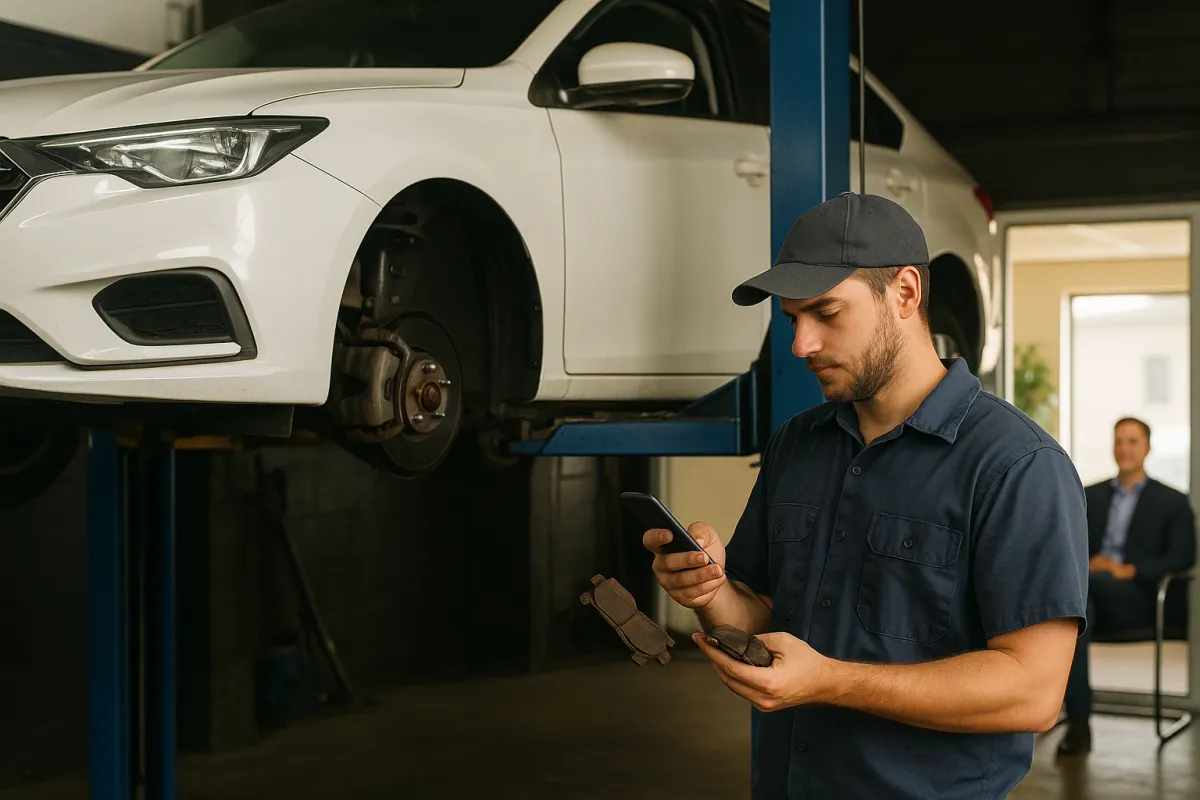
In many “Not My Job” images, the task is technically completed—just in the most careless way imaginable. A similar pattern quietly plays out in rushed brake jobs: the pads are replaced, the light goes off, the bill is paid. But the foundational work that separates a merely functional system from a truly safe one is often skipped.
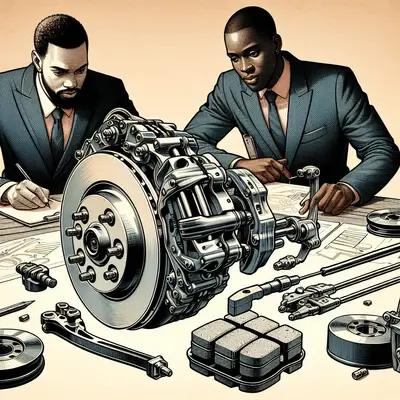
A premium brake service is never just “pads and out the door.” At minimum, it should include inspection of rotor thickness and runout, caliper slide pin condition and lubrication, brake hose cracking or bulging, and hardware (shims, clips, springs) that ensure pads move freely and wear evenly. When technicians treat these steps as optional, you still leave with working brakes—but locked-in problems such as uneven pad wear, hot spots on rotors, early brake pulsation, or a gradual loss of braking efficiency. These issues rarely announce themselves the next day; they accumulate quietly until one hard stop exposes every shortcut taken months before.
2. The Smallest Parts Often Reveal the Biggest Corner‑Cutting
Scroll through those lazy‑job photo threads and one detail stands out: it’s the small, inexpensive tasks that are most visibly neglected. The same is true with brake service. The components that cost a few dollars—and require a few extra minutes of care—are often the ones that separate refined, confident stopping from noisy, inconsistent braking.
Anti‑rattle clips, pad shims, caliper slide boots, and fresh high‑temperature grease rarely appear on an invoice as line‑item luxuries, yet their absence is a reliable indicator of “just get it done” workmanship. Corroded or missing hardware leads to pad binding, brake squeal, and, under hard braking, compromised contact between pad and rotor. A luxury‑level brake job pays obsessive attention to these details: hardware is cleaned or replaced, contact surfaces are deburred, and all moving interfaces are lubricated with the correct compound. When you inspect your own invoice or speak with a service advisor, ask specifically about hardware and lubrication. The quality of their answer is often the truest measure of the quality of the work.
3. Time Pressure Is the New Hidden Brake Hazard
The online “Not My Job” culture often treats time as the enemy: the faster something is done, the funnier (and lazier) the outcome. In automotive service, aggressive scheduling can push even competent technicians toward unsafe shortcuts. A 30‑minute “brake special” may look appealing on a billboard; it is far less appealing when you consider what must be sacrificed to hit that clock.
Proper brake service requires thermal cool‑down for components before precise measurements, methodical cleaning of hub surfaces to prevent rotor runout, careful bleeding of hydraulic systems (especially on vehicles with ABS and stability control), and test‑driving under varying conditions. Each of these takes time that cannot be compressed without consequence. When booking service, resist the allure of ultra‑fast promises. Ask instead how long the shop allocates per axle for a full brake service, whether they road-test after work, and how they handle stubborn hardware or corrosion. A shop that allows time for meticulous work is one that treats your safety as a priority, not an obstacle.
4. Visual Perfection Can Hide Functional Neglect
Many of the viral “Not My Job” photos are striking because, at a quick glance, they look almost fine—until you notice the door that doesn’t open, the sign pointing nowhere, the paint line across a fallen leaf. Brakes can be similarly deceptive: gleaming calipers and new pads can mask deep functional neglect.
A rotor can look smooth yet be below its minimum thickness, meaning it will overheat more quickly and be more prone to fade or cracking in an emergency stop. A clean caliper can conceal seized pistons or contaminated seals. Even fresh brake fluid can be topped off without ever addressing underlying moisture content or boiling point degradation. This is where documentation matters. A premium brake inspection provides measured values—rotor thickness, pad depth, fluid moisture percentage—rather than vague assurances. Ask for these numbers and keep them. Over time, they form a personalized history of your brake system’s health and let you see whether your vehicle is being maintained or merely kept cosmetically compliant.
5. How to Build a “Zero Compromise” Culture Around Your Own Brakes
In a world amused by the artistry of half‑finished jobs, treating your brakes as non‑negotiable sends a powerful signal—to your service providers and, quietly, to everyone riding with you. Cultivating this zero‑compromise standard does not require you to become a mechanic; it requires you to become a discerning client.
Begin by adopting a few refined habits: choose shops that welcome questions and can explain their brake procedures step by step; insist on OEM‑quality or better friction materials and rotors appropriate for your driving (city, mountain, towing, high‑speed commuting); schedule proactive inspections before long trips or season changes rather than waiting for warning lights; and create a small, elegant log of brake services, test‑drive impressions, and any changes in pedal feel or noise. Over time, this transforms your brake maintenance from reactive to curated. You are no longer hoping the job was done properly—you are orchestrating an environment in which shortcuts are awkward, visible, and out of place.
Conclusion
The popularity of “Not My Job” content is, at its heart, a commentary on how casually some people treat responsibility. On the road, that attitude is a luxury no one can afford. Your brake system is the final arbiter of every decision you make behind the wheel; it deserves more than a rushed, checkbox approach.
By insisting on thoroughness over speed, detail over appearance, and documentation over vague reassurance, you create a standard of care that mirrors the best of modern craftsmanship. In an age that often celebrates doing less, let your brakes be the quiet, precise proof that when it comes to stopping power, you accept nothing but the absolute, meticulously executed job.
Key Takeaway
The most important thing to remember from this article is that this information can change how you think about Brake Systems.