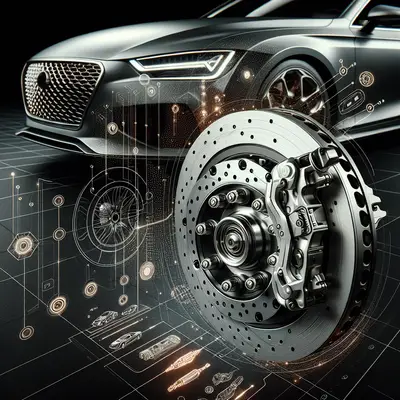
For drivers who demand more than mere motion, the brake system is not a formality—it is the quiet guardian of every journey. Beneath the polished paintwork and refined cabin appointments lies a complex orchestration of hydraulics, electronics, and friction materials working in unison to deliver poised, predictable stops. Understanding this system at a deeper level elevates brake care from a maintenance chore to an exercise in craftsmanship and safety. What follows is a refined exploration of modern brake systems, with five exclusive insights that discerning owners can use to protect both their investment and their peace of mind.
The Architecture of Confidence: How Modern Brake Systems Really Work
At its core, a modern brake system translates the subtle pressure of your foot into carefully controlled clamping force at each wheel. When you press the pedal, a brake booster amplifies your input, and a master cylinder converts that force into hydraulic pressure. This pressure travels through brake lines to calipers at each wheel, where pistons press the brake pads against the rotors, transforming kinetic energy into heat via friction.
Anti-lock braking systems (ABS) monitor wheel speed hundreds of times per second, modulating pressure to prevent lockup and maintain steerability during hard stops. Electronic stability control and traction control build on this, selectively braking individual wheels to preserve composure in evasive maneuvers or low-traction scenarios. In hybrid and electric vehicles, regenerative braking adds a further layer of sophistication, recovering energy while sharing stopping duties with the friction brakes. Appreciating this architecture reframes brake service as the maintenance of an interdependent safety ecosystem, rather than the replacement of isolated parts.
Exclusive Insight #1: Pedal Feel Is a Precision Instrument, Not a Vague Impression
To the discerning driver, the brake pedal is as revealing as a finely tuned steering rack. Subtle changes in resistance, travel, or consistency often precede visible wear by thousands of miles.
A pedal that feels “spongy” may indicate air in the hydraulic system, moisture-contaminated brake fluid, or expanding rubber hoses under pressure—each of which degrades precision and emergency stopping performance. An overly firm pedal with reduced travel can suggest seized caliper slides, swollen seals, or contaminated pads losing their ability to modulate friction smoothly. Even a slightly “notchy” feel, where the pedal does not move in a perfectly linear fashion, can signal early corrosion in caliper pistons or uneven pad deposits on the rotor surface.
Treat your pedal feel as an early-warning gauge: any change that is noticeable, persistent, and not attributable to road conditions deserves a professional inspection. Capturing these issues at an embryonic stage not only preserves safety but also prevents costly secondary damage to rotors, calipers, and ABS components.
Exclusive Insight #2: Brake Fluid Is the System’s Lifeblood—And Its Silent Vulnerability
Brake fluid is often overlooked because it rarely draws attention until it fails. Yet it is the medium through which every braking command travels, and its condition has a direct impact on stopping power—especially in demanding or emergency scenarios.
Most modern vehicles specify glycol-based DOT 3, DOT 4, or DOT 5.1 fluid. These fluids are hygroscopic: they absorb moisture from the atmosphere over time, even in sealed systems. As water content rises, the fluid’s boiling point drops. Under heavy braking—descending a mountain pass, towing, or repeated high-speed stops—this can cause vapor bubbles to form. Vapor compresses, unlike fluid, resulting in dramatic pedal fade and a disconcerting loss of braking authority.
Premium brake care involves more than topping off the reservoir. It means:
- Adhering to time-based replacement intervals (often every 2–3 years) rather than waiting for visible contamination.
- Ensuring fresh fluid meets or exceeds the manufacturer’s specified DOT rating.
- Avoiding mixing incompatible fluids and steering clear of silicone-based DOT 5 unless explicitly specified.
A clear, amber-colored fluid with a documented change history is a subtle yet powerful indicator that the vehicle’s braking foundation is being treated with the seriousness it deserves.
Exclusive Insight #3: Temperature Management Is the Hidden Art of Consistent Stopping
Brakes are fundamentally heat-management devices. Each stop converts the car’s kinetic energy into thermal energy, which must be absorbed, then shed, in a controlled manner. For drivers, especially those who value precision and repeatability, understanding how heat affects braking can dramatically improve safety and component longevity.
Under normal use, quality rotors and pads operate comfortably within their designed temperature range. However, repeated hard stops, spirited driving on mountain roads, or heavy loads can push components toward their thermal limits. Overheated pads may glaze, reducing friction and causing a hard pedal with diminished stopping performance. Rotors can develop hot spots or micro-cracks, leading to pulsation, vibration, and, in extreme cases, structural compromise.
Refined drivers can support temperature management by:
- Allowing more distance between vehicles to avoid frequent abrupt stops.
- Downshifting appropriately on long descents (where the transmission and engine design permit), easing the continuous load on the friction brakes.
- Avoiding resting a foot on the brake pedal, which keeps pads lightly in contact with the rotors and gradually builds unnecessary heat.
Premium replacement components—such as rotors with advanced metallurgy or high-quality pads matched to your driving style—further enhance the system’s ability to dissipate heat gracefully and maintain consistent braking characteristics.
Exclusive Insight #4: Brake Noise and Dust Are Not Merely Cosmetic Concerns
Squeals, chirps, and unexpected grinding sounds are not inherent traits of disc brakes; they are messages. Likewise, the pattern and quantity of brake dust that accumulates on your wheels can be a subtle report card on system health and component choice.
High-pitched squealing during light braking may result from vibration between pad and rotor surfaces, sometimes remedied by proper lubrication of contact points, chamfered pad edges, or the use of premium shim materials. A rhythmic scraping or grinding sound, especially if new, may indicate worn pads exposing the metal backing plate, trapped debris between pad and rotor, or rotor damage that needs prompt attention to avoid caliper harm.
Brake dust composition and distribution are equally telling. Excessive dust on one wheel compared with the others may reveal a dragging caliper, sticking slide pins, or an imbalanced hydraulic system. Ultra-low-dust ceramic pads can provide a more refined visual aesthetic, but the compound must still be appropriate for the vehicle’s weight and usage profile to maintain optimum stopping performance.
In a refined maintenance program, noise and dust are not tolerated as inevitable nuisances; they are investigated as diagnostic clues and addressed with targeted, high-quality solutions.
Exclusive Insight #5: Electronic Brake Assist Systems Deserve the Same Respect as Hardware
As vehicles grow more sophisticated, braking is no longer purely mechanical and hydraulic. Advanced driver-assistance systems (ADAS) integrate information from sensors, cameras, and radar to subtly influence braking—often in ways invisible to the casual driver but critical in emergency situations.
Automatic emergency braking (AEB) can initiate or intensify stopping force when it detects an imminent collision. Brake assist systems recognize “panic” pedal application and rapidly apply full braking pressure, even if the driver does not fully depress the pedal. Adaptive cruise control fine-tunes braking to maintain chosen following distances, while stability control uses selective wheel braking to keep the vehicle on its intended path.
These systems depend on more than functioning calipers and rotors. They require:
- Proper calibration following suspension, alignment, or body repairs.
- Clean and unobstructed sensors and camera lenses.
- Accurate wheel speed data from ABS sensors free of corrosion or contamination.
For owners who expect the highest standard of safety, this means choosing repair facilities familiar with ADAS calibration and insisting on post-repair verification procedures. The sophistication of modern brake electronics warrants the same level of respect and scrutiny traditionally reserved for the vehicle’s mechanical components.
Conclusion
A refined approach to brake systems transcends routine pad and rotor replacements. It recognizes the brake pedal as a nuanced instrument, brake fluid as a critical safety medium, and heat management, noise behavior, and electronic assist systems as integral chapters of the same story. By paying attention to these five exclusive insights—pedal feel, fluid integrity, thermal control, noise and dust diagnostics, and electronic system health—discerning owners transform brake maintenance into a deliberate, informed practice.
In doing so, every stop becomes more than a reduction of speed. It becomes a quiet affirmation that the vehicle’s most important safety system is being cared for with the same precision, thoughtfulness, and respect that went into its design.
Sources
- [National Highway Traffic Safety Administration (NHTSA) – Brakes and ABS](https://www.nhtsa.gov/equipment/brakes-abs) - Overview of brake and anti-lock braking system safety, performance, and regulatory context.
- [U.S. Department of Transportation – Brake Fluid Safety Advisory](https://www.transportation.gov/mission/safety/brake-fluid-safety) - Discusses the importance of brake fluid condition, contamination, and maintenance best practices.
- [SAE International – Fundamentals of Brake Systems](https://www.sae.org/learn/content/c0605/) - Technical education resource outlining the engineering principles behind hydraulic and electronic braking systems.
- [Insurance Institute for Highway Safety (IIHS) – Front Crash Prevention and AEB](https://www.iihs.org/topics/front-crash-prevention) - Explains how automatic emergency braking and related systems interact with vehicle braking hardware.
- [University of Texas at Austin – Vehicle Braking and Friction Materials Lecture Notes](https://users.ece.utexas.edu/~abbas/ee445l_s12_files/Braking.pdf) - Academic perspective on brake heat generation, friction materials, and performance characteristics.
Key Takeaway
The most important thing to remember from this article is that this information can change how you think about Brake Systems.