For drivers who value composure as much as capability, brakes are not just components—they are the quiet guardians of every decisive moment behind the wheel. This guide is designed for those who expect more than “good enough” from their brake repair strategy. We will move beyond the usual checklists and explore nuanced, often-overlooked details that distinguish ordinary maintenance from truly elevated brake care. Along the way, you’ll discover five exclusive insights that help transform routine repairs into a disciplined, safety-first philosophy.
Understanding Brake Repair as a Safety System, Not a Single Job
Most repair conversations focus on parts: pads, rotors, calipers. A more refined approach starts by viewing the brake system as a tightly integrated safety network. Each component—mechanical, hydraulic, and electronic—contributes to how predictably and gracefully your vehicle can shed speed.
Modern vehicles blend traditional hydraulic brakes with advanced electronics: ABS (Anti-lock Braking System), EBD (Electronic Brakeforce Distribution), and often stability and traction controls. When you authorize a “simple brake job,” your choices can affect all of these systems at once. Inferior pads might lengthen stopping distances, poor rotor finishing can create vibration that confuses wheel-speed sensors, and neglected fluid can undermine ABS performance. Treating brake repair as a system-level decision, instead of an isolated task, is the first step toward a more mature and safety-focused ownership experience.
Insight 1: Matching Brake Components to Your Driving Profile
One of the most overlooked refinements is aligning brake components with how and where you actually drive. The right decision here can meaningfully change your confidence in emergency stops.
For urban commuters who engage in frequent stop‑and‑go driving, brake pads with stable friction at low to moderate temperatures and low noise are often ideal. Long‑distance, highway‑heavy drivers may benefit from compounds that resist fade under sustained braking and minimize dust on premium wheels. Owners of performance sedans or SUVs may find that higher‑friction, higher‑temperature pads paired with ventilated or higher‑mass rotors deliver a more consistent pedal feel under spirited or mountainous driving.
What matters is not “the best pad” in a generic sense, but the best pad for your vehicle’s weight, your usual speeds, ambient temperatures, and your tolerance for noise or dust. A sophisticated approach to brake repair includes a conversation with your technician that sounds less like “What’s cheapest?” and more like “What compound characteristics do these parts offer for my driving environment?”
Insight 2: Evaluating Shops by Their Brake Process, Not Their Price
Premium results rarely come from a race to the bottom on cost. For brake repairs, the process a shop follows often matters more than whether they quote a few dollars less than a competitor.
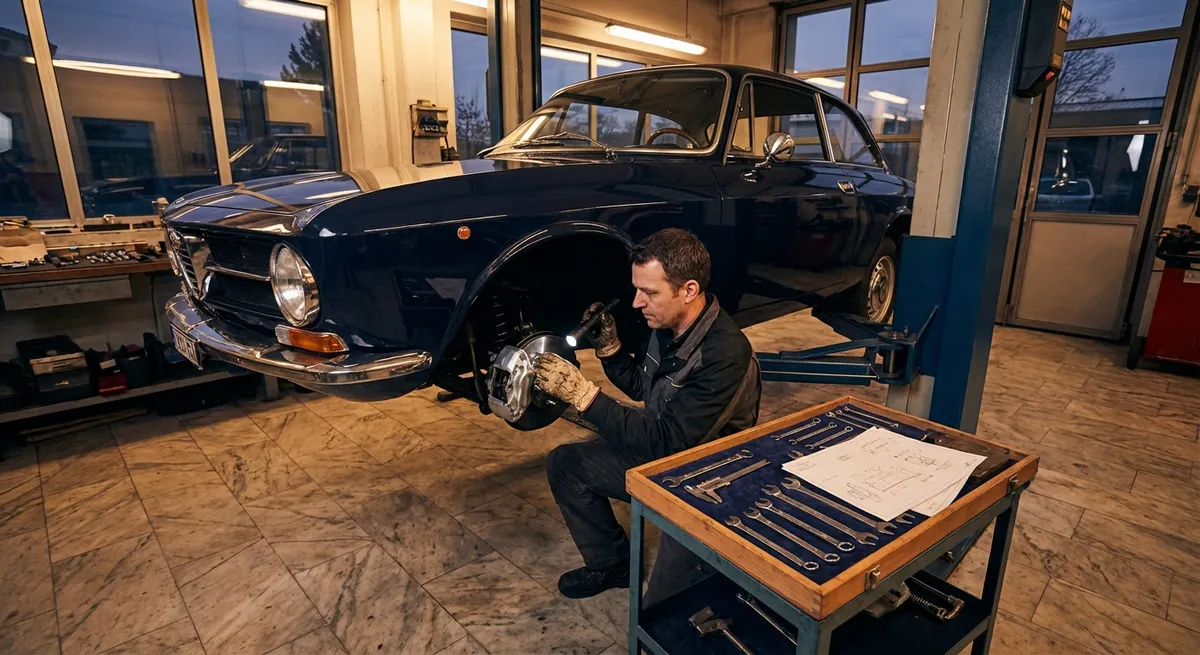
A meticulous brake repair workflow typically includes: confirming your specific complaints on a road test; measuring pad thickness and rotor runout with proper tools; inspecting caliper slide pins, boots, and seals; examining hoses for swelling or cracking; and assessing brake fluid condition. On installation, a conscientious technician will clean and lubricate sliding surfaces correctly (never contaminated with grease where friction must be precise), torque wheels using a calibrated wrench, and conduct a thoughtful post‑repair road test.
Ask prospective shops about their standard brake inspection checklist and whether they measure or simply “eyeball” wear. Inquire if they resurface rotors within spec or replace them, whether they use OEM‑equivalent or premium aftermarket components, and how they handle bedding‑in new pads. A shop that can clearly articulate its process and quality controls is far more likely to deliver the level of safety and refinement you expect.
Insight 3: The Subtle Role of Brake Fluid in Emergency Performance
Brake fluid is often treated as an afterthought, but for drivers serious about safety, it deserves center stage. Over time, brake fluid absorbs moisture, which lowers its boiling point and increases internal corrosion. Under heavy braking—such as an abrupt stop from highway speeds or descending a steep grade—overheated, moisture‑laden fluid can begin to boil, creating compressible vapor in the lines and a soft, sinking pedal precisely when you need firmness.
Manufacturers typically recommend fluid replacement every 2–3 years, yet many vehicles go two or three times that without service. A more disciplined approach involves testing fluid for moisture content or boiling point during major services and proactively flushing it on schedule, not merely “when it looks dark.” For vehicles with high‑performance braking systems or frequent long‑distance use, this becomes even more critical.
Combining a quality DOT‑specified fluid (never downgrading from the manufacturer’s specification) with regular flushes ensures that your ABS and stability systems can respond instantly when you make a critical steering or braking input. Silent, invisible, and inexpensive compared to major repairs, brake fluid maintenance is one of the most leveraged safety steps a discerning owner can take.
Insight 4: Listening to Early Signals Before They Become Urgent
Exceptional brake safety is less about reacting to obvious failures and more about noticing subtle changes early. Many serious brake incidents are preceded by “quiet warnings” that were either missed or dismissed.
These warnings can include: a slightly longer pedal travel than you remember; a faint vibration only at certain speeds; a soft “brush” sound when braking lightly; or an occasional pull to one side that vanishes when you release the pedal. None of these may trigger a warning light, yet they are often telling you that pads are wearing unevenly, a rotor has begun to warp, a caliper is sticking, or a hose is starting to fail internally.
Establishing your own personal “baseline” for pedal feel and stopping response is invaluable. Once or twice a month, on an empty, straight stretch of road, perform a controlled, moderate‑to‑firm stop from typical driving speed and pay attention: How firm is the pedal? Is the vehicle tracking straight? Does ABS engage smoothly if you ask for a strong stop on a low‑grip surface? Training yourself to sense minor deviations lets you schedule a professional inspection before those small shifts become a hard pull, a warning light, or a compromised emergency stop.
Insight 5: Integrating Digital Records Into Your Brake Safety Strategy
Today’s most diligent owners manage their vehicles with the same structure they might apply to a financial portfolio: documented, traceable, and strategically planned. Brake care benefits enormously from this mindset.
Maintaining a digital log of every brake‑related service—pad and rotor replacements, caliper work, fluid flushes, and ABS diagnostics—creates a transparent history that helps you and your technician spot patterns. For instance, if one corner of the car routinely wears pads faster, that suggests an underlying hardware or hydraulic issue. If you find yourself replacing pads unusually often, you can revisit component choices or driving habits with data in hand.
Integrating your maintenance records into a secure app or cloud‑based document lets you schedule proactive services at precise intervals, not vague estimates. This not only enhances safety but also supports resale value; a prospective buyer presented with a meticulous brake maintenance record immediately understands that this vehicle has been driven—and stopped—with uncommon care.
Elevating Everyday Confidence Through Intentional Brake Care
Exceptional braking performance is rarely an accident. It is the result of intentional choices: in component selection, in the caliber of the professionals you trust, in the discipline of fluid and hardware maintenance, and in the attention you give to early signals from your vehicle. When you approach brake repair as an integrated, data‑informed, and safety‑first practice, every drive becomes quieter—not just in sound, but in worry.
For the discerning driver, the standard is simple: your brakes should feel as composed and consistent on a sudden, demanding stop as they do in slow urban traffic. That level of confidence does not come from a single repair visit; it comes from a philosophy. Adopt that philosophy, and every stop becomes a controlled, deliberate act—not a hope, but a certainty.
Sources
- [National Highway Traffic Safety Administration (NHTSA) – Brakes and Safety Systems](https://www.nhtsa.gov/equipment/brakes) - Overview of brake systems, components, and safety considerations from a U.S. government agency
- [AAA – Brake System 101](https://exchange.aaa.com/automotive/automotive-trends/brake-system-101/) - Explains key brake components, warning signs, and maintenance recommendations for consumers
- [Federal Trade Commission (FTC) – Auto Repair Basics](https://consumer.ftc.gov/articles/auto-repair-basics) - Guidance on choosing repair shops, understanding estimates, and ensuring quality work
- [University of Nebraska–Lincoln – Brake System Basics](https://safety.extension.org/brake-system-basics/) - Educational overview of how braking systems function and why maintenance matters
- [Car and Driver – How Your Car’s Brakes Work](https://www.caranddriver.com/features/a15130029/how-your-cars-brakes-work-feature/) - Detailed explanation of brake operation and modern electronic assists such as ABS
Key Takeaway
The most important thing to remember from this article is that this information can change how you think about Repair Guides.