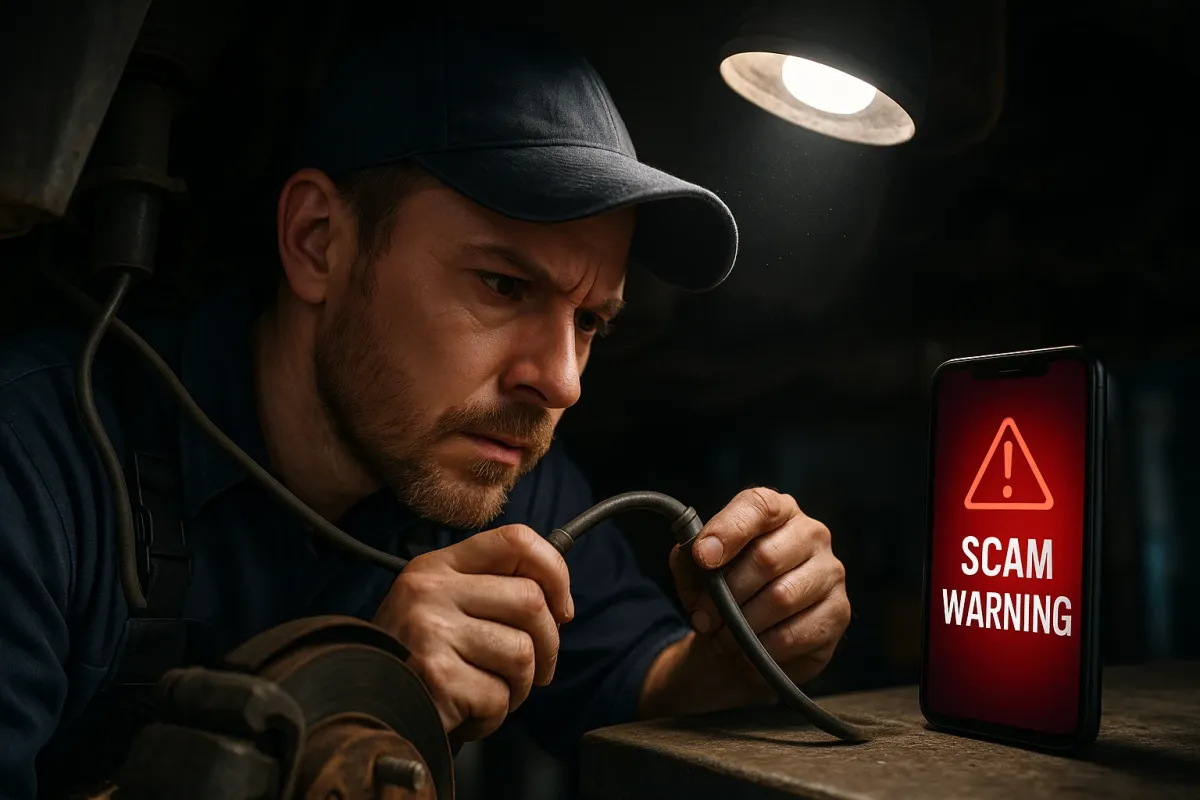
Online, people are trading cautionary tales about scams they fell for so others won’t repeat the mistake. A recent viral thread—mirrored in coverage like “Redditors Share 23 Scams They Fell For So Others Won’t”—is less about money than mindset: it’s a masterclass in how quietly we override our own instincts until the damage is done.
On the road, drivers make a similar trade every day. We dismiss small irregularities in our brakes the way people dismiss small red flags in suspicious emails—until that quiet doubt becomes a crisis. In an era where we’re finally learning to question too-good-to-be-true links and “urgent” messages, it’s time to apply that same refined skepticism to the one system that stands between us and catastrophe: our brakes.
Below are five exclusive, high-level safety insights designed for drivers who approach vehicle care with the same discernment they bring to their financial and digital lives.
1. Treat New Noises Like Suspicious Emails—Never “Click Through” and Ignore Them
Just as scam victims describe a brief moment of doubt before they clicked, most brake failures are preceded by subtle, easy-to-dismiss signals. A faint chirp when you reverse. A brief grind after a cold start. A pulsing pedal you chalk up to “old roads.”
Sophisticated brake care begins with a simple rule: no new sound is “normal” until a professional proves it is. Modern brake pads include wear indicators specifically engineered to produce an audible warning when friction material is low. That high-pitched squeal is not an annoyance; it’s the mechanical equivalent of your bank flagging unusual activity. Grinding, on the other hand, typically signals metal-on-metal contact—pad material is gone and the rotor is now being damaged with every stop.
Rather than turning up the music, document the symptom the way you would document a suspicious transaction. Note when it happens (cold vs. warm brakes, high speed vs. low, straight-line vs. turning), then schedule an inspection promptly. The more precisely you can describe the “pattern,” the easier it is for a master technician to isolate the cause before it matures into a safety risk—or an expensive overhaul.
2. Verify the “Sender”: Vet Your Brake Shop Like You’d Vet a Financial Institution
In scam stories, victims often trusted the wrong “authority”—a fake bank, a spoofed tech support line, an impostor relative. The automotive world has its own version of this: repair facilities that look professional but cut quiet corners on safety-critical systems.
A premium approach to brake safety includes a rigorous vetting of who touches your car. Look beyond star ratings and coupons. Instead, examine:
- Certifications and specialization. Seek out shops where technicians are ASE-certified and where brake work is a core competency, not an afterthought. European, performance, and EV platforms in particular demand specialized knowledge of regenerative systems, electronic parking brakes, and advanced stability controls.
- Parts transparency. A refined shop will be forthright about which brands of pads, rotors, and fluid they use—and why. OEM or high-tier aftermarket brands should be the default, not an upsell.
- Process, not just price. Ask how they bed-in new pads, how they torque caliper bolts, and whether they clean and lubricate slide pins and pad channels. Serious professionals can articulate their process in clear, confident detail.
Just as you wouldn’t move your life savings based on a text message, you shouldn’t entrust your braking system to the lowest bidder with the loudest ad. Brake care is not a commodity—it is a craft.
3. Recognize “Urgency” Pressure: Why You Should Question Both Panic and Procrastination
Scam victims often describe being rushed: “Act now or your account will be closed.” On the road, drivers create an equal and opposite danger: deferring brake work indefinitely because “it still kind of stops fine.” Both extremes—panic and procrastination—undermine good judgment.
The refined approach is measured urgency. When a trusted shop advises brake work, request objective data instead of emotional persuasion: remaining pad thickness in millimeters, rotor thickness vs. minimum specification, and brake fluid moisture content or boiling point. A premium technician will be able to show you these numbers, not just tell you a story.
With that information, you can calibrate your response. Three millimeters of pad remaining may not require same-day replacement if you drive short, gentle city trips—but it does warrant planning the service within a defined mileage window. Severely corroded brake lines or fluid that fails basic safety thresholds, by contrast, justify immediate attention. Replace vague fear with quantified risk, and you’ll make calmer, safer decisions.
4. Guard Your “Digital Perimeter”: How Modern Electronics Hide (and Reveal) Brake Issues
Online scams exploit the gap between what we see and what’s really happening behind the screen. Modern cars do something similar: they insulate you so well from the raw mechanics that serious brake issues can brew silently in the background.
ABS, ESC, automatic emergency braking, and regenerative systems mask weak hydraulic performance up to a point. A slightly soft pedal or marginal pad friction may be compensated by electronics—until they’re not. That’s why warning lights and intermittent ABS “events” during gentle braking must never be dismissed as mere software quirks.
Insist on a full diagnostic scan at least once a year, even if your dashboard is quiet. Stored (but not illuminated) brake-related fault codes can reveal early issues with wheel speed sensors, hydraulic control units, or electronic parking brakes long before they cause a noticeable symptom. Consider it the automotive equivalent of checking your credit report: discreet, meticulous, and invaluable for catching problems while they’re still small and easily corrected.
5. Build a Personal “Brake Audit Trail” the Way You Track Financial Transactions
The people who recover quickest after being scammed are usually those who kept excellent records—statements, emails, timestamps. The same discipline, applied to your braking system, transforms you from a reactive driver into a proactive steward of safety.
Create a dedicated log—digital or elegantly bound—containing every brake-related service: date, mileage, shop, parts used, measurements taken (pad thickness, rotor thickness, fluid test results), and your own impressions before and after the work. Over time, patterns emerge: how many miles your particular pads last, how your vehicle responds to different brands or compounds, and how your climate affects corrosion and fluid degradation.
This history becomes invaluable when you change shops, purchase a new vehicle, or negotiate warranty coverage. More importantly, it sharpens your instincts. If a shop recommends front pads at 20,000 miles when your usual interval is closer to 50,000 with similar driving, you’ll know to ask deeper questions—or seek a second opinion. In a world of generic advice, your personal brake audit trail is bespoke intelligence, tailored to you and your car.
Conclusion
The viral stories of people sharing scams they fell for are, ultimately, stories about tiny warnings ignored until they became big regrets. Brake failures follow the same narrative arc—only the consequences are far less forgiving.
By treating every new noise as a signal, vetting your brake shop as carefully as your bank, embracing measured urgency, respecting the sophistication of modern electronic systems, and curating a meticulous brake history, you elevate safety from a routine chore to a refined practice.
In an age when we are finally learning to protect our data and our finances, extending that same vigilance to our braking systems isn’t just prudent—it’s a quiet, deliberate act of self-preservation every time you press the pedal and expect the world to stop on cue.
Key Takeaway
The most important thing to remember from this article is that this information can change how you think about Safety Tips.