There’s a quiet renaissance happening in how we appreciate quality. Just as the internet is captivated by the intricate details of century-old homes—celebrated in pieces like “50 Beautiful Old Houses That Show How Craftsmanship Has Stood The Test Of Time”—drivers are beginning to look at their vehicles with the same discerning eye. If crown molding and hand-cut joinery can endure for generations, what does “craftsmanship” look like in something as critical, and perishable, as your braking system?
On today’s roads, premium safety isn’t just about buying a high‑end car; it’s about understanding the components that stand between you and the unexpected. Think of this as your architectural tour of the brake system: not just how it works, but how to preserve it with the same respect we give to historic buildings that still stand firm a century later.
Below are five exclusive, detail‑driven insights designed for drivers who treat brake safety as a non‑negotiable luxury rather than an afterthought.
1. Treat Your Brake System Like Fine Architecture, Not Disposable Hardware
The renewed fascination with historic houses—where every joint, hinge, and molding is examined and admired—offers a powerful analogy for brake maintenance. In those homes, longevity is never an accident; it’s the result of intentional design, regular care, and respectful upgrades. Your braking system deserves the same philosophy.
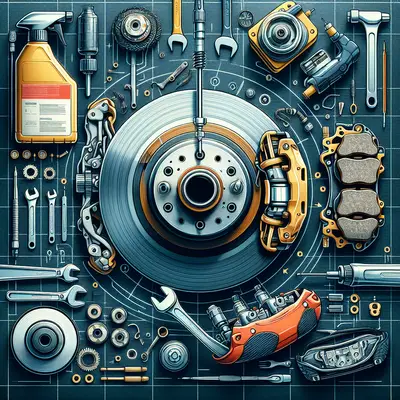
Rather than viewing pads and rotors as parts you “run into the ground,” think of them as structural elements. The caliper bracket is your foundation, the rotor is your load‑bearing wall, and the pads are your wear surface—each must be aligned, torqued, and protected from corrosion with the same precision a restorer gives to a century-old staircase. This mindset shifts you from reactive repairs (“It squeals, so I’ll replace it”) to proactive stewardship—inspecting hardware, rubber components, and mounting points at regular intervals, not just when the car complains.
2. Resurfacing vs. Replacing Rotors: The Craftsperson’s Decision
When old houses are restored, the best builders don’t rip out original hardwood just because it’s worn; they evaluate how much “material” is left and whether it can be refinished safely. Your brake rotors deserve that same measured judgment.
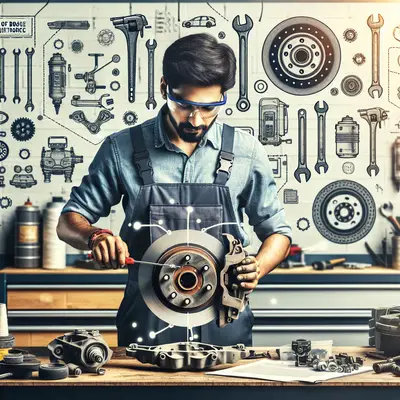
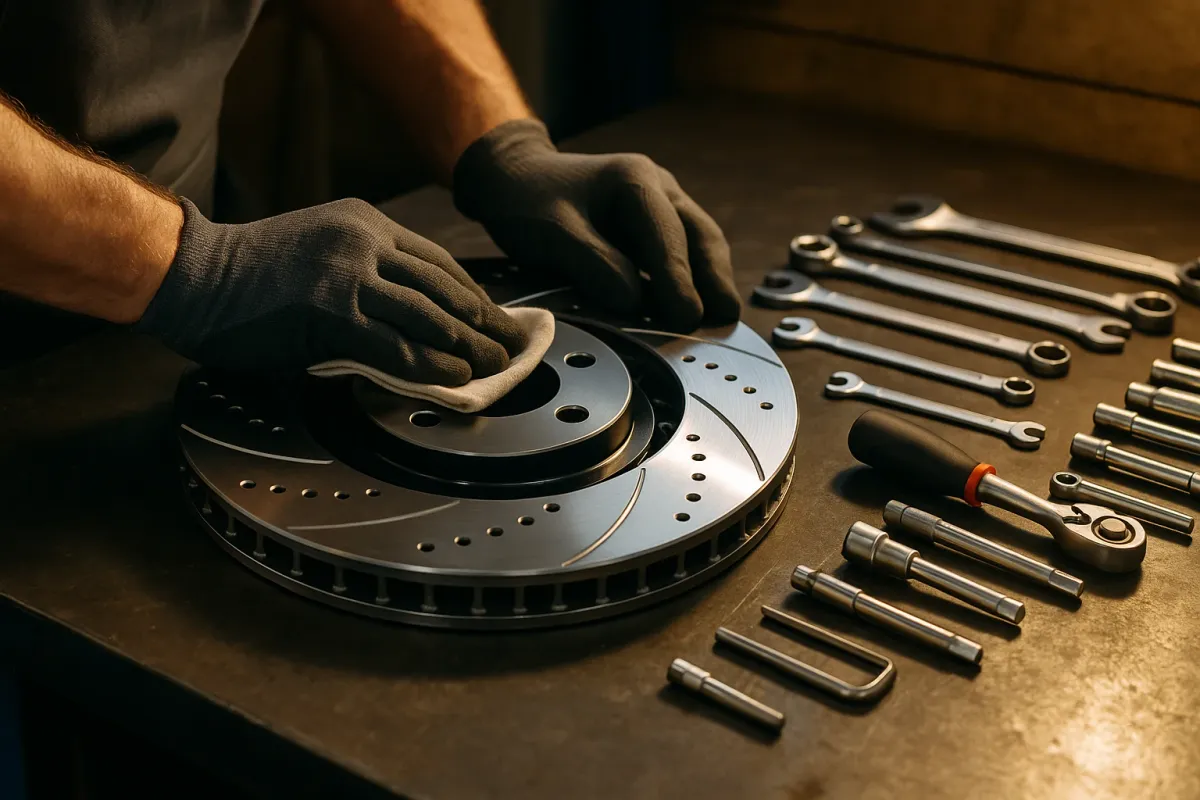
Modern rotors have a minimum thickness specification cast or stamped on the hat. A precision micrometer—not guesswork—should decide whether resurfacing is acceptable or replacement is mandatory. Light, even scoring and no evidence of heat spots may qualify a rotor for careful machining, provided the finished thickness remains above spec and runout is kept within tight tolerances (often around 0.002–0.004"). However, deep grooves, blue heat marks, or severe rust flaking—especially on daily‑driven vehicles in wet or salted regions—are the brake equivalent of rotten floorboards: replacement is the only premium choice. A true high‑end job also includes cleaning the hub face meticulously to prevent lateral runout that will, over time, masquerade as a “warped” rotor.
3. Pad Selection as a Design Choice: Matching Material to Driving Style
In the world of period homes, you wouldn’t pair cheap plastic hardware with handcrafted cabinetry. Similarly, pairing premium rotors with bargain pads is a design mismatch. Today’s brake pads are engineered in distinct “personalities”—ceramic, semi‑metallic, and low‑metallic organic—each suited to a different type of driver and environment.
Ceramic pads are the choice for drivers who prioritize refinement: quieter operation, low dust, and smooth, progressive bite. They’re ideal for luxury sedans and crossovers used primarily in urban and suburban settings. Semi‑metallic pads, by contrast, offer stronger high‑temperature performance and firmer pedal feel, making them appropriate for heavier vehicles, spirited drivers, or those who frequently tow. The premium approach is to select pads not just by brand, but by friction profile and intended use, then bed them in correctly—using manufacturer‑recommended moderate‑to‑firm stops to gradually build an even transfer layer on the rotor surface. Skipping this “finishing detail” is like applying topcoat to unprepared wood: it works for a while, but the beauty and durability suffer.
4. Hardware, Lubrication, and Torque: The Hidden Details That Separate “Fine” from “Merely Fixed”
The homes now going viral for their craftsmanship are often celebrated for what you don’t see: straight door frames, perfectly aligned windows, drawers that still glide. Brakes are the same. The difference between an average brake job and an exceptional one lives in the details that are largely invisible once the wheel goes back on.
Premium practice means replacing abutment clips and pad hardware instead of reusing corroded originals. It means cleaning caliper slide pins, then applying a high‑temperature synthetic brake lubricant sparingly and only where appropriate—never on friction surfaces or rubber boots. It also means using a torque wrench on caliper bracket bolts and wheel lug nuts, avoiding the “impact‑only” approach that can distort rotors and over‑stress studs. Even something as simple as ensuring pads move freely in their brackets—no binding, no excessive play—has a direct impact on noise, wear, and pedal feel. Like a perfectly hung vintage door, a well‑assembled brake system operates quietly, predictably, and with a sense of effortlessness.
5. Environmental Realities: Rust, Moisture, and the New Maintenance Schedule
Historic houses remind us that environment dictates care. A coastal Victorian needs different preservation than a desert bungalow. With brakes, climate and driving style are equally influential—yet many owners still default to mileage alone when considering service.
In regions with heavy road salt or high humidity, brake components can degrade structurally long before the vehicle hits a conventional mileage interval. Flaking rotor edges, seized slide pins, and swollen rubber hoses are not cosmetic issues; they are early warnings of compromised stopping reliability. City driving with frequent light stops can glaze pads and create uneven deposits on rotors, while repeated high‑speed braking on highways can overheat components if they’re not spec’d correctly. A sophisticated owner adapts: scheduling annual wheel‑off brake inspections in harsh climates, opting for coated rotors to resist rust, and replacing brake fluid every two to three years to combat moisture that quietly lowers the boiling point and invites internal corrosion. It’s the same logic that keeps an old house standing—acknowledge where it lives, and maintain accordingly.
Conclusion
The renewed cultural affection for enduring craftsmanship—seen in the popularity of those “beautiful old houses” features—shouldn’t stop at our doorsteps. It belongs in our garages as well. Your braking system may never trend on social media, but the thoughtfulness you bring to its care directly influences the safety and serenity of every mile you drive.
By treating brakes as a crafted system rather than a consumable afterthought, by making measured decisions about rotors, pads, hardware, and environment, you elevate routine maintenance into a form of stewardship. That’s the true hallmark of premium ownership: not just what you drive, but how meticulously you ensure it can stop, every single time.
Key Takeaway
The most important thing to remember from this article is that this information can change how you think about Repair Guides.