For drivers who care about more than merely getting from A to B, brake safety is a quiet benchmark of personal standards. It’s not just about avoiding catastrophe; it’s about preserving the satisfaction of a vehicle that feels composed, predictable, and impeccably maintained. This guide is crafted for those who take pride in an elevated driving experience, and who prefer foresight to roadside surprises.
Below, you’ll find a refined approach to brake repair decisions, built around five exclusive insights that go beyond the usual “squeaks and grinding” advice—insights that help you sense what your brakes are telling you long before trouble becomes obvious.
Elevating Brake Repair From Crisis Response to Curated Routine
Most brake repairs happen reactively: a warning light, a sharp noise, a sudden vibration. For discerning drivers, that timing is unacceptable. A refined brake care routine treats repairs as curated interventions rather than emergency responses.
Begin by adopting an interval mindset, not a symptom mindset. Instead of waiting for something to feel “wrong,” synchronize brake inspections with other key milestones: seasonal tire changes, annual alignment checks, or every 10,000–12,000 miles (or ~15,000–20,000 km), whichever comes first. During these visits, request a documented brake inspection: pad thickness measurements in millimeters, rotor condition notes, and fluid boiling point tests when appropriate.
This documented history becomes your brake “profile.” Over time, you and your technician can see how quickly components wear based on your driving style, climate, and road conditions. The result isn’t guesswork; it’s a personalized replacement schedule that keeps your brake system performing at its peak well before safety margins are compromised.
Exclusive Insight #1: The Texture of the Pedal Matters More Than the Noise
Many articles fixate on sound—squeals, squeaks, and grinding. But sophisticated brake assessment starts with touch. The brake pedal’s texture under your foot is often a more precise indicator of developing issues than anything you hear.
Pay close attention to:
- Linear firmness: In a well-maintained system, pedal pressure should build smoothly and predictably. If the pedal feels slightly spongy, requires more travel than it used to, or responds inconsistently from one stop to the next, you may be seeing the early stages of fluid degradation, micro air intrusion, or deteriorating rubber hoses.
- Subtle pulsing at low speeds: A pronounced pulse often indicates rotor warping, but a faint, recurring rhythm—especially when braking gently from 25–40 mph—may point to early thickness variation (uneven rotor wear) that can be corrected before it becomes harsh or unsafe.
- Delayed engagement: Even a small increase in the time between pedal application and braking “bite” is worth noting. This delay can be an early clue that caliper slides are sticking, pads are glazing, or fluid is compromised.
Creating a mental baseline for how your pedal feels when everything is right is a small habit with outsized value. Once you know what your vehicle’s “perfect” pedal feels like, any deviation—however modest—becomes a useful early warning.
Exclusive Insight #2: Brake Fluid as a Precision Safety Component, Not an Afterthought
Brake fluid is often relegated to the background, considered only when it looks dark in the reservoir. For drivers serious about safety and consistency, that’s an oversight. Brake fluid is your hydraulic lifeline; its condition directly affects not only performance but also how predictably the vehicle stops under stress.
Brake fluid is hygroscopic—it absorbs moisture over time. Even in sealed systems, humidity can permeate rubber hoses and seals. That moisture quietly lowers the fluid’s boiling point, making it more prone to vaporizing under heat from repeated braking, particularly on steep grades or in spirited driving. Vapor in the lines translates to a soft pedal and, in extreme cases, brake fade when you need capacity the most.
Instead of relying solely on visual checks, request periodic testing of your fluid’s boiling point or moisture content during inspections. Many professional shops have tools designed for this purpose. For most passenger vehicles, replacing brake fluid approximately every 2–3 years (or per your manufacturer’s guidance) is not merely a maintenance box to tick—it’s a commitment to preserving the crisp, confident feel of your braking system under demanding conditions.
Exclusive Insight #3: Matching Brake Components to the Way You Actually Drive
Not all brake pads and rotors are created—or intended—equally. A premium approach to brake repair means choosing components that are thoughtfully matched to how and where your vehicle is driven, rather than defaulting to the cheapest “will-fit” part.
Consider three core dimensions when selecting components:
- Driving environment: City-heavy driving with frequent stops often benefits from pads formulated to handle repeated moderate heat cycles with minimal noise and dust. Highway-dominant driving may favor compounds that deliver stable friction at higher speeds and temperatures.
- Vehicle character: A heavier SUV, hybrid with regenerative braking, or high-performance sedan each places unique demands on the friction material. For instance, hybrids may require pads that resist corrosion and low-speed noise, because the friction brakes engage less frequently but often at lower temperatures.
- Comfort vs. performance priorities: Some premium pads are engineered for near-silent operation and low dust but may trade off ultimate high-heat performance. Others prioritize exceptional fade resistance, which can come with slightly more noise or dust. Understanding what matters most to you—silence, cleanliness, peak performance, or longevity—lets you choose deliberately.
Ask your repair professional not just “What’s available?” but “What’s ideal for my usage pattern?” That small shift in questioning can elevate your brake repair from a generic replacement to a bespoke solution aligned with your driving life.
Exclusive Insight #4: The Hidden Importance of Cleanliness and Hardware
Brake pads and rotors attract attention; mounting hardware and cleanliness rarely do. Yet in refined brake service, the quiet work happens in the details you can’t immediately see.
Quality brake work includes:
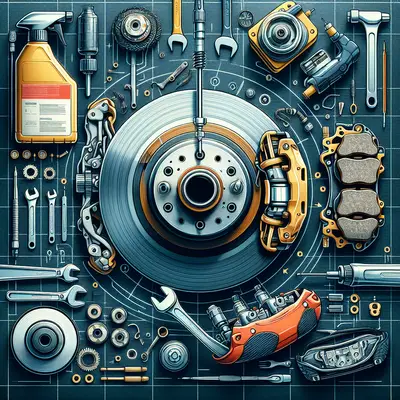
- Thorough cleaning of contact surfaces: Caliper brackets, pad slides, and hub faces should be cleaned of rust, debris, and old grease. Even minor corrosion between the rotor and hub can introduce runout (a slight wobble), which often leads to vibration and uneven pad deposition later.
- Proper lubrication of sliding points (but nowhere else): High-temperature brake grease belongs on caliper slide pins and pad contact points—never on friction surfaces. Under-lubricated slides can cause uneven pad wear and pulling; over-lubrication or misapplied grease can contaminate pads and rotors.
- Hardware renewal: Anti-rattle clips, shims, and slide pin boots are not decorative. Worn or seized hardware undermines even the finest pad and rotor set. An elevated standard is to replace hardware kits when pads are replaced, particularly in regions with road salt or high humidity.
If your brake repair estimate lists “hardware kit,” “slide servicing,” or “hub surface preparation,” it’s often a sign that the shop is approaching your system with the level of care it deserves. You’re not just paying for parts; you’re investing in craftsmanship and longevity.
Exclusive Insight #5: Establishing Your Own Early-Warning Rituals
The most safety-conscious drivers don’t wait for warning lights, and they don’t delegate all awareness to their technician. They cultivate simple, repeatable rituals that keep their senses tuned to the vehicle’s behavior.
Consider integrating a few discreet habits into your driving routine:
- Monthly quiet-stop check: On a safe, empty stretch of road, gently brake from about 30–35 mph with the windows slightly down and the audio off. Listen for minor sounds you might miss in daily traffic, and feel for any lateral pull or pedal irregularity.
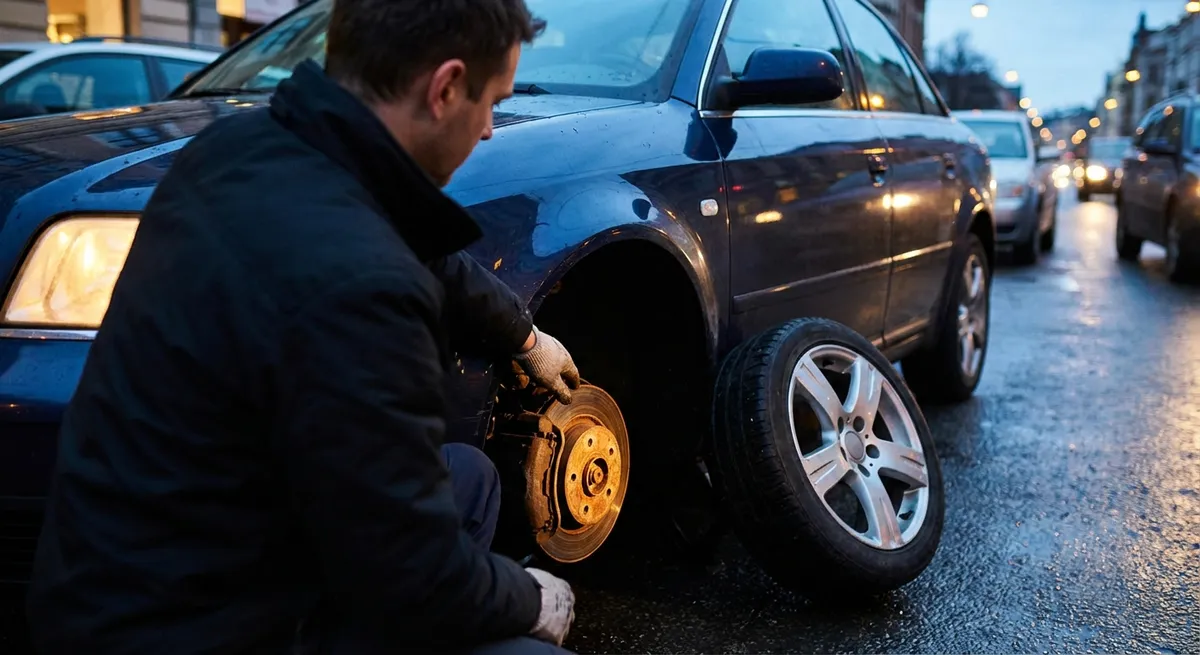
- Garage or driveway glance: When you park at home, briefly look at the inside faces of your front wheels with a flashlight. Significant differences in dust buildup from left to right, streaks indicating fluid leakage, or unusual rust patterns on rotors can signal early problems.
- Steering wheel and seat “micro-feedback”: Light tremors in the steering wheel or a faint rhythmic vibration you feel through the seat under braking—especially at moderate speeds—are worth noting and mentioning during your next service visit. These micro-signals rarely appear overnight; catching them early can transform a future major repair into a modest adjustment or machining.
Taken together, these rituals form a calibrated awareness of your brake system. You’re not obsessing; you’re listening—quietly but consistently—so that your vehicle never has to shout for attention.
Conclusion
Brake safety, at its highest standard, is not a matter of fear but of refinement. For drivers who demand control, composure, and confidence in every stop, the details matter: the feel of the pedal, the condition of the fluid, the careful selection of components, the cleanliness of hidden hardware, and the personal rituals that keep small changes from becoming big problems.
By embracing these five insights, you transform brake repair from a reactive chore into a deliberate, well-informed practice—one that respects both the engineering of your vehicle and the responsibility you assume every time you press the pedal. In that quiet space between motion and standstill, you’ll know that your safety isn’t left to chance; it’s the result of considered choices and meticulous care.
Sources
- [National Highway Traffic Safety Administration (NHTSA) – Brake Safety Overview](https://www.nhtsa.gov/equipment/brakes) - Federal guidance on brake systems, safety considerations, and component roles
- [AAA – Repair and Maintenance: Brake System Basics](https://exchange.aaa.com/automotive/repair-maintenance/brake-system/) - Consumer-focused explanation of brake components, wear, and service intervals
- [Ford Motor Company – Understanding Your Vehicle’s Brake System](https://www.ford.com/support/how-tos/owner-resources/brakes/understanding-your-vehicles-brake-system/) - OEM perspective on modern brake systems and recommended maintenance practices
- [University of California, Berkeley – Vehicle Dynamics and Brake Performance](https://escholarship.org/uc/item/8gk6w2ng) - Research-based insights into braking performance and vehicle control
- [U.S. Department of Transportation – Federal Motor Vehicle Safety Standards: Brakes](https://www.ecfr.gov/current/title-49/subtitle-B/chapter-V/part-571/section-571.105) - Regulatory standards governing hydraulic brake systems in passenger vehicles
Key Takeaway
The most important thing to remember from this article is that this information can change how you think about Repair Guides.