Even the most powerful engine is only as impressive as its ability to stop with composure. For drivers who value refinement, confidence does not come from brute force at the pedal, but from a brake system that feels transparent, predictable, and quietly capable in every situation. Understanding how your brakes work—and how to care for them with intention—turns every stoplight, off-ramp, and emergency maneuver into a demonstration of poised control rather than anxious guesswork.
The Architecture of Confidence: How Modern Brake Systems Truly Work
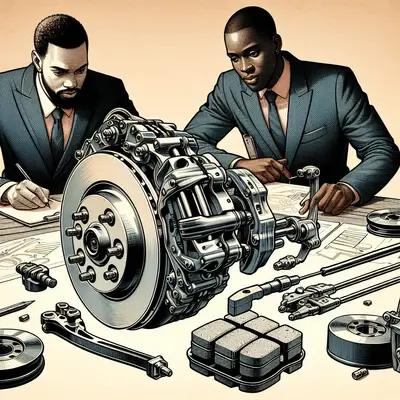
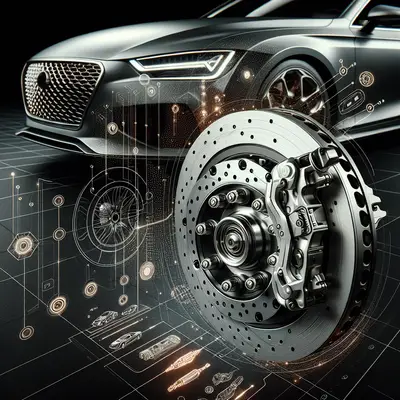
Beneath the apparent simplicity of a pedal and a disc lies an intricate, highly coordinated system. When you press the brake pedal, a brake booster amplifies your input and sends hydraulic pressure through brake lines filled with specialized fluid. That pressure forces pistons in your calipers to clamp the pads onto the rotors, converting kinetic energy into heat—lots of it.
In contemporary vehicles, especially in premium and performance segments, this basic sequence is refined by layers of electronic oversight. Anti-lock braking systems (ABS) rapidly pulse brake pressure to prevent wheel lock-up. Electronic brake-force distribution (EBD) subtly reallocates braking effort between front and rear wheels as the car’s weight shifts under deceleration. Some models layer in brake assist systems that sense panic stops and increase line pressure even if the driver hesitates. Together, these elements are calibrated not simply to stop the car, but to do so in a way that feels stable, linear, and controlled through the steering wheel and the seat.
Disc dimensions, rotor composition, pad compound, and caliper design all influence both performance and character. Larger rotors dissipate heat more effectively; multi-piston calipers can apply force more evenly; and high-friction pads can reduce stopping distances at the expense of noise or dust. For the discerning owner, understanding these trade-offs is the foundation of tailoring a brake system that feels deliberate rather than merely adequate.
Beyond “Good Enough”: Material Choices That Shape Your Braking Experience
Brake components are not interchangeable commodities; they define much of your car’s personality under deceleration. Even within OEM-compliant parts, there is a wide spectrum of quality, thermal capacity, and refinement. Rotors, for instance, may be made from standard cast iron, high-carbon alloys for improved heat handling, or composite designs blending iron with aluminum hats to reduce unsprung weight. The choice affects not only stopping performance but also steering feel and ride sophistication.
Pads are even more nuanced. Organic, semi-metallic, and ceramic formulations offer different balances of bite, fade resistance, noise, and dust. A high-bite pad can feel reassuringly assertive on a spirited drive but may squeal at low speeds in an underground garage. A low-dust, comfort-oriented pad may deliver quieter, cleaner performance but feel slightly softer in initial response. Discerning drivers often prefer a compound that prioritizes consistency and modulation over sheer aggressiveness—a pad that allows for millimeter-precise pedal control in traffic and during high-speed braking alike.
Even the hardware that secures these components—caliper pins, shims, and anti-rattle clips—contributes to refinement. High-quality hardware reduces vibrations, improves pad alignment, and prolongs even wear. When it comes to brake system service, insisting on premium, well-engineered components is not an indulgence; it is an investment in predictable, repeatable stopping behavior at precisely the moment you need it.
Fluid, Heat, and Time: The Hidden Enemies of Consistent Braking
Brake fluid rarely attracts attention, yet it is the lifeblood of the system. Most vehicles rely on glycol-based DOT 3, DOT 4, or DOT 5.1 fluids, each with different boiling points and moisture-absorption rates. Over time, brake fluid absorbs water from the atmosphere through microscopic permeation and imperfect seals. As moisture content rises, the fluid’s boiling point falls—meaning that during repeated hard stops, vapor bubbles can form, compress, and produce a soft, alarming pedal known as brake fade.
For elevated driving confidence, brake fluid should be treated as a service item, not a background detail. Performance-oriented or heavy vehicles that see mountain roads or spirited driving benefit from higher-boiling-point fluids and more frequent flush intervals. Even for city-focused luxury sedans and SUVs, a regular brake fluid exchange every two to three years (or per manufacturer guidance) preserves the system’s consistency and corrosion resistance inside lines, calipers, and master cylinders.
Heat management is equally critical. Rotors are designed to act as massive heat sinks, and ventilation vanes, slots, or cross-drilled patterns can help evacuate heat and gases. However, excessive or repeated high-temperature events—towing, track use, or long downhill descents—can blue rotors, glaze pads, and permanently alter friction characteristics. Drivers who demand refinement should note not just whether the car stops, but whether each stop feels as composed as the last under demanding conditions. Diminishing consistency is often the first signal that heat management is being exceeded.
Five Exclusive Insights for Exceptionally Safe, Refined Braking
Discerning owners are not satisfied with generic advice like “replace pads when they’re worn.” They look for the subtle details that separate merely functional brakes from an impeccably tuned system. The following five insights will resonate with drivers who expect their braking performance to match the sophistication of the rest of their vehicle.
1. Pedal Texture Is a Diagnostic Tool, Not Just a Sensation
Most drivers notice only pedal firmness or softness, but refined observation reveals more. A perfectly bled, healthy system exhibits a firm, progressive pedal: initial light resistance, then smoothly increasing effort for more deceleration. A pedal that feels spongy or “elastic” often points to air in the lines or degraded fluid. A pedal that slowly sinks under steady pressure—especially at a stoplight—is a serious warning sign of internal hydraulic leakage or master cylinder wear.
Additionally, pay attention to how the pedal reacts during ABS engagement. In a well-calibrated system with healthy components, ABS intervention should feel controlled and reassuring rather than violently chattering. Documenting how your pedal feels when the brakes are fresh—and noticing even small deviations over time—creates your own personal baseline for early detection of issues long before warning lights appear.
2. Brake Balance Reveals More Than Alignment Ever Will
Owners often focus on wheel alignment to explain pulling or wandering, but brake balance is a quieter culprit. During a firm stop on a straight, flat road, your car should remain precisely straight, with no tendency to veer. A subtle pull under braking can indicate uneven pad material transfer on the rotors, a sticking caliper slide, or imbalance in hydraulic pressure.
The refined driver periodically performs controlled, moderate stops in a safe, empty area to assess this balance. If the steering wheel twitches, the body nudges slightly to one side, or the sensation is asymmetrical between left and right, it is worth a professional evaluation. Correcting brake balance does more than improve safety; it restores a sense of calm authority at the wheel, particularly during high-speed deceleration or in adverse conditions.
3. Noise Patterns Can Distinguish Annoyance from Emerging Risk
Not all brake noises are equal. A brief, light squeak in the final few feet before a stop, especially in humid conditions, may simply be pad vibration or surface rust being cleaned off the rotors. However, a consistent high-pitched squeal during normal stops at low speeds could be the wear indicator tab brushing the rotor—signaling that pad material is nearing its minimum safe thickness.
A grinding or growling noise is a different category altogether and typically indicates metal-on-metal contact where the pad friction material has completely worn through. At this stage, rotor damage and sharply reduced stopping performance are virtually guaranteed. The discerning owner not only listens for noise but notes when and how it appears: cold vs. hot brakes, light vs. hard stops, dry vs. wet conditions. This pattern recognition can guide more precise, efficient service rather than guesswork.
4. Brake Feel Evolves as Tires Age—And It Matters
Braking performance is not just a function of the brake hardware; it is ultimately limited by the tire’s contact with the road. As tires age, even with generous tread depth remaining, compounds harden and wet grip diminishes. What feels like “longer stopping distances” or “mushier brakes” can in reality be the tire’s reduced capacity to translate braking force into road friction.
A refined safety practice is to consider brakes and tires as a system. When you replace one, at least evaluate the other. After installing new tires, note any changes in ABS engagement frequency, pedal modulation, and stopping distance. Similarly, after a brake service, pay close attention to how the car behaves in the first 500–600 miles, as pads and rotors bed in and re-establish an even layer of transfer material. Owners who align tire condition, brake condition, and their driving environment enjoy much more predictable, confidence-inspiring stops.
5. Your Environment Should Dictate a Bespoke Brake Maintenance Rhythm
Factory maintenance schedules are designed for broad averages, not for a downtown commuter in stop-and-go traffic, a coastal resident in salty air, or a mountain driver descending long grades weekly. High-density urban driving wears pads more quickly and can generate significant heat even at low speeds. Coastal climates can accelerate corrosion on calipers, backing plates, and brake lines. Frequent steep descents challenge fluid and rotor temperatures far more than casual highway cruising.
Sophisticated brake care adapts the service interval to the environment. This may mean annual brake inspections instead of every two years, more frequent fluid flushes in humid regions, or selecting higher-temperature pad compounds for vehicles regularly driven in the mountains. Keeping a concise log of service dates, mileage, and driving pattern changes—such as a new commute or move to a different climate—enables a maintenance strategy that is tailored rather than generic.
The Subtle Art of Braking Gracefully, Every Time
A truly premium driving experience is defined not only by acceleration, silence, or technology, but by how serenely and decisively a vehicle can shed speed. When the brake pedal communicates clearly, when the car remains composed under demanding stops, and when the system performs identically in dry, wet, hot, and cold conditions, the result is a quiet sense of trust that changes how you drive.
Attentive owners treat their brake systems not as an afterthought, but as a central expression of their vehicle’s character and their own standards. By understanding the architecture of modern brakes, respecting materials and heat, and applying refined observational habits—particularly the five insights outlined above—you transform routine maintenance into a deliberate practice of safety and control. The reward is simple yet profound: every stop feels intentional, measured, and entirely under your command.
Sources
- National Highway Traffic Safety Administration (NHTSA) – Brake Safety Information – Overview of brake safety awareness and inspection priorities
- U.S. Department of Transportation – Brake Fluids, FMVSS No. 116 – Defines DOT brake fluid types and performance requirements
- Carnegie Mellon University – “Brake Systems in Modern Vehicles” Lecture Notes – Technical background on braking system design and dynamics
- Continental Automotive – ABS and Electronic Brake Systems Overview – Details on ABS, EBD, and related electronic brake technologies
- Tire Rack – “How Tires Affect Braking Distance” – Comparative testing of tires and their impact on stopping performance
Key Takeaway
The most important thing to remember from this article is that this information can change how you think about Brake Systems.