For discerning drivers, true confidence behind the wheel is not about horsepower or badges on the grille—it is about the quiet certainty that, when required, the car will come to a composed, predictable stop. Brake systems are the unspoken guardians of every journey, working in the background with remarkable precision. Understanding how they operate—and how to care for them with intention—transforms brake maintenance from a reactive expense into a refined safety discipline.
This guide explores modern brake systems from a premium, detail‑oriented perspective and highlights five exclusive insights that safety‑focused owners can use to keep their stopping power consistently poised and trustworthy.
The Modern Brake System, Curated for Control
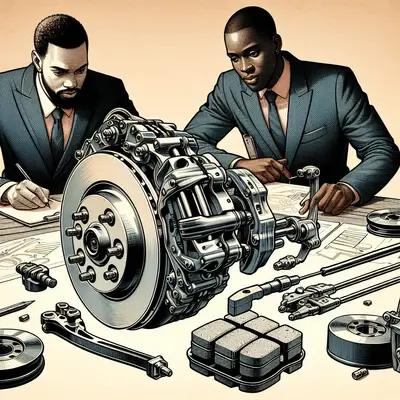
A contemporary brake system is an orchestrated network rather than a handful of mechanical parts. At its heart are the brake pedal, master cylinder, brake lines, calipers or wheel cylinders, rotors or drums, and the friction material itself—pads or shoes. These components are now integrated with sophisticated electronics, including ABS (Anti‑lock Braking System), ESC (Electronic Stability Control), and often brake assist systems that interpret how urgently you are trying to stop.
Hydraulic pressure carries your pedal input to each wheel with remarkable precision. In disc brakes, calipers clamp pads against spinning rotors; in drum systems, shoes press outward against a rotating drum. Electronic controls constantly evaluate wheel speed, vehicle yaw, and traction, adjusting brake force at each wheel in milliseconds. When maintained at a high standard, the entire system delivers something more valuable than performance figures: a predictable, linear response that feels the same during a gentle city stop or a sudden highway emergency. That consistency is the hallmark of a properly curated brake system.
Five Exclusive Insights for the Safety‑Focused Driver
The difference between “functioning” brakes and truly confidence‑inspiring brakes is often found in subtleties. These five insights speak to owners who seek more than basic roadworthiness.
1. Brake Feel Is a Diagnostic Language, Not a Vague Impression
Many drivers dismiss “pedal feel” as subjective, but in a well‑maintained vehicle it becomes a reliable early‑warning system. A firm pedal that engages predictably near the top of its travel usually reflects a healthy hydraulic system with minimal air in the lines and properly sized components. A spongy or slowly sinking pedal, by contrast, may indicate air intrusion, moisture‑laden fluid, or internal seal wear in the master cylinder.
The refined driver pays attention to small deviations: an extra millimeter of travel, a slightly delayed bite, or a faintly inconsistent response between cold‑start stops and fully warmed driving. Logging these impressions—mentally or in a maintenance journal—allows you to present specific, actionable feedback to your technician. Instead of arriving at the shop with “something feels off,” you can discuss how the pedal changed over time, which often shortens diagnostic time and improves repair precision.
2. Brake Fluid Is a Precision Component, Not a “Lifetime” Afterthought
Brake fluid is frequently overlooked because it is largely invisible, yet it is one of the most critical—and most perishable—elements in the system. Most modern vehicles use glycol‑based DOT 3, DOT 4, or DOT 5.1 fluid, all of which are hygroscopic: they absorb moisture from the air over time. This moisture lowers the fluid’s boiling point and can corrode the delicate internal surfaces of calipers, ABS valves, and master cylinders.
For a safety‑conscious owner, treating brake fluid like a timing belt—on a schedule, not only when there’s a problem—is a quiet but powerful safety upgrade. Periodic fluid testing with a professional‑grade electronic tester or boiling point meter, followed by a thorough flush at the intervals recommended by the manufacturer (or sooner in humid or mountainous regions), preserves pedal firmness during repeated stops and extends the life of high‑value components. It’s a subtle maintenance ritual with outsized impact on emergency braking performance.
3. Rotor Quality and Finish Shape the Character of Every Stop
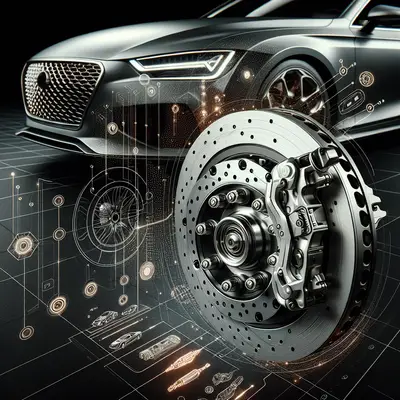
Brake rotors are not merely metal discs; their material, design, and surface finish profoundly influence pedal stability, noise, and fade resistance. Premium rotors are carefully balanced, machined to tight tolerances, and often coated to resist corrosion on non‑friction surfaces. This reduces vibration, maintains even pad contact, and helps preserve a clean, consistent braking surface.
Subtle cues—like a faint steering wheel tremor under moderate braking or an intermittent vibration that disappears after long highway drives—can signal uneven rotor thickness (often called “judder”) or inconsistent pad deposits. Addressing this with high‑quality rotors and proper installation torque on the wheel lugs not only restores smoothness, it prevents the driver from unconsciously compromising safety by braking more gently than required to avoid unpleasant feedback. For those who drive frequently in mountainous terrain or with full passengers and luggage, choosing rotors designed for better heat management becomes an understated but meaningful upgrade.
4. Electronic Aids Are Partners, Not Substitutes for Brake Discipline
Modern vehicles have transformed braking into a collaborative effort between the driver and an array of electronic systems. ABS prevents wheel lockup during hard stops, ESC helps maintain stability during evasive maneuvers, and brake assist can detect a panic stop and apply full braking force faster than most humans can. These features are remarkable, but they are not magic—and they are not compensation for worn pads, neglected fluid, or mismatched tires.
The sophisticated driver treats these systems as additional layers in a carefully constructed safety architecture. Understanding that ABS works best with good tire tread and proper inflation, for example, reinforces the idea that tire care is integral to brake performance. Recognizing that ESC needs accurate wheel‑speed data encourages timely attention to wheel‑speed sensor warnings. Viewed this way, electronic aids are not excuses to be less vigilant, but reasons to maintain the mechanical system to a standard that allows the electronics to perform at their peak.
5. Consistency Across Axles Is a Safety Priority, Not a Styling Option
It can be tempting to upgrade only the front brakes or to mix pad types and rotor designs based on availability or aesthetics. However, the balance between front and rear braking forces is meticulously engineered. The system assumes a certain friction profile at each axle to maintain stability under hard braking, especially on wet or uneven surfaces.
Mixing drastically different pad compounds—such as aggressive performance pads in front and economy pads in the rear—can subtly alter this balance. The result may be increased stopping distance, premature ABS activation, or an unstable feel during threshold braking. A safety‑oriented owner works with a trusted technician or specialist to choose components as a matched set, ensuring similar friction characteristics, temperature behavior, and quality across both axles. This is how you achieve braking that feels composed, symmetrical, and predictable in every scenario, from a sudden lane closure to a steep downhill descent.
Refining a Personal Brake Safety Standard
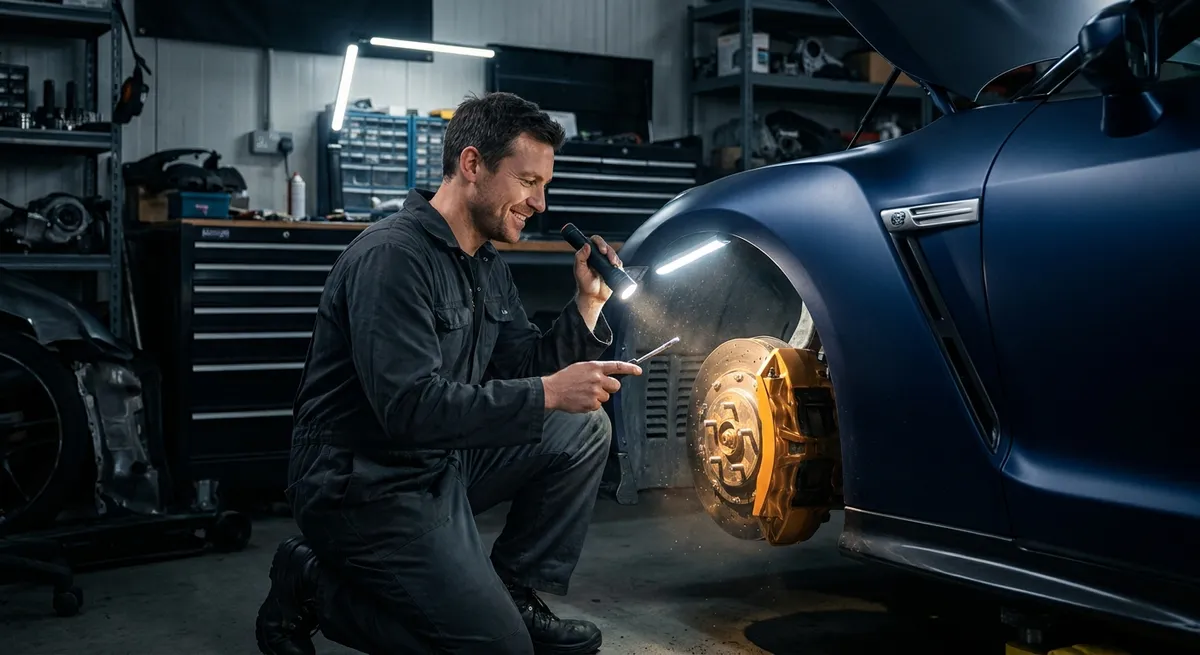
Elevating brake care is less about learning to turn wrenches and more about adopting a meticulous mindset. It begins with understanding the language of your vehicle: pedal feel, subtle noises, steering feedback, and changes in behavior from one season to the next. It continues with intentional maintenance choices—scheduled fluid service, premium‑grade friction materials, precisely machined rotors, and respect for the balance the factory engineers designed.
By treating your brake system as you might a finely tuned instrument, you create a driving experience in which every stop feels composed, proportional, and reassuringly familiar. That level of consistent control is not accidental; it is the result of quiet, thoughtful attention to the details that most drivers never see—but that safety‑driven owners insist on getting right.
Sources
- National Highway Traffic Safety Administration (NHTSA) – Vehicle Brakes Overview - Authoritative information on brake safety, regulations, and system components
- U.S. Department of Transportation – ABS and Stability Control Fact Sheet - Explains how ABS and stability control enhance braking safety
- AAA – Brake System Inspection and Maintenance Guide - Practical guidance on proper inspection intervals and maintenance practices
- University of Nebraska–Lincoln – Brake Fluid and Hydraulic Systems Basics - Educational overview of brake fluid behavior, moisture absorption, and hydraulic principles
- Car and Driver – How Anti-lock Brakes Work - Technical yet accessible explanation of ABS operation and its role in modern brake systems
Key Takeaway
The most important thing to remember from this article is that this information can change how you think about Brake Systems.