For the genuinely attentive driver, a brake system is more than a pedal and a set of pads—it is an orchestra of hydraulics, friction materials, electronics, and design choices working in quiet harmony. When that harmony is disturbed, even subtly, safety, confidence, and driving pleasure all begin to erode. Understanding what happens between your foot and the road surface is not merely technical curiosity; it is the foundation of composed, predictable stopping in every situation.
This guide explores the brake system with a focus on nuance: how refined drivers think about feel, response, and long-term reliability. Along the way, you’ll find five exclusive insights that elevate your perspective beyond routine maintenance and into the realm of intentional, informed care.
The Brake System as a Chain of Trust
Every brake application is a transfer of trust: from your brain to your foot, through hydraulic lines and friction surfaces, to four small contact patches of rubber on the road. When any link in that chain is compromised—even slightly—the result is inconsistency, and inconsistency is the enemy of confident driving.
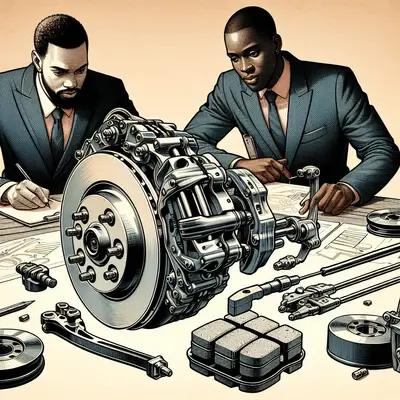
At the heart of the system lies the master cylinder, converting pedal pressure into hydraulic force. This pressure travels through brake lines and hoses to calipers or wheel cylinders, which then press friction material against a rotating surface (rotor or drum). Modern vehicles layer in additional intelligence—ABS, electronic brakeforce distribution, and stability control—to refine how that force is allocated.
The sophisticated driver pays attention not only to whether the car stops, but to how it stops. Is the pedal linear, or does it feel vague at the top and grabby at the bottom? Does the vehicle remain poised under hard braking, or does it dart to one side? Subtle changes in behavior are often the earliest and most honest indicators that something has shifted within the system, even before obvious noise or warning lights appear.
Exclusive Insight #1: The First Half-Inch of Pedal Travel Is a Diagnostic Tool
Most drivers ignore the initial pedal movement, but discerning owners treat it as an early-warning sensor. The first half-inch of pedal travel, before serious deceleration begins, reveals hydraulic health, pad take-up, and even subtle air intrusion in the brake lines.
A pedal that once felt immediate but now has a soft, elastic quality near the top may indicate slightly compressible fluid (often due to moisture absorption), minor air pockets, or beginning master cylinder wear. Conversely, an unusually high, rigid pedal after recent service can suggest improperly adjusted or sticking components.
Make a habit of noticing pedal feel during calm, low-speed stops in a controlled environment. Comparing that sensation over weeks and months allows you to detect small changes long before more obvious symptoms appear, turning routine driving into a continuous, quiet diagnostic process.
Materials, Heat, and the Art of Consistent Stopping
Brakes convert kinetic energy into heat, and how gracefully they handle that heat separates average systems from truly confidence-inspiring ones. Rotors, pads, and fluid each respond to heat differently, and their combined behavior defines brake performance during repeated or emergency stops.
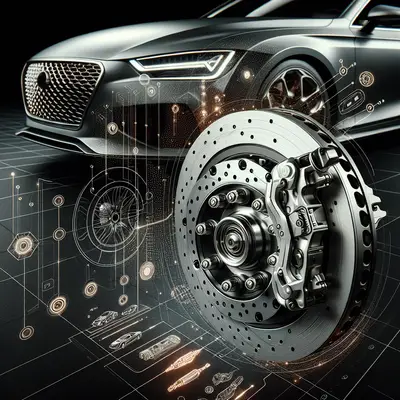
Pad compounds vary from comfort-oriented organic formulas to performance-focused semi-metallic and ceramic designs. Rotors can be plain, slotted, or drilled, each carrying trade-offs in noise, dust, cooling, and longevity. Brake fluid, often overlooked, determines how resistant the system is to fade when temperatures climb.
For the refined driver, the aim is not “maximum bite at any cost,” but predictable behavior across a range of temperatures and conditions. The goal is consistency—knowing that the first hard stop on a cold morning and the third firm stop descending a mountain pass will feel reassuringly familiar.
Exclusive Insight #2: Thermal Memory Leaves Clues on Your Rotors
Rotors quietly record how they’ve been treated. Light, uniform gray surfaces typically indicate well-matched pads and moderate, consistent use. Blue or purple patches, radial dark streaks, or ghost-like pad imprints suggest episodes of localized overheating or holding the brakes firmly while hot.
These visual cues—what you might call your rotors’ “thermal memory”—offer insight into your driving style and the health of your braking components. Repeated hot spots can contribute to pulsation, uneven pad deposits, and long-term vibration. A sophisticated owner periodically inspects rotor faces (or has them inspected) not just for thickness and grooves, but for these subtle color and pattern changes that foretell future issues.
Hydraulics, Lines, and the Quiet Importance of Brake Fluid
While pads and rotors take the spotlight, brake fluid is the system’s unsung enabler. It must transmit pressure instantly and consistently while resisting boiling, absorbing as little moisture as possible, and maintaining chemical compatibility with seals and hoses.
Over time, brake fluid absorbs water from the atmosphere, even in a closed system. This lowers its boiling point, making the system more susceptible to fade during repeated hard braking. Moisture also encourages internal corrosion in lines, calipers, and ABS components. The result can be a pedal that feels slightly spongy under sustained use, or in the worst case, severe fade when you most need firm response.
Stainless braided lines and high-quality fluid can refine pedal feel and thermal stability, but they must be chosen and installed carefully to maintain safety and compatibility. For many drivers, simply adhering to an informed fluid replacement interval is an elegant, low-visibility upgrade to their safety envelope.
Exclusive Insight #3: Brake Fluid Timing Should Follow Use, Not Just Years
Manufacturers often recommend changing brake fluid every 2–3 years, but a sophisticated approach considers how the vehicle is used, not only the calendar. Vehicles frequently driven in mountainous areas, hot climates, or with heavy loads (including towing) subject their brakes to significantly more thermal stress.
In such use cases, replacing brake fluid based on mileage and driving conditions—such as every 20,000–30,000 miles or after prolonged exposure to high-load driving—can be more meaningful than an arbitrary time interval. A professional fluid test that measures boiling point or moisture content is an even more precise way to decide when change is warranted, elevating maintenance timing from guesswork to data-informed care.
Electronics, Modulation, and the Subtlety of Modern Assistance
Today’s brake systems are rarely purely mechanical. Anti-lock braking systems (ABS), electronic stability control (ESC), traction control, and electronic brakeforce distribution collaborate silently in the background. These systems are designed to preserve control, but their behavior also provides refined feedback to a driver who knows what to feel for.
ABS should activate only in conditions approaching wheel lock—wet pavement, gravel, ice, or extremely hard stops. If ABS frequently intervenes during modest braking, it may signal tire grip issues, imbalanced braking, or over-eager pedal inputs. Similarly, stability control engagement during ordinary maneuvers can hint at suspension, alignment, or loading imbalances.
The cultivated driver learns the normal “signature” of these assist systems: the characteristic pedal pulsation of ABS, the brief traction control light under aggressive acceleration, the subtle throttle cut from stability control. Any noticeable change in how or when they appear becomes a prompt for respectful investigation rather than casual dismissal.
Exclusive Insight #4: How Your Car “Talks” During ABS Events Matters
Not all ABS activations feel the same. Occasional, brief, smooth pulsations during a hard stop on a slick surface are expected. Harsh, rapid, uneven pulsations, combined with a sensation of the vehicle darting or pulling, may suggest uneven tire traction, brake imbalance, or a sensor issue.
Treat any unexpected ABS behavior as a conversation starter with your vehicle, not a nuisance. The difference between a controlled, composed ABS event and a chaotic-feeling one is often a precursor to mechanical or tire-related issues. For drivers who prioritize composure, this feedback is not background noise; it is valuable data.
Aesthetics of Care: Cleanliness, Sound, and Subtle Performance
A well-maintained brake system does not call attention to itself; it simply functions with quiet confidence. Noise, vibration, and visible grime are all indicators that something in the equilibrium has shifted.
Light brake dust is normal with many pad compounds, but excessive, uneven, or suddenly increased dust can suggest alignment or caliper issues. Occasional light squeaks may be benign, but chronic squealing, grinding, or scraping requires immediate attention. Fluid seepage around calipers, hoses, or the master cylinder is never decorative—it is a direct threat to system integrity.
The refined owner treats periodic brake inspection as part of a broader aesthetic of care: clean, intact dust boots; properly torqued hardware; even pad wear; and rotors free from deep grooves or cracks. This attention preserves not just safety, but the tactile and acoustic character of the car—how it feels and sounds when called upon to slow from speed with authority.
Exclusive Insight #5: Even Pad Wear Is the Signature of a Well-Balanced System
When brake pads wear evenly across their surface and from inner to outer pad, they tell a story of properly functioning calipers, slides, and hydraulic balance. By contrast, tapered wear or a pronounced difference between inner and outer pads often reveals sticky caliper slides, seized pistons, or improper hardware installation.
Instead of merely asking, “How much pad is left?” a sophisticated evaluation asks, “How evenly are they wearing?” This shift in perspective transforms pad checks from a simple replacement decision into a deeper assessment of the entire brake assembly’s health. Even wear is the visual signature of balance; anything else invites careful investigation.
Conclusion
A brake system worthy of a discerning driver is not defined by branding or sheer size alone, but by its composure, consistency, and clarity of feedback. When you begin to notice the first half-inch of pedal travel, the tonal nuances of ABS engagement, the thermal story told by your rotors, and the symmetry of pad wear, you move beyond basic maintenance into a more cultivated relationship with your vehicle.
This is not about obsessiveness; it is about respect—for physics, for engineering, and for the lives these systems protect. By elevating your understanding of brake systems and adopting refined, evidence-based habits, you transform every stop from a routine act into a quietly sophisticated exercise in control.
Sources
- National Highway Traffic Safety Administration (NHTSA) – Brake Systems Overview - Authoritative background on brake components, performance, and safety considerations
- Carnegie Mellon University – Brake Systems Technical Overview (ME Department) - Engineering-focused discussion of brake system behavior and performance
- Continental Automotive – Brake Systems and ABS Technology - Insight into modern hydraulic and electronic brake control systems from a major OEM supplier
- StopTech / PowerStop Technical White Paper – Warped Rotor Myth - Detailed explanation of rotor heat effects, pad deposits, and brake feel
- U.S. Department of Transportation – Brake Fluid Safety Information - Federal guidance on brake fluid, maintenance, and safety best practices
Key Takeaway
The most important thing to remember from this article is that this information can change how you think about Brake Systems.