For drivers who view motoring as more than mere transportation, the brake system is not just a safety feature—it is the quiet custodian of composure, precision, and trust. Understanding how your brakes truly function, and how to care for them beyond the obvious, transforms every stop from a routine action into a carefully managed performance. This article explores the architecture of modern brake systems and offers five exclusive, elevated insights that discerning drivers can use to maintain a standard of safety that feels as polished as it is practical.
The Architecture of Confidence: How Modern Brake Systems Truly Work
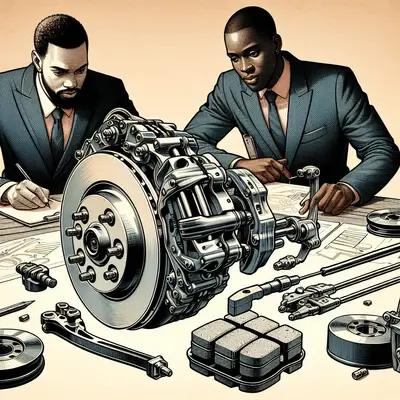
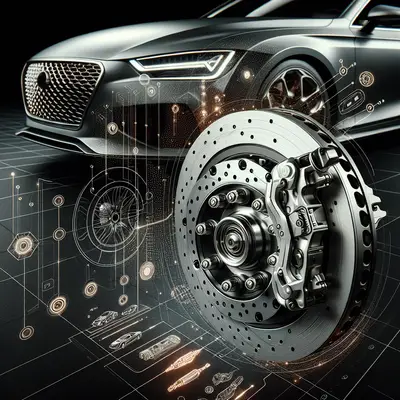
A contemporary brake system is a meticulously balanced network designed to convert motion into controlled stillness with minimal drama. At its heart is the master cylinder, which translates the pressure of your foot into hydraulic force, sending brake fluid through lines and hoses to each wheel. Calipers clamp brake pads against spinning rotors, turning kinetic energy into heat; this heat must then dissipate efficiently to prevent fade and maintain consistent stopping power.
Advanced vehicles layer electronic intelligence on top of this hydraulic core. Anti-lock braking systems (ABS) rapidly pulse braking force to prevent wheel lockup, enabling steering control during hard stops. Electronic brake-force distribution (EBD) adjusts braking pressure between front and rear wheels, while stability and traction systems can selectively brake individual wheels to keep the vehicle composed. When these systems operate in harmony, they deliver not only safety, but a subtle feeling of poise and predictability that distinguishes a well-maintained car from an ordinary one.
Exclusive Insight 1: Pedal Feel Is a Language—Learn Its Nuances
Most drivers notice only the extremes: a spongy pedal or one that feels rock-hard. A more refined approach is to read pedal feel as a nuanced, evolving language.
A consistent, firm but progressive pedal usually indicates a healthy hydraulic system and properly bedded pads. A pedal that slowly sinks at a stoplight—while maintaining braking force—may point to an internal master cylinder leak long before a full failure. A slightly “springy” or elastic sensation can suggest expanding rubber hoses under pressure, especially in older vehicles, even if stopping distances still appear acceptable.
Equally telling is the way the pedal responds during a series of moderate stops. If the first stop feels precise but subsequent stops within a minute feel softer or require more travel, it can signal fluid that’s absorbing moisture and boiling under repeated heat. A discerning driver does not wait for outright brake fade; they treat these subtle changes as early invitations to inspect, service, and restore the system to its intended clarity.
Exclusive Insight 2: Brake Fluid Quality Is a Silent Performance Divider
Brake fluid, often overlooked, is where many otherwise careful owners unintentionally compromise their safety margin. This hygroscopic fluid gradually absorbs moisture from the air, lowering its boiling point and increasing the risk of vapor formation under heavy braking. The result is a disconcerting soft pedal and reduced braking force, particularly during spirited drives, towing, mountain descents, or emergency stops.
Beyond basic replacement intervals, a premium mindset considers brake fluid like a fine instrument that must stay within a narrow performance specification. Choosing fluid that meets or exceeds your manufacturer’s DOT rating, having it professionally flushed at appropriate intervals (often every 2–3 years or as recommended), and avoiding mixing incompatible fluid types all contribute to a more consistent, authoritative brake response. For performance-oriented drivers or those in hot climates or hilly regions, upgrading to a higher-performance compatible fluid can deliver more stable braking without altering any other hardware.
The true sophistication lies not in simply changing fluid, but in timing the service before symptoms appear—treating fluid care as preventive refinement rather than reactive repair.
Exclusive Insight 3: Heat Management Is the Hidden Art Behind Every Graceful Stop
Every stop is a thermal event. Brakes convert motion into heat, and the capacity to repeatedly handle that heat without deterioration separates a merely adequate system from an exceptional one. Rotors must dissipate heat efficiently; pads must retain their friction characteristics across a wide temperature range; calipers, hoses, and seals must withstand repeated thermal cycling.
Drivers who value confidence in every situation understand that conditions such as long downhill stretches, frequent stop-and-go traffic, or driving fully loaded place a far greater thermal burden on the brakes than casual city use. The savvy approach is to adapt driving style and maintenance to this reality.
Downshifting on steep descents, leaving generous following distances to allow lighter, longer braking rather than abrupt stops, and avoiding unnecessary “riding” of the brakes all reduce thermal strain. During service, asking specifically about rotor thickness, evidence of heat spots or micro-cracking, and pad material quality elevates the conversation beyond routine pad replacement. This attention to heat management preserves not only safety margins but also the smoothness and predictability that sophisticated drivers appreciate.
Exclusive Insight 4: Electronic Aids Are Powerful—But Not a Substitute for Mechanical Excellence
Modern brake systems are increasingly supported by software: ABS, stability control, traction management, brake assist, and even automated emergency braking. While these systems can dramatically enhance safety, they all rely on sound mechanical fundamentals.
ABS, for example, can modulate braking force to prevent lockup, but it cannot compensate for severely worn pads, contaminated rotors, or degraded fluid. Automated emergency braking may reduce the severity of a collision, yet its performance is constrained by tire grip and the underlying braking hardware’s condition. If mechanical components are neglected, electronic systems often work harder—activating more frequently, engaging sooner, and masking subtle degradation until a high-demand stop exposes the underlying weaknesses.
A refined owner treats the electronics as an additional layer of assurance, not a primary safety net. Confirming that warning lights are investigated promptly, ensuring sensors and wheel speed rings remain clean and intact, and maintaining high-quality tires with proper inflation all allow these technologies to operate as originally engineered—quietly, intelligently, and without drama.
Exclusive Insight 5: Service Choices Shape Your Brakes’ Character, Not Just Their Longevity
Many brake services are presented as commodity work, yet every decision—from pad compound to rotor design to hardware quality—subtly shapes how your car feels and responds. Discerning drivers view brake service as a form of curation rather than mere replacement.
Original equipment (OE) or premium-equivalent components are engineered to balance performance, noise, dust, and comfort in a specific way. Ultra-long-life pads may extend service intervals but can increase rotor wear or reduce initial bite. Aggressive performance compounds might deliver superb high-temperature stability but introduce more noise or dust in daily use. Even “little” details—fresh anti-rattle clips, high-quality shims, and correct lubrication of sliding surfaces—make the difference between brakes that are merely functional and those that operate with refined quietness and consistency.
Engaging with a technician who is willing to discuss pad options, rotor quality, and your driving style—rather than simply offering a generic package—elevates the outcome. The goal is not over-specifying a track setup for a commuter, but rather aligning your brake system’s character with how and where you truly drive: confident in the rain, composed in an emergency, and unobtrusively refined every other day.
Conclusion
A truly sophisticated approach to brake safety goes beyond listening for squeals or waiting for dashboard warnings. It involves understanding the subtle messages carried through the pedal, respecting the quiet importance of brake fluid and heat management, recognizing the partnership between mechanical components and electronic systems, and making curated service decisions that reflect both your standards and your driving reality.
In this perspective, your brake system is not an afterthought—it is the foundation of every confident journey. By paying attention to these refined, often overlooked aspects of brake care, you preserve not just stopping distance, but also the composed, assured character that defines a truly well-kept automobile.
Sources
- [National Highway Traffic Safety Administration (NHTSA) – Brakes and Safety Systems](https://www.nhtsa.gov/equipment/brakes) - Authoritative information on brake safety, system components, and regulatory standards
- [U.S. Department of Transportation – Brake Systems Technical Resources](https://www.transportation.gov/mission/safety) - Federal guidance and safety research related to vehicle braking and control systems
- [Society of Automotive Engineers (SAE) – Brake Systems Technical Papers](https://www.sae.org/search/?qt=brake%20system) - Engineering research on brake performance, heat management, and advanced systems
- [University of Nebraska–Lincoln – Automotive Brake Systems Educational Materials](https://communitycolleges.nebraska.edu/west/AutomotiveService/Pages/BrakeSystems.aspx) - Educational overview of brake components, hydraulics, and maintenance practices
- [Bosch Mobility Solutions – Brake System Technology](https://www.bosch-mobility.com/en/solutions/passenger-cars-and-light-commercial-vehicles/braking-systems/) - Manufacturer perspective on modern braking technologies and electronic assist systems
Key Takeaway
The most important thing to remember from this article is that this information can change how you think about Brake Systems.