Modern motoring is defined less by horsepower than by restraint. True confidence on the road comes not from how quickly a vehicle can surge forward, but from how predictably, quietly, and consistently it can come to rest. For drivers who view their car as a precisely tuned instrument rather than mere transportation, brake repair is not a last‑minute emergency—it is a curated discipline.
This guide explores brake repair from a premium, safety‑first perspective. Beyond basic maintenance, it offers five exclusive insights that discerning owners can use to elevate both safety and driving refinement.
Understanding Brake Repair as a Safety System, Not a Single Part
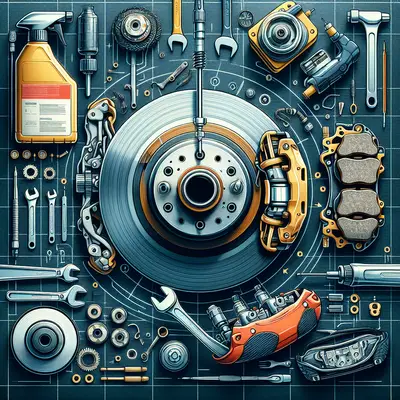
Many owners still think of “brake repair” as replacing pads when they squeal. In reality, a braking system is an ecosystem: pads, rotors, calipers, brake fluid, lines, ABS modules, wheel speed sensors, and even tires harmonize to create that controlled, linear stop.
When you approach repair as system stewardship rather than part swapping, your decisions change. You begin to consider how pad compound interacts with rotor metallurgy, how caliper slide lubrication influences pedal feel, and how fluid condition affects ABS performance under panic braking. This perspective also reveals why “just the cheapest pads” is a false economy—especially in heavier or performance-oriented vehicles.
For the safety‑conscious driver, brake service becomes less about reacting to noise and more about preserving consistency: repeatable stops, predictable pedal travel, and balanced braking at every wheel. That consistency is the hallmark of a carefully maintained car.
Exclusive Insight #1: The Signature of a Healthy Brake Pedal
Most drivers focus on sounds; sophisticated drivers focus on feel.
Your brake pedal has a “signature” feel that is as distinct as a firm handshake. When the system is healthy, you experience a smooth, progressive increase in resistance as you press, followed by a calm, predictable deceleration. There should be no sponginess, abrupt grabs, or pulses—just a composed, linear response.
Subtle changes in this signature often speak before any warning light does:
- A soft, sinking pedal can signal air in the lines, moisture‑laden fluid, or an internal master cylinder leak.
- A higher, overly firm pedal may indicate swollen rubber lines or pad glazing.
- A pulsing or “heartbeat” pedal under gentle braking suggests rotor thickness variation or warped rotors.
- A longer pedal travel at startup may reflect vacuum issues with the brake booster or system imbalance.
Refined drivers periodically test pedal feel in a safe, low‑traffic area. They are alert to even slight deviations, documenting changes between services. By treating the pedal as a diagnostic instrument rather than a mere control, you catch developing faults early—before they become true safety hazards.
Exclusive Insight #2: Brake Fluid as the Hidden Guardian of Stopping Power
Brake fluid rarely joins the conversation at dealership waiting rooms, yet it quietly defines the upper limits of your stopping performance.
Brake fluid is hygroscopic—it absorbs moisture over time, even in sealed systems. That moisture does three critical things you never want near a braking system:
- Lowers the boiling point, making the system more vulnerable to brake fade during repeated hard stops or mountain descents.
- Promotes internal corrosion of calipers, ABS valves, and steel lines.
- Alters pedal feel, introducing a soft or inconsistent response as microbubbles and degraded fluid compress under pressure.
For drivers who value precision, brake fluid is treated as a scheduled component, not a casual afterthought. Instead of waiting for a catastrophic failure, they:
- Follow or exceed the manufacturer’s recommended flush interval—often around every 2–3 years, sooner in humid climates or for heavy use.
- Use a fluid that meets or exceeds the specified DOT rating, and ensure it is from a reputable brand with clear boiling point data.
- Request documentation of fluid color and condition during service, treating it as seriously as engine oil.
In high‑demand driving—towing, long downhill stretches, or spirited mountain roads—the difference between fresh, high‑integrity fluid and neglected fluid can be the difference between decisive stopping and a vague, unnerving pedal at precisely the wrong moment.
Exclusive Insight #3: Rotor Finish and Pad Compound as a Deliberate Pairing
Brake pads and rotors are often replaced independently, yet their interaction is where finesse (and safety) truly lives.
Rotors are not simply metal discs to be “turned” or replaced; their surface finish, hardness, and thickness variation all dictate how consistently your brakes behave. Pads are not just friction material; their compound—ceramic, semi‑metallic, low‑metallic—determines noise, dust, and heat management.
Discerning owners approach this pairing with intention:
- Pad selection aligns with driving style. Ceramic pads tend to offer quieter, low‑dust performance—ideal for luxury daily driving—while semi‑metallic pads handle heat more robustly, better suited to heavier vehicles or more demanding use.
- Rotor quality is not compromised. Cheap rotors often have less precise machining and inferior metallurgy, making them more prone to warping or developing thickness variation.
- The rotor surface is respected. After installation, proper bedding‑in of pads and rotors—a structured series of moderate stops to transfer an even layer of pad material—dramatically reduces noise, vibration, and uneven wear.
The result of a thoughtful pad‑rotor pairing is more than shorter stopping distances; it is a calm, glass‑smooth deceleration with minimal noise and steering wheel vibration. That is the tactile luxury you feel every time you gently roll off a highway exit.
Exclusive Insight #4: Environmental and Driving Context as a Service Multiplier
Brake systems age differently in different environments. A city‑driven sedan in a coastal climate lives a markedly different life than a highway cruiser in the dry interior states. Sophisticated brake care acknowledges context.
Consider how these factors shift your ideal service rhythm:
- Stop‑and‑go urban driving causes frequent, moderate‑intensity braking, generating consistent heat cycles that accelerate pad and rotor wear.
- Hilly or mountainous routes demand frequent braking on descents, heightening the risk of fade and rotor warping if components or fluid are marginal.
- Coastal or snowbelt regions expose brake hardware to salt and corrosion, attacking caliper slides, backing plates, and steel lines from the outside in.
- Occasional-use or garaged vehicles may suffer from surface rust on rotors and stiffening of rubber components, even with low mileage.
Premium brake care personalizes inspections and replacement intervals based on how and where the car lives. A cautious owner might request pre‑season inspections before harsh winters or extended road trips, focusing deliberately on caliper freedom of movement, condition of dust boots, line corrosion, and rotor surface integrity.
Safety, in this context, is not defined only by mileage—it is defined by exposure.
Exclusive Insight #5: The “Balanced Axle” Philosophy for Consistent Stability
Braking stability depends on symmetry. When one end—or one side—of the vehicle is maintained to a higher standard than the other, elegance gives way to unpredictability.
The “balanced axle” philosophy is simple: treat each axle as a matched set. Whenever feasible:
- Replace brake pads in pairs on the same axle, never just on one side.
- Evaluate rotors as a pair, replacing both if one is below spec, warped, or excessively worn.
- Compare caliper function left-to-right—sticking or dragging on one side can subtly pull the car under braking or create uneven pad deposits.
- Consider proportioning: if you significantly alter pad compounds on one axle (for example, more aggressive fronts), ensure the overall brake balance remains stable and predictable.
This symmetry is more than a technical nicety. Under hard braking, especially in wet or uneven conditions, the vehicle’s composure depends on each wheel contributing as intended. An unbalanced system can cause directional pulls, premature ABS activation, or loss of composure during evasive maneuvers.
Discerning owners routinely ask their technicians whether work is being done symmetrically, requesting clear explanations whenever it is not. That single question often distinguishes routine maintenance from truly premium brake care.
Elevating Brake Repair to an Ongoing Safety Ritual
Brake repair, at its highest level, is less about emergencies and more about rituals: periodic inspections, attentive listening to pedal and vehicle behavior, and thoughtful component selection. The reward is not merely the absence of problems; it is an enduring sense of control every time you approach a traffic light, a steep descent, or a sudden lane closure.
By understanding your brake pedal’s signature, respecting brake fluid as a safety-critical component, pairing pads and rotors intentionally, adjusting service to your driving environment, and preserving balance across each axle, you turn a routine service item into a refined safety practice.
In a world that celebrates acceleration, the most sophisticated statement a driver can make is a calm, precise, utterly predictable stop.
Sources
- National Highway Traffic Safety Administration (NHTSA) – Brakes and Safety – Overview of brake safety considerations and federal guidance on braking systems.
- U.S. Department of Transportation – Brake Maintenance Basics – Government recommendations on proper brake inspection and maintenance practices.
- AAA – Car Brakes: How They Work and When to Service Them – Consumer-focused explanations of brake components, warning signs, and service intervals.
- Car Care Council – Understanding Brake System Service – Industry-backed guidance on comprehensive brake service and why system-level maintenance matters.
- University of Kentucky College of Engineering – Brake System Fundamentals – Educational material on the engineering principles behind automotive brake systems and performance.
Key Takeaway
The most important thing to remember from this article is that this information can change how you think about Repair Guides.