Brake confidence is not about how hard the pedal can bite—it’s about how predictably, quietly, and consistently your vehicle comes to rest. For drivers who treat safety as a non‑negotiable luxury, the brake system is less a collection of parts and more a finely tuned ecosystem. Understanding how to read that ecosystem, beyond the usual “squeaks and warning lights,” is what separates routine ownership from genuinely elevated stewardship.
This guide explores the subtleties that careful drivers use to evaluate, preserve, and refine their brake performance, with five exclusive insights that rarely appear in standard maintenance advice but matter profoundly when the goal is graceful, controlled stops—every time.
The Signature of a Healthy Brake Pedal
Most drivers only think about the pedal when it feels wrong—too soft, too hard, or alarmingly low. A more sophisticated approach is to treat pedal feel as an ongoing diagnostic signal.
A well‑maintained brake system communicates through the pedal with consistent resistance and a clear, progressive build of stopping force. You should feel a defined “take‑up” point—where the pads begin to engage the rotors—followed by smooth, linear response. Any change in this familiar signature, even if the vehicle still stops adequately, deserves attention. A slightly longer pedal travel may indicate early pad wear or minor air intrusion into the hydraulic circuit. A firmer‑than‑usual pedal can hint at a sticking caliper or swollen brake hose limiting fluid movement. The refined driver consciously notices pedal nuance during everyday driving, long before a warning light or loud noise forces the issue.
Exclusive Insight #1: Create a “Pedal Baseline Ritual.”
Once a month, on the same stretch of familiar road, perform three controlled stops from moderate speed, paying close attention to pedal travel, firmness, and how early the brakes begin to respond. Treat this as a baseline check. Document any change in feel or stopping distance in a small logbook or notes app. This ritual makes you the first, best sensor your brake system has.
The Art of Listening for Quiet Imperfections
Noises are often dismissed as “just brakes” until they become intrusive. A more discerning perspective recognizes that the character of a sound matters as much as its volume.
A brief, faint squeal during the first few stops on a damp morning can be normal surface rust being wiped from rotors. A light chirp at very low speeds may simply reflect pad formulation. By contrast, a rhythmic scraping that rises and falls with wheel speed often signals rotor issues or a pad worn down to its backing plate. Grinding, even if intermittent, is never trivial; it usually means metal‑to‑metal contact and accelerated damage.
Beyond the obvious, subtle “shushing” or whispery sounds under gentle braking can be early indicators of glazing (overheated pads and rotors) or uneven pad deposits on the rotor surface. These don’t necessarily impair emergency stopping yet, but they compromise smoothness and can evolve into pulsation, vibration, and longer stops if ignored.
Exclusive Insight #2: Evaluate Brakes in Complete Silence.
Choose a quiet, traffic‑free road, turn off the audio system, and perform a series of gentle, medium, and firm stops. Listen not only for squeal or grinding, but for faint rhythmic patterns, scraping, or changes in tone between light and heavy pedal pressure. This “silent session” once per season can reveal emerging issues before they become costly repairs.
Brake Balance: Beyond Pulling and Pulsation
Most articles reduce brake balance to “does the car pull to one side?” but that’s only the most obvious failure mode. Superior brake performance is about symmetry—left to right, and front to rear.
Under gentle braking on a straight road, a properly balanced system keeps the vehicle tracking dead straight with no steering correction. Under more assertive braking, the front should accept most of the load, but the rear must contribute enough to prevent the nose from diving excessively. Anti‑lock braking systems (ABS) and electronic brakeforce distribution (EBD) subtly manage this choreography, but they cannot fully compensate for neglected hardware: sticky calipers, contaminated pads, or mismatched parts can undermine balance.
Even without a pull, you can detect imbalance by feel. A brake that causes the front end to “nod” sharply forward suggests the rear brakes may be underperforming, forcing the front to do too much work. A car that feels unsettled or “skittish” in the rear when braking over uneven surfaces may be suffering from rear brake or suspension issues compromising stability. Over time, such imbalances quietly extend stopping distances and accelerate wear in unexpected places.
Exclusive Insight #3: Use Lane Markers as an Alignment Test.
On an empty, straight roadway, align the vehicle carefully within your lane and apply smooth, moderate braking without steering correction. Watch where the car finishes relative to the lane markings. If you consistently drift toward one side, even slightly, your system may have a hidden balance problem—worth discussing with a trusted brake specialist before it turns into visible pulling or uneven wear.
Thermal Discipline: Respecting Heat in Everyday Driving
Everything about modern brake design is a conversation with heat. Pads convert kinetic energy into thermal energy; rotors absorb and dissipate it; fluid endures it. Refined drivers understand that how they use their brakes determines how gracefully that heat is managed.
Repeated heavy stops from high speeds, holding the pedal firmly while stationary after a hard stop, or descending long grades using only the brakes rather than engine braking all accelerate heat buildup. Excess heat can fade braking power temporarily, but long before obvious fade appears, it can subtly harden rubber seals, accelerate pad glazing, and encourage uneven rotor deposits—leading to vibration and inconsistency.
Your relationship to heat is also influenced by vehicle loading. A fully loaded SUV with passengers and luggage can silently double the stress placed on the braking system, particularly on steep descents. Modern systems are engineered with margins of safety, but intentionally preserving those margins is the hallmark of an attentive driver.
Exclusive Insight #4: Practice “Cooling Stops” After Demanding Braking.
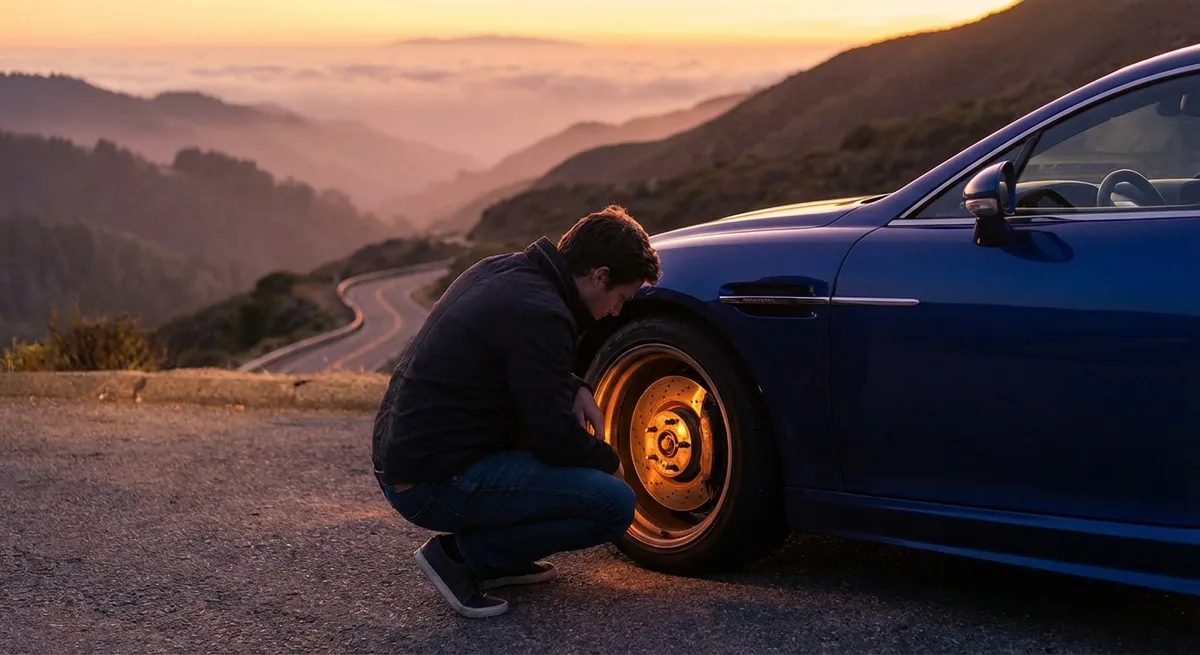
After a sequence of hard stops—spirited driving, towing, or descending a long hill—avoid coming to a complete stop and holding the pedal firmly with glowing‑hot brakes. Instead, if safe, roll the car slightly a few times while stopped (releasing and gently reapplying the brake) or come to rest using lighter brake pressure. This minimizes the risk of imprinting hot spots on rotors and helps maintain smoother, vibration‑free braking in the long term.
Brake Fluid: The Overlooked Lifeline of Consistent Stopping
Brake fluid is rarely visible and almost never discussed in casual conversations, yet it is the quiet foundation of every confident stop. It must transmit your foot’s pressure instantly and consistently, even when exposed to extreme heat near the wheels.
Most modern vehicles use glycol‑based fluids (DOT 3, 4, or 5.1) that are hygroscopic—they gradually absorb moisture from the air. Over time, this moisture lowers the fluid’s boiling point and can promote internal corrosion in calipers, lines, and ABS components. The result is not always dramatic fade; more often, it is subtle inconsistency: the pedal that occasionally feels “mushy” after long descents, or the system that becomes harder to bleed properly as internal corrosion progresses.
A premium‑minded approach treats brake fluid not as an afterthought, but as a scheduled replacement item. Manufacturers commonly recommend 2–3 year intervals, even when mileage is low. For vehicles used in hilly regions, coastal climates, or heavy traffic where brakes run hotter, this discipline becomes especially important. High‑performance or “racing” fluids may offer higher boiling points, but they are not always the best choice for daily driving, as they can absorb moisture more quickly and demand more frequent service.
Exclusive Insight #5: Ask for a Measured Moisture or Boiling-Point Test.
When servicing brakes at a reputable shop, request a brake fluid test using a proper electronic tester or boiling‑point tool rather than relying solely on vehicle age. This provides an objective measure of fluid condition, allowing you to replace it based on performance metrics—not guesswork. For drivers who value repeatable, confidence‑inspiring pedal feel, this is one of the most cost‑effective upgrades you can make.
Conclusion
A sophisticated approach to brake safety is less about dramatics and more about quiet mastery: knowing how your brakes should feel, sound, and respond—and noticing when they begin to stray from that standard. By cultivating a detailed awareness of pedal character, subtle sounds, brake balance, thermal behavior, and fluid condition, you elevate your role from passive owner to active curator of your vehicle’s most important safety system.
This level of attention is not about anxiety; it is about assurance. Every refined stop, every smooth deceleration in traffic, and every controlled descent on a steep road reflects hundreds of micro‑decisions you have made to respect and preserve the integrity of your brake system. For the discerning driver, that is not merely maintenance—it is craftsmanship in motion.
Sources
- [National Highway Traffic Safety Administration – Brakes and Safety Systems](https://www.nhtsa.gov/equipment/brakes) – Overview of brake system safety, performance expectations, and component function
- [U.S. Department of Transportation – Federal Motor Vehicle Safety Standards for Brakes](https://www.ecfr.gov/current/title-49/subtitle-B/chapter-V/part-571#p-571.105) – Regulatory standards governing hydraulic brake systems in passenger vehicles
- [AAA – How to Know When Your Brakes Need Servicing](https://www.aaa.com/autorepair/articles/how-to-know-when-your-brakes-need-servicing) – Practical guidance on brake symptoms, noises, and service intervals
- [Brembo – Brake Fluid: Characteristics and Maintenance](https://www.brembo.com/en/company/news/brake-fluid-characteristics-and-maintenance) – Technical explanation of brake fluid properties, boiling points, and replacement recommendations
- [MIT School of Engineering – The Physics of Braking](https://engineering.mit.edu/engage/ask-an-engineer/how-does-a-car-brake-work/) – Educational discussion of the physics behind braking, heat generation, and stopping distances
Key Takeaway
The most important thing to remember from this article is that this information can change how you think about Brake Systems.