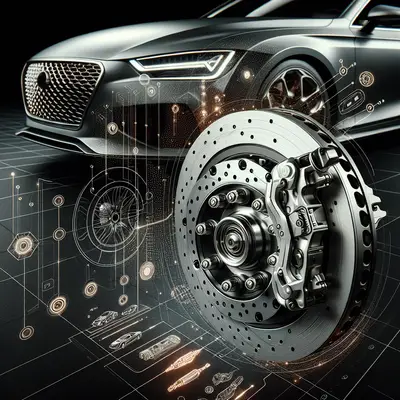
Every confident stop begins long before your foot meets the pedal. For the discerning driver, brake performance is not merely a technical detail; it is a quiet promise of control, composure, and safety in every mile. Understanding how your brake system truly works—and how subtle choices and habits influence its behavior—transforms routine maintenance into an elevated form of stewardship over your car and your own safety.
This guide explores the modern brake system with particular attention to refined, real‑world practices. Along the way, you’ll find five exclusive insights that safety‑minded owners rarely hear from a quick-service lane, yet can meaningfully influence how gracefully and reliably your vehicle comes to rest.
The Modern Brake System: An Elegant Chain of Decisions
At its core, a brake system is an energy‑management device. Your vehicle’s momentum is converted into heat at the wheels, and the entire system is designed to control where that heat is created, how it is dissipated, and how consistently it can repeat the process.
From pedal to pavement, the path looks simple: your foot presses the pedal, the master cylinder converts this into hydraulic pressure, calipers clamp against rotors or drums, and friction converts motion into heat. Yet the refinement lies in the subtleties: line routing to avoid air pockets, rotor vane design to encourage cooling airflow, pad compounds tailored to temperature ranges, ABS and stability control algorithms that modulate pressure more rapidly than a human foot ever could.
For a premium, safety‑focused driver, the question is not “Do my brakes work?” but “How predictably, how consistently, and under what conditions do they continue to protect me?” The answers live in the details—details that are often overlooked in basic maintenance conversations.
Insight 1: Brake Feel Is a Safety Signal, Not a Luxury
Many owners treat “pedal feel” as a matter of comfort or driving enjoyment, but it is first and foremost a diagnostic tool. The way the pedal responds, travels, and firms up under your foot provides real‑time feedback on hydraulic integrity, pad condition, and even heat saturation.
A pedal that gradually becomes softer during repeated stops can hint at fluid boiling or calipers struggling with heat—an early sign that your braking system is approaching its thermal limits. A high, rock‑hard pedal that stops the car but feels abrupt may indicate overly aggressive pad compounds for your driving style or conditions. A spongy, springy pedal after a fluid change can reveal trapped air or improperly bled lines.
Treat your pedal feedback as an instrument gauge you feel instead of see. Make a mental note of how it behaves on a familiar stretch of road, at a familiar speed, once a month. Subtle changes—slightly increased travel, a delay in initial bite, or a new vibration—are your cue to investigate long before a warning light illuminates. For the attentive owner, pedal feel becomes an early‑warning system and one of the most refined safety tools at your disposal.
Insight 2: Brake Fluid Age Matters More Than Brake Pad Brand
Brake pads attract most of the attention, yet brake fluid quietly underpins the entire system. It transfers the force of your foot to each wheel, maintains pressure under extreme temperatures, and resists moisture that can corrode internal components. While many drivers obsess over pad choices, they underestimate how dramatically old, moisture‑laden fluid can degrade braking performance.
Brake fluid is hygroscopic—it naturally absorbs water over time, even in a sealed system. As water content rises, boiling temperature falls, increasing the risk of “vapor lock” under heavy braking. The result can feel like sudden, alarming fade: the pedal sinks farther, becomes soft, and requires more effort for the same deceleration.
A premium approach is to treat the brake fluid service interval as a non‑negotiable safety ritual, not a suggestion. Even if mileage is low, a conservative interval of every 2–3 years is a strong safeguard, especially in humid climates or for vehicles that see spirited driving or mountain descents. Ask your shop to test fluid boiling point or moisture content, and request that they record results in your maintenance log. It is a small, invisible investment with an outsized effect on your ability to stop confidently when it matters most.
Insight 3: Heat Management Is the Hidden Currency of Safer Braking
For most drivers, brake wear is framed as a matter of friction material and mileage. In reality, the true limiting factor is often heat. Rotors, pads, calipers, and fluid all have temperature ranges where they perform at their best; exceed those ranges often enough, and safety margins quietly erode.
Long downhill descents, towing, repeated high‑speed stops, or aggressive city driving can push brakes into thermal stress. The symptoms—longer stopping distances, odor of overheated pads, shimmering rotors, or pedal fade—are only the visible tip of the iceberg. Repeated overheating can subtly harden pad surfaces (glazing), warp rotor faces, and accelerate fluid degradation.
Exclusive Insight: “Staged Braking” as a Heat‑Conscious Technique
A refined driving habit that significantly protects your brake system is “staged braking” on predictable stops. Rather than delaying until the last practical moment, ease into braking slightly earlier with a firm, progressive initial application, then taper pressure smoothly as you roll to a stop. This allows more time for airflow over the rotors and less peak temperature per stop.
On long downhill grades, alternate short, firm braking intervals with periods of coasting in gear rather than constant light pressure. This gives the brakes time to cool between applications and can meaningfully extend pad, rotor, and fluid life—while maintaining better consistency in pedal feel throughout the descent.
Insight 4: Rotor Quality and Finish Shape How Calmly Your Car Stops
Rotors are often viewed as generic hardware, replaced on price or convenience. Yet subtle differences in rotor design and manufacturing can change how smoothly and quietly your car decelerates, particularly over time.
Premium rotors typically offer:
- More uniform metallurgy for consistent heat distribution
- Precision machining to reduce thickness variation and runout
- Finely finished braking surfaces that help new pads bed in evenly
- Carefully designed cooling vanes to channel air through the rotor
These refinements reduce the likelihood of steering wheel vibration under braking and minimize the uneven pad deposits that drivers often mislabel as “warped rotors.” Combined with proper torque on lug nuts (even, correct tightening is critical), a quality rotor can maintain composure and smoothness for significantly longer.
Exclusive Insight: Insisting on Rotor Runout Measurement
When replacing rotors, request that your technician measure rotor runout and hub cleanliness rather than relying solely on visual inspection. A thin film of rust or debris between hub and rotor can create minute misalignment that eventually translates into pulsation at the pedal. Asking for runout measurements—not just “bolt‑on and go”—is a quiet, expert‑level step that separates routine brake work from truly refined brake service.
Insight 5: Your Driving Environment Should Inform Your Brake Setup
Modern brake systems are engineered as a balanced package, but that balance assumes typical use. Where and how you drive should guide nuanced choices about pads, rotors, and even inspection frequency.
- Urban stop‑and‑go: Frequent light‑to‑moderate braking stresses pad material and caliper slide components. A premium low‑dust, low‑noise pad with excellent cold performance can keep engagements smooth and predictable, while routine cleaning of caliper hardware preserves even pad application.
- Mountain or hilly regions: Heat resistance becomes dominant. A pad compound with stable friction at higher temperatures, combined with rotors designed for superior cooling, is a quiet ally on long descents.
- High‑speed commuting: Repeated moderate‑to‑firm stops from highway speeds reward balanced pad choices and meticulous tire maintenance. Grip is the final link in the braking chain; high‑quality, properly inflated tires with appropriate tread depth are as crucial as the best rotors.
Exclusive Insight: Align Brake Service With Tire Rotations
For the meticulous owner, one elegant practice is to treat each tire rotation as a structured mini–brake inspection. At these intervals, request that your shop document pad thickness at each wheel, rotor condition, and any signs of fluid seepage or uneven wear. Over time, you will build a pattern—a narrative of how your braking system ages. Recognizing deviations from that pattern early often prevents more serious, safety‑critical failures later.
Insight 6: ABS and Stability Systems Are Only as Smart as Their Foundation
Anti‑lock braking systems (ABS), traction control, and electronic stability control (ESC) are now standard on modern vehicles and quietly intervene far more often than most drivers realize. They sense slip, modulate pressure, and help keep the vehicle composed when traction is compromised. Yet these systems do not create friction or grip—they optimize what the underlying mechanical system and tires can provide.
A neglected brake system with uneven pad wear, contaminated rotors, or low‑quality fluid forces ABS and ESC to work harder and less predictably. Likewise, worn or mismatched tires can cause the system to interpret normal braking as incipient loss of control. The result can be a slightly “nervous” feel in emergency maneuvers, or ABS activation earlier than expected on marginal surfaces.
Exclusive Insight: Practicing One Controlled ABS Stop Each Season
In a safe, empty, straight‑line environment—such as a deserted, dry parking lot—performing one or two firm, straight‑line stops each season can be remarkably educational. It allows you to feel how your ABS behaves, verify that the system engages smoothly rather than abruptly, and notice any unusual noises or pulsations. This calm, controlled rehearsal can reduce the surprise factor in a real emergency stop and subtly reinforces your confidence in both the system and your own responses.
Conclusion
Sophisticated brake care is not about obsessing over every component—it is about understanding how the system behaves as a whole, then making quiet, informed decisions that preserve its integrity. By listening to brake feel, respecting fluid age, managing heat, insisting on rotor and hardware quality, tailoring your setup to your environment, and periodically validating ABS behavior, you elevate brake maintenance from a reactive chore to a proactive safety discipline.
For the discerning driver, these details are not indulgences; they are the foundation of poise and control in the moments that matter most. Each refined habit you adopt becomes an invisible layer of protection—one that begins before every journey and accompanies you, silently, to every safe and confident stop.
Sources
- U.S. National Highway Traffic Safety Administration (NHTSA) – Brake Systems Overview – Explains the fundamentals of vehicle braking systems and their role in overall safety
- AAA – Understanding Your Vehicle’s Braking System – Consumer‑focused overview of brake components, function, and basic maintenance recommendations
- University of Nebraska–Lincoln – Vehicle Brake System Basics – Educational explanation of brake system operation and failure modes
- Bosch Mobility – ABS and ESP Systems – Technical insight into the function and benefits of ABS and stability control systems
- Continental – Brake Fluid Information – Details on brake fluid properties, moisture absorption, and recommended service considerations
Key Takeaway
The most important thing to remember from this article is that this information can change how you think about Brake Systems.