For the driver who demands more than “good enough,” braking is not merely a function; it is a quiet assurance that every journey can end as gracefully as it begins. True brake maintenance is less about reacting to obvious failures and more about cultivating a disciplined, almost curatorial care for the systems that protect you. This is where routine becomes ritual—measured, thoughtful, and exacting.
In this guide, we look beyond basic checklists to explore refined, safety‑focused maintenance practices. You will discover five exclusive insights that turn ordinary upkeep into a precise craft, elevating your confidence every time your foot meets the pedal.
Understanding the Character of Your Braking System
Before discussing maintenance, it is useful to understand that no two braking systems feel exactly the same. Material choices, caliper design, booster tuning, and electronic assists all give a vehicle its own “braking character.” A discerning owner will deliberately learn that character—how the pedal feels when new, how the car behaves when cold, how it responds during repeated stops, and how it performs fully loaded versus lightly occupied.
This familiarity becomes your baseline, the reference point against which you can detect subtle changes long before they become safety issues. A slightly lengthened pedal travel, a softer “bite” at low speeds, or a faint vibration during highway deceleration becomes a meaningful signal instead of a vague annoyance. By cataloging these sensations in your mind—almost like recognizing the nuances of a familiar voice—you transform subjective impressions into an early‑warning system that works every time you drive.
The Foundation: Fluid Discipline and Thermal Respect
Brake fluid is often the least glamorous yet most consequential component of your system. Over time, it absorbs moisture, which degrades its boiling point and encourages internal corrosion. When fluid temperature rises—during long descents, brisk driving, or towing—a compromised boiling point can allow vapor to form in the lines, softening pedal feel and, in extreme situations, reducing braking effectiveness when you need it most.
A premium approach treats brake fluid as a consumable, not an afterthought. Follow the severe‑use service interval in your owner’s manual or, if your driving is performance‑oriented or heavily urban, consider shorter intervals. Insist on high‑quality fluid that meets or exceeds your vehicle’s specified DOT rating, and have the system properly bled to remove old fluid and trapped air. Pay particular attention after any major brake work: a full, methodical bleed restores the crisp, linear pedal feel that distinguishes an adequately serviced car from a truly well‑maintained one.
Thermal respect extends beyond fluid. After repeated hard stops—such as when descending a steep grade—allow the brakes to cool gently. Avoid resting your foot heavily on the pedal at a complete stop after very aggressive braking, as this can leave pad “imprints” on rotors and introduce unevenness that you may later feel as a subtle pulsation. Treat temperature as an invisible, but very real, element of your maintenance routine.
Beyond Wear Limits: Evaluating Quality, Not Just Quantity
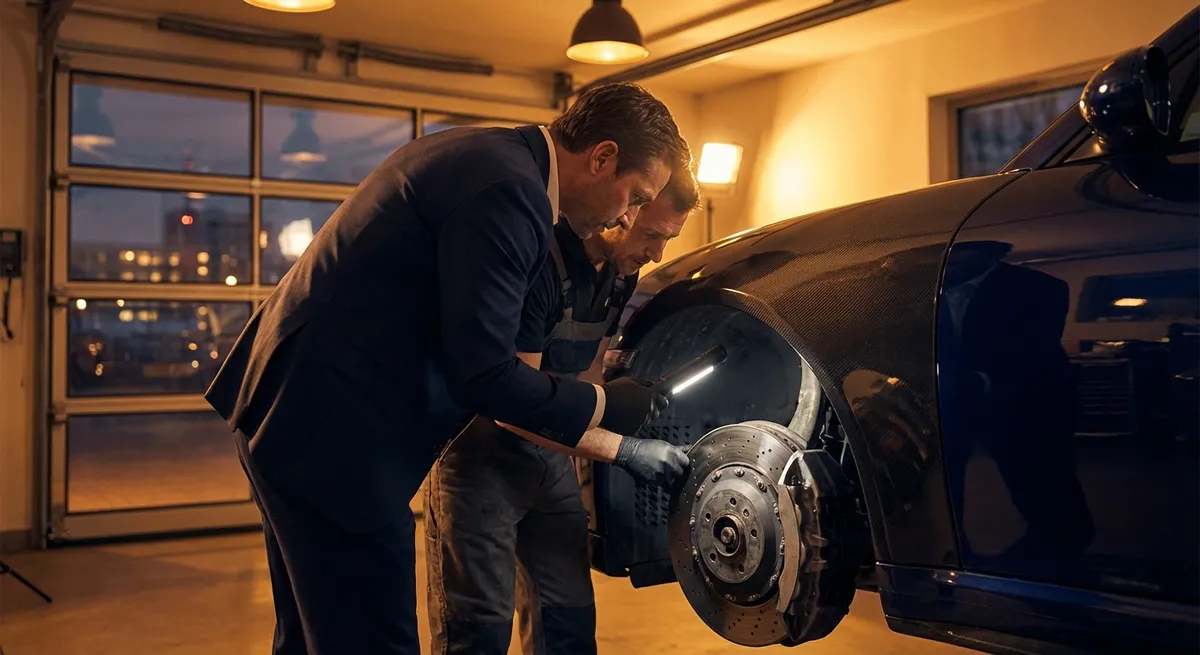
Many owners think of brake maintenance as simply replacing pads and rotors when they reach minimum thickness. A more refined perspective evaluates not only how much material remains, but the quality of how that material is wearing. A glance through the wheel at a service station is rarely enough; periodic, intentional inspections are your opportunity to catch early patterns that reveal deeper issues.
Look for even pad contact across the rotor surface. Dark, patchy or heavily scored areas can point to sticking caliper slide pins, misaligned hardware, or contamination from road chemicals and grease. Rust ridges at the rotor’s outer edge or on the hat surface can, over time, reduce effective contact area. Inner pads sometimes wear faster than outer ones—an asymmetry that hints at caliper or hardware concerns hidden from casual view.
When replacement is necessary, treat it as a chance to improve, not simply restore. Choose pads and rotors that are appropriate to your driving environment: high‑quality, low‑noise formulations for urban commuting; more temperature‑resistant compounds for spirited or heavy‑duty use. A sophisticated approach works with your technician to balance initial bite, fade resistance, noise, dust, and component longevity, crafting a brake setup that matches your expectations rather than defaulting to the cheapest available option.
Five Exclusive Insights for Safety‑Focused Owners
Discerning drivers often sense that “there must be more” to proper brake maintenance than standard advice suggests. The following five insights speak directly to that instinct, revealing nuances that many service routines miss:
Pedal Feel is a Diagnostic Tool, Not Just a Comfort Measure
A firm, consistent pedal is more than a luxury—it is an active indicator of system health. Gradual sponginess, even without obvious leaks, can signal moisture‑laden fluid, microscopic air ingress, or internal hose degradation. A slightly sinking pedal under steady pressure may suggest master cylinder concerns long before they become critical. Treat any change in pedal feel as data, worthy of attention and documentation, not something to “get used to.”
Brake Hoses Quietly Age from the Inside Out
Rubber brake hoses can swell internally or delaminate as they age, even when they appear acceptable externally. This can cause uneven braking, pulling to one side, or pads that drag slightly and overheat. On older vehicles—or cars kept long term—proactive replacement of flexible hoses with high‑quality OEM or carefully chosen upgraded components is not indulgent; it is an investment in consistent, predictable response under pressure.
Your Wheel Choice Influences Brake Performance and Cooling
Wheels are often chosen for aesthetics, yet their design affects airflow around the brakes. Enclosed, style‑driven wheels may retain more heat, especially in stop‑and‑go conditions or spirited driving. This additional heat stresses pads, rotors, and fluid. For safety‑conscious owners, prioritizing wheels with proper ventilation and selecting tire sizes that preserve factory braking geometry helps maintain the engineered balance of your system.
Wheel Torque and Clean Mounting Surfaces Protect Rotor Integrity
Uneven or excessive lug nut torque can introduce rotor distortion over time, leading to pedal pulsation that many drivers attribute only to “warped rotors.” Insist that wheels be mounted to clean, corrosion‑free hubs and tightened with a calibrated torque wrench in the correct pattern. This simple detail, often overlooked in rushed service environments, can significantly extend rotor life and preserve smooth, vibration‑free braking.
Driving Technique is a Form of Ongoing Maintenance
How you use your brakes day‑to‑day has a direct impact on their health. Smooth, anticipatory deceleration with firm, decisive applications is kinder to the system than constant light dragging. For new pads and rotors, a correct bedding‑in procedure—progressively heating and cooling the components through controlled stops—helps establish an even transfer layer and more consistent performance. Thoughtful technique minimizes glazing, reduces premature wear, and keeps the braking surface in its optimal condition.
Together, these insights move you past basic servicing into an elevated stewardship of your vehicle’s most important safety system. They are subtleties, certainly—but in braking, subtleties matter.
Partnering with the Right Expertise
Even the most knowledgeable owner benefits from a trusted professional partner. The distinction lies in how you engage with them. Rather than simply requesting “a brake job,” articulate the sensations you have noticed—pedal changes, noises, vibrations, or shifts in stopping distance. Ask for measurements and observations in return: rotor thickness variation, pad wear patterns, and fluid condition.
A sophisticated maintenance relationship is collaborative, not passive. Expect your service provider to use quality parts, proper torque procedures, and correct bleeding techniques. If you drive in demanding conditions—mountainous routes, frequent towing, or high‑performance usage—be candid about it. The more your technician understands your braking demands, the more precisely they can tailor component choices and service intervals.
Finally, maintain a record of brake‑related work as carefully as you would major engine or transmission service. Documenting fluid changes, pad and rotor replacements, and any hardware updates not only supports resale value, but also gives you a clear narrative of your system’s evolution—an elegant logbook of every careful stop you have prepared for in advance.
Conclusion
Sophisticated brake maintenance is not about paranoia; it is about precision. When you treat your braking system as a vital, finely tuned instrument—rather than a background necessity—you gain more than reliable stops. You gain composure, a sense that each journey is underwritten by careful thought and deliberate practice.
By reading the character of your brakes, respecting heat and fluid integrity, evaluating the quality of wear, applying nuanced insights, and working with informed professionals, you elevate routine maintenance into something far more meaningful: a quiet, constant commitment to arriving safely, every time.
Sources
- [NHTSA – Brakes and Safety Information](https://www.nhtsa.gov/equipment/brakes) - U.S. National Highway Traffic Safety Administration overview of brake safety and performance considerations
- [AAA – How to Know When You Need Brake Service](https://exchange.aaa.com/automotive/maintenance-repair/how-to-know-when-you-need-brake-service/) - Practical guidance from AAA on recognizing brake wear and maintenance needs
- [Brake Fluid and Your Vehicle’s Stopping Power – University of Nebraska–Lincoln](https://ianrnews.unl.edu/brake-fluid-and-your-vehicles-stopping-power) - Educational explanation of brake fluid function, moisture absorption, and replacement intervals
- [Ford Motor Company – Understanding Your Braking System](https://www.ford.com/support/how-tos/owner-resources/vehicle-features/under-the-hood/how-brakes-work/) - Manufacturer’s overview of modern brake system components and operation
- [U.S. Department of Transportation – Safe Braking on Grades](https://www.fmcsa.dot.gov/safety/driver-safety/cmv-driving-tips-safely-descending-grades) - Federal guidance on thermal management and braking technique on descents (principles relevant to all drivers)
Key Takeaway
The most important thing to remember from this article is that this information can change how you think about Maintenance.