A truly confident drive is rarely loud about its capabilities. It’s felt instead—in the poised way a vehicle sheds speed, how it settles without drama in an emergency stop, and the quiet assurance that every component in the brake system is working in concert. For discerning drivers, brakes are not a mere wear item; they are a precision safety instrument. Understanding how they function, how they age, and how to care for them transforms routine maintenance into an elevated, safety-first discipline.
Understanding the Architecture of Modern Brake Systems
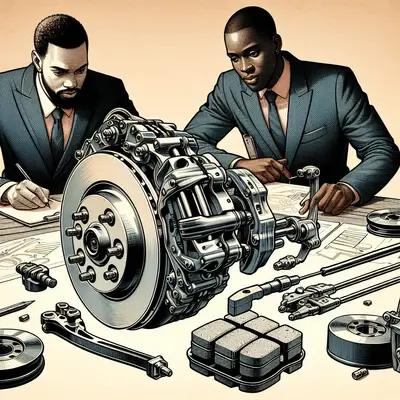
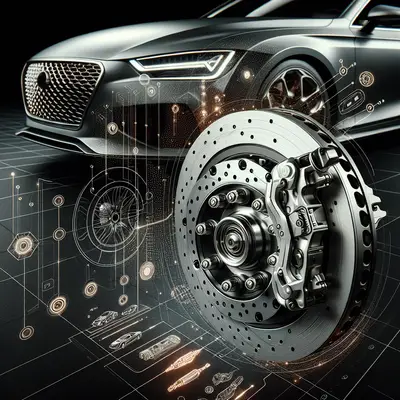
Today’s brake systems are a sophisticated blend of mechanical, hydraulic, and electronic engineering. At their core, most passenger vehicles rely on hydraulic disc brakes at the front and either disc or drum brakes at the rear. Pressing the brake pedal activates a master cylinder, which applies hydraulic pressure through brake lines to calipers. These calipers clamp brake pads against rotating discs (rotors), converting kinetic energy into heat through friction.
Layered on top of this hydraulic architecture are advanced electronic systems: Anti-lock Braking Systems (ABS), Electronic Brakeforce Distribution (EBD), stability control, and increasingly, advanced driver-assistance systems (ADAS) that can partially or fully apply the brakes for you. These technologies don’t replace traditional brakes; they refine them—optimizing pressure, preventing wheel lock, and preserving control.
For the safety-conscious driver, the key is understanding that each stop is a dialogue between components: pedal feel, hydraulic integrity, friction material, rotor condition, and electronic calibration. When that dialogue is crisp and consistent, you experience what feels like effortless stopping power.
How Brake Materials Shape Performance and Feel
Not all brake components are created equal, and the materials used in pads and rotors significantly influence performance, noise, dust, and longevity. Entry-level pads tend to be organic or semi-metallic, prioritizing cost and acceptable performance. Premium applications often lean toward ceramic or advanced semi-metallic compounds, chosen for their refined pedal feel, stable friction characteristics, and low noise.
Rotors, too, vary. Standard cast iron rotors are common and effective; higher-end or performance-focused options may incorporate improved metallurgy, venting designs, or even two-piece constructions to better manage heat and reduce unsprung weight. For drivers who value quiet, linear stopping and minimal fade under repeated braking—such as during spirited highway driving or mountain descents—the right pairing of pad compound and rotor design is crucial.
This is where a knowledgeable technician or specialist shop becomes invaluable. A premium brake setup is not necessarily the most aggressive; it’s the one that best matches your driving style, vehicle weight, climate, and expectations for refinement.
Five Exclusive Insights for Drivers Who Expect More from Their Brakes
Sophisticated drivers tend to ask more nuanced questions about safety and performance. The following insights go beyond the basics and reflect the level of detail that genuinely elevates brake care.
1. Brake Fluid Is Your Most Overlooked Safety Component
Brake fluid is hygroscopic—it absorbs moisture over time. Even if your vehicle rarely sees track days or mountain passes, absorbed water lowers the fluid’s boiling point and increases internal corrosion risk in calipers, lines, and the ABS module. The result can be a spongy pedal, reduced stopping performance under heavy braking, and expensive component failures.
For most vehicles, a complete brake fluid exchange every 2–3 years (or as specified by the manufacturer) significantly improves long-term reliability. For drivers who demand more, asking for a test of brake fluid’s boiling point or moisture content provides a data-driven basis for service, rather than relying solely on mileage or time intervals.
2. Pedal Feel Is a Diagnostic Tool, Not Just a Preference
Many drivers adapt to gradual changes in pedal feel—longer travel, delayed initial bite, or inconsistent firmness—without realizing these are early warning signs. A premium approach is to treat pedal feedback as you would tire wear: subtle shifts are worth paying attention to.
A slightly softer or longer pedal could indicate:
- Early air ingress or moisture in the fluid
- Caliper guide pins starting to bind
- Rubber brake hoses beginning to swell internally
- Uneven pad wear or glaze on the friction surfaces
Noticing these changes early and having them investigated can prevent more severe issues and maintain that reassuring, precise response you expect each time you brake.
3. Heat Management Is the True Test of a Brake System
Most brake systems perform adequately in a single, moderate stop. True capability—and true safety—emerges when brakes are repeatedly tested: descending a long grade, performing several high-speed stops, or driving in stop-and-go traffic on a hot day. In these scenarios, the system’s ability to manage heat determines fade resistance, rotor life, and pad durability.
Refined drivers can protect their brakes by:
- Using engine braking on long descents instead of riding the pedal
- Avoiding repeated hard stops from high speeds unless necessary
- Giving brakes time to cool after heavy use (such as after towing or emergency braking)
If you frequently drive in demanding conditions, discussing higher-temp pad compounds or upgraded rotors with a specialist can significantly enhance safety margins without compromising everyday comfort.
4. Consistency Between Axles Matters More Than Raw Power
Upgrading only the front brakes with more aggressive pads or larger rotors, while leaving the rear unchanged, can subtly disturb the vehicle’s braking balance. Modern cars rely on carefully tuned front–rear distribution, coordinated with ABS and stability control. When the friction characteristics differ significantly between axles, stopping distances may not improve as expected, and the car’s behavior under heavy braking can become less predictable.
A premium strategy is to consider brake performance as a balanced system. If you enhance front braking capability, ensure the rear is appropriately matched—even if not identically upgraded. The goal is not maximal bite on one end of the vehicle, but a smooth, stable, and predictable stopping attitude under both gentle and aggressive use.
5. Electronic Systems Are Only as Good as Their Mechanical Foundation
ABS, traction control, and advanced driver-assistance systems are often seen as a safety net, but they cannot compensate for neglected mechanical components. Worn pads, grooved rotors, contaminated fluid, or seized slide pins will compromise the effectiveness of these systems. For example, ABS can modulate pressure exquisitely—yet if a caliper is sticking, that wheel will still underperform during a stop.
For owners of vehicles with adaptive cruise control, automatic emergency braking, or lane-centering features, this link becomes even more critical. These systems assume a known baseline of braking performance. Maintaining that baseline—through timely pad replacement, rotor resurfacing or replacement when required, and regular inspections of hoses, lines, and calipers—is essential to ensure electronic interventions are accurate and effective.
Elevating Your Brake Service Standards
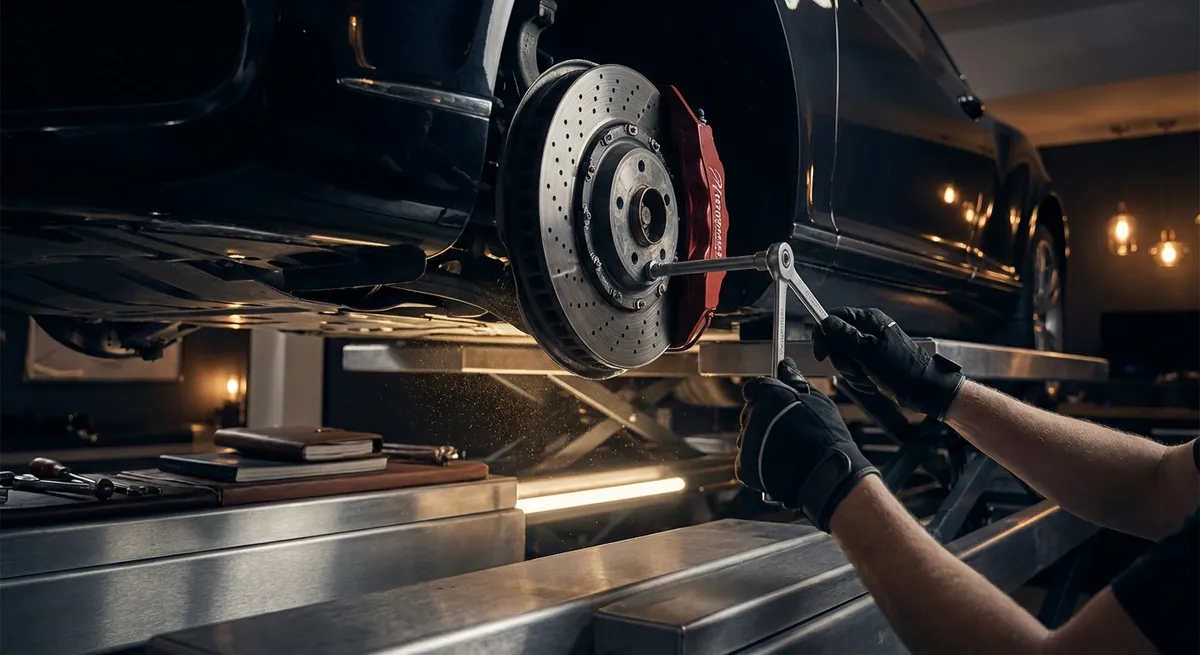
Choosing where and how your brakes are serviced is as important as choosing the vehicle itself. A genuinely premium brake service is defined less by branding and more by process and precision. Look for shops that:
- Measure, rather than guess: rotor thickness, runout, pad wear, and fluid quality
- Provide clear, itemized findings with photographs or measurements
- Use high-quality, known-brand components and follow torque specifications
- Bed in new pads and rotors correctly, or provide you with a detailed bedding procedure
- Explain not just what they are replacing, but why—using terms that match your level of interest
The outcome should be a brake system that stops confidently, quietly, and consistently, with a feel that inspires trust rather than merely avoiding concern.
Conclusion
Brake systems are the quiet guardians of every journey, and their true sophistication lies in details most drivers never see. For those who care deeply about safety and refinement, brakes become more than consumables; they are carefully curated components, maintained with intention and insight. By understanding the architecture of your brake system, respecting the role of materials and heat, and acting on subtle feedback before it becomes a problem, you cultivate a level of safety that feels as luxurious as it is responsible. In the refined world of attentive motoring, superior stopping is not an option—it is an expectation.
Sources
- National Highway Traffic Safety Administration (NHTSA) – Vehicle Brakes and Safety – Overview of braking systems and their role in vehicle safety
- U.S. Department of Transportation – Brake System Inspection Guidelines (FMCSA) – Federal guidance on brake inspection and safety practices
- AAA – How Your Car’s Brake System Works – Clear technical explanation of brake system components and operation
- SAE International – Brake Fluids and Their Influence on Brake Performance – Technical research repository on brake fluids and performance (search “brake fluid hygroscopic”)
- Consumer Reports – Car Brakes: What You Need to Know – Practical guidance on brake maintenance and warning signs for consumers
Key Takeaway
The most important thing to remember from this article is that this information can change how you think about Brake Systems.