For drivers who regard their vehicle as more than transportation, brake performance is non‑negotiable. It is the quiet guarantor of every confident merge, every composed descent, every measured arrival. Beneath the surface, however, modern brake systems are far more intricate than a simple pedal and a set of pads. Understanding their nuances allows a discerning owner not only to stay safe, but to maintain a standard of refinement that ordinary maintenance often overlooks.
This briefing explores the architecture of contemporary brake systems and highlights five exclusive, often-missed insights that matter deeply to safety‑conscious drivers.
The Modern Brake System: An Elegant Network, Not a Single Part
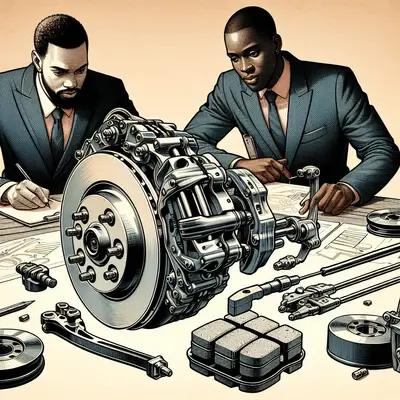
Today’s brake system is a coordinated network rather than an isolated component. At its core are the familiar elements—master cylinder, brake lines, calipers, pads, rotors, and fluid—but these now work in concert with advanced electronics.
Antilock braking systems (ABS) pulse braking pressure hundreds of times per second to help maintain traction under sudden stops. Electronic brake-force distribution (EBD) subtly shifts braking effort between front and rear axles based on load, road conditions, and speed, allowing the vehicle to remain stable under uneven or emergency braking. Brake assist can recognize panic stops and immediately provide maximum hydraulic pressure, even if the driver has not fully depressed the pedal. More advanced vehicles integrate these functions with stability control, adaptive cruise control, and collision avoidance systems, meaning your brakes are now deeply woven into the vehicle’s overall safety architecture.
For an attentive owner, this interconnectedness has implications: brake work is no longer purely mechanical. Quality of components, precision of installation, and the competence of the shop’s diagnostic approach all influence how effectively these electronic systems can intervene when it matters most.
Exclusive Insight #1: Pedal Feel Is a Safety Instrument, Not Just a Comfort Detail
Pedal feel—how the brake pedal responds under your foot—is one of the most underappreciated safety indicators. Many drivers notice only extremes (a very soft or very stiff pedal), but refined observation can reveal subtler, earlier warnings.
A gradually lengthening pedal travel, where the pedal must be pressed further before the brakes “bite,” can suggest brake fluid degradation, minor air intrusion, or early master cylinder wear long before a warning light appears. A pedal that feels slightly “springy” or inconsistent from one stop to the next can indicate localized caliper sticking, swollen rubber brake hoses, or uneven pad deposits on the rotors.
Premium driving means cultivating an awareness of the pedal’s normal behavior: how firm it is during gentle city traffic, how it responds after a long downhill stretch, how it feels on a cold morning after the vehicle has sat overnight. Any deviation from that baseline, even if the car still seems to stop “well enough,” deserves attention. In high‑end maintenance culture, brake service is not delayed until obvious failure—it is initiated at the first refined change in feedback.
Exclusive Insight #2: Brake Fluid Has a Quiet Expiration Date
Brake fluid is the unsung lifeblood of your braking system. It is hygroscopic, meaning it absorbs moisture from the air over time, even in a closed system. This subtle water accumulation lowers the fluid’s boiling point, making it more vulnerable to “brake fade” under sustained or heavy use—such as descending long grades or repeated high-speed stops.
As fluid ages, corrosion inhibitors also break down. Microscopic internal corrosion can then begin inside lines, calipers, and the ABS hydraulic unit. This damage is typically invisible externally but can shorten the life of expensive components and degrade the smooth modulation you expect from a premium brake feel.
For refined care, consider brake fluid service not as an occasional add-on, but as a scheduled, critical maintenance ritual. Many manufacturers recommend replacing brake fluid roughly every two to three years, but frequent highway driving, urban stop‑and‑go, or performance use may justify shorter intervals. An advanced shop can test the fluid’s moisture content or boiling point rather than merely relying on age or mileage. That kind of data‑driven approach aligns with a safety‑first mindset and preserves the system’s crisp, consistent response.
Exclusive Insight #3: Rotor Quality and Finish Shape How Your Car Communicates
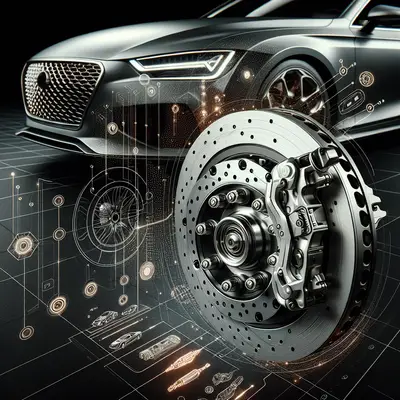
Rotors (or brake discs) are often treated as interchangeable, but their quality and finish have direct consequences for safety, comfort, and refinement. Low‑grade rotors may meet minimum specification but can introduce unwanted vibration, uneven wear, and accelerated pad degradation.
Precision‑machined rotors with uniform thickness and high‑quality metallurgy resist warping and hot spots better under repeated hard stops. The surface finish—a controlled micro‑texture created during manufacturing or resurfacing—allows new pads to “bed in” evenly, maximizing friction while minimizing noise. Poorly finished or excessively rough rotors can cause subtle pedal pulsing, intermittent squeal, and increased stopping distances.
For a discerning owner, this suggests three refined habits:
- Treat rotors as critical components, not mere consumables.
- Ask your service provider which brand and specification of rotors they are installing, not just “new rotors.”
- After rotor and pad replacement, follow the recommended break‑in (bedding) procedure precisely. This process is essential for creating an even transfer layer of pad material on the rotor surface, which underpins both smooth operation and consistent stopping power.
In a premium braking experience, silence, smoothness, and predictability are not luxuries; they are markers of a system working at its safest potential.
Exclusive Insight #4: Caliper Health Is the Hidden Guardian of Even Braking
Calipers—those precisely engineered clamps that press the pads against the rotor—often escape scrutiny until problems are pronounced. Yet their condition is central to even, stable braking.
A caliper that slides poorly, has a partially seized piston, or suffers from deteriorated rubber seals can cause one wheel to work harder than the others. The result may be a very subtle pull during braking, a steering wheel that drifts slightly when stopping, or uneven pad and rotor wear. Over time, this imbalance can lengthen stopping distances, overheat specific wheels, and compromise stability during emergency maneuvers.
Sophisticated brake care includes proactive caliper inspections during any brake service: checking for smooth movement along guide pins, verifying that dust boots and seals are intact, and looking for corrosion or fluid seepage. In regions with harsh winters or salted roads, caliper maintenance becomes even more critical, as corrosion accelerates. For owners who value consistency, it can be prudent to rebuild or replace calipers in pairs (left and right on the same axle) to preserve uniform behavior.
The key insight: when a shop recommends caliper service, they may not be selling an optional “extra”—they may be preserving the symmetry that underlies controlled, predictable braking.
Exclusive Insight #5: Your Driving Environment Should Shape Your Brake Strategy
A refined brake maintenance plan is not one‑size‑fits‑all; it should reflect where and how you drive. Two vehicles with identical mileage can have very different brake health depending on environment and usage.
Urban drivers endure repeated low‑speed stops, often from short distances, which can glaze pads and cause noisy, uneven wear if the brakes are never fully warmed. Highway drivers may see pads last longer, but when they do brake, it is often from higher speeds—generating greater heat and placing more stress on rotors and fluid. Mountain and hilly regions ask the most of brakes, particularly on long descents where prolonged moderate braking can overheat the system if engine braking is not used thoughtfully.
Climate adds another layer. Coastal and high‑humidity areas accelerate corrosion of metal components. Cold climates with road salt intensify rust on pads, rotors, and calipers. In such conditions, more frequent inspections and fluid changes are not indulgences; they are realistic responses to a harsher environment.
The discerning approach is to discuss your specific driving pattern with your technician—daily commute, terrain, load (passengers, cargo, towing), and climate—and align your maintenance intervals and component choices with that reality. This transforms brake service from generic upkeep into tailored risk management.
Conclusion
True brake safety is rarely about a single dramatic failure; it is built quietly over years of attentive choices and subtle observations. By treating pedal feel as an instrument, respecting the finite life of brake fluid, insisting on quality rotors and correct bedding, safeguarding caliper health, and tailoring maintenance to your driving environment, you move beyond basic compliance into a level of care that matches a premium driving experience.
In a world of increasing horsepower and complex driver‑assist systems, the most sophisticated statement a driver can make is simple: every stop is as thoughtfully engineered as every start.
Sources
- NHTSA: Brakes – Antilock Braking Systems (ABS) – U.S. government overview of ABS technology and its role in vehicle safety
- IIHS: Braking Performance and Safety Technologies – Insurance Institute for Highway Safety explanation of advanced braking and driver-assistance systems
- AAA Exchange: Proper Brake System Maintenance – Guidance on brake components, fluid, and service recommendations
- University of Texas at Austin – Brake Systems Fundamentals (ME Dept. Course Notes) – Educational overview of brake mechanics and system behavior
- Bosch Automotive: Brake Systems and ABS Components – Technical descriptions of modern brake and ABS components from a major OEM supplier
Key Takeaway
The most important thing to remember from this article is that this information can change how you think about Brake Systems.