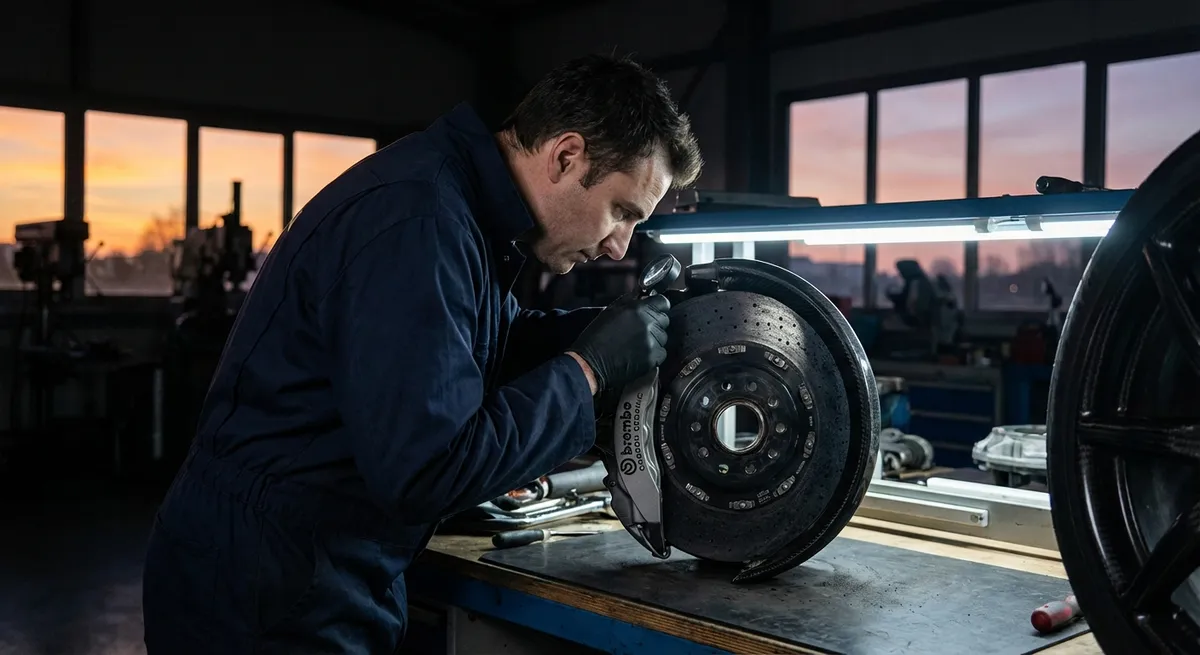
For drivers who value composure as much as capability, the brake system is not merely a mechanical necessity—it is the quiet arbiter of confidence, control, and safety. Understanding how your brakes think, respond, and age allows you to move through traffic, weather, and time with a standard of assurance that feels decidedly elevated. This is not about basic upkeep; it is about cultivating an informed, almost curatorial relationship with the system that stops several thousand pounds of moving mass in a matter of seconds.
Inside the System: How Brakes Translate Intention into Control
Every press of the pedal initiates a carefully orchestrated sequence: mechanical leverage at the pedal, hydraulic pressure in the brake lines, and precise friction at each wheel. In a typical hydraulic brake system, the master cylinder converts pedal effort into fluid pressure, which travels through brake lines to calipers (or wheel cylinders), squeezing pads against rotors (or shoes against drums). That friction converts kinetic energy into heat, allowing the vehicle to decelerate smoothly.
Modern systems integrate anti-lock braking (ABS), electronic brake-force distribution (EBD), and sometimes brake assist, all working in milliseconds to prevent wheel lockup, maintain steering control, and optimize force across all four wheels. Rather than simply “stopping the car,” the system constantly balances traction, weight transfer, and surface conditions. When this orchestra is in tune, stopping feels unremarkable—in the best possible way. When it is not, every pedal press is a negotiation rather than a certainty.
Five Exclusive Insights for the Safety-Obsessed Driver
Beyond the familiar advice to “check your pads” or “listen for squeaks,” there are subtler markers of an exceptional brake system—details that refined, safety-conscious drivers often learn only after a close call or an expensive repair. These five insights bring those nuances into focus.
1. Pedal Feel Is a Diagnostic Language, Not a Preference
To an attentive driver, pedal feel is less about comfort and more about conversation. A firm, consistent pedal typically indicates minimal air in the lines, healthy hydraulic components, and well-matched pad and rotor surfaces. A slowly sinking pedal, even if the vehicle still stops, can hint at internal master cylinder wear or a developing fluid leak long before an obvious failure.
A “spongy” pedal, where the pedal travels farther than expected or feels compressible, usually signals air or moisture in the system, degraded brake hoses, or boiling fluid after heavy braking. Subtle changes over weeks—a slightly longer pedal travel at stoplights or a softer feel in the morning—are often the earliest, quietest signs that your system’s margin of safety is narrowing. Drivers who treat pedal feel as data rather than inconvenience typically address issues before they become emergencies.
2. Brake Fluid Is a Time-Sensitive Safety Component, Not a Lifetime Fill
Brake fluid is hygroscopic—it absorbs moisture from the atmosphere through microscopic permeation in hoses, seals, and reservoirs. Over time, this raises the fluid’s water content, lowers its boiling point, and accelerates internal corrosion in calipers, master cylinders, and ABS modules. In high-demand braking—descending a long grade, towing, or repeated hard stops—moisture-laden fluid can flash to vapor, creating compressible bubbles and sudden brake fade.
Premium maintenance treats brake fluid more like a consumable than a permanent fixture. Having the fluid tested or replaced based on age, usage, and environment—often around every 2–3 years for many vehicles, or per the manufacturer’s guidance—is an understated but powerful safety practice. Clear, fresh fluid is not only a performance advantage; it is an investment in the longevity and reliability of every major brake component.
3. Quiet Brakes Are Not Always Healthy Brakes
Most drivers are conditioned to listen for noise, but a lack of noise is not a guarantee of health. Certain pad compounds, especially high-quality low-metallic or ceramic formulations, can remain quiet even when they are nearing the end of their service life or operating on mildly warped rotors. Similarly, uneven pad wear—where one corner of the vehicle is doing more braking work than the others—may not make itself known audibly.
Visual inspection and measured thickness are far more reliable than sound alone. A refined approach includes periodic professional inspections that go beyond quick-glance checks: confirming inner pad wear (often more severe than outer), inspecting rotor surfaces for subtle heat spots or fine radial cracks, and verifying that all caliper slide pins and pistons move freely. Silence is a pleasant characteristic, but symmetry, consistency, and measured wear are the true indicators of a balanced, trustworthy system.
4. Heat Patterns on Rotors Reveal Your Driving Signature
Brake rotors are not just metal discs; they are a visible archive of your driving style and your system’s health. Light, even gray surfaces with uniform sweep marks generally indicate properly bedded pads and balanced braking forces. Discoloration—especially blue or dark purple patches—suggests localized overheating, often from aggressive braking, dragging calipers, or a seized slide pin.
Subtle radial cracks, commonly near drilled holes or slots, may indicate thermal stress from repeated hard stops or track-style driving, and can compromise both performance and structural integrity if left unaddressed. A refined driver pays attention to these visual cues, particularly after towing, mountain driving, or emergency stops. Inspecting rotors with intention—front and back surfaces—transforms them from anonymous components into a visible safety gauge.
5. Electronic Aids Enhance, But Never Replace, Brake Fundamentals
Advanced driver-assistance systems (ADAS)—such as automatic emergency braking, adaptive cruise control, and stability control—lean heavily on the brake system as their primary actuator. They modulate individual wheels, apply strategic stopping power, and rely on precise hydraulic response to execute corrective actions that most drivers could not replicate manually.
However, these systems assume the brakes are fundamentally sound: adequate pad thickness, healthy rotors, clean and consistent fluid, and fully functional ABS components. When any of these baseline elements are compromised, electronic aids lose their effectiveness, and their interventions can feel abrupt, inconsistent, or late. The sophisticated driver understands that ADAS is an enhancement layer, not a substitute for foundational brake integrity. Maintaining the mechanical and hydraulic fundamentals is the surest way to ensure that those electronic protections work exactly as intended when seconds matter.
Elevating Routine Maintenance into a Safety Standard
Translating this understanding into practice begins with intention. Instead of viewing brake service as a reaction to noise or dashboard warnings, it becomes a scheduled, thoughtful ritual—aligned with mileage, driving conditions, and personal tolerance for risk. This might mean proactively measuring pad thickness at each tire rotation, scheduling a brake fluid exchange before a long road trip, or requesting a more thorough inspection that includes caliper slide pin operation and rotor runout, not just pad replacement.
Partnering with a technician or workshop that communicates in specifics—actual measurements, fluid test results, and observed wear patterns—allows you to manage your brake system with the same clarity you apply to financial planning or health decisions. Over time, this approach yields something subtle but unmistakable: a consistent, predictable pedal, balanced stops in adverse weather, and the quiet confidence of knowing your vehicle’s most critical safety system is maintained to a standard, not a minimum.
Conclusion
A truly refined driving experience is not defined by power output or design details alone; it is anchored in the quiet certainty that when you ask the car to stop, it will do so with composure and precision. By listening to pedal feel as a language, treating brake fluid as a time-sensitive asset, looking beyond silence, reading rotor surfaces intelligently, and respecting the limits of electronic aids, you elevate brake maintenance from routine obligation to deliberate safety craft.
In a world of increasing speed and distraction, this level of attention is not extravagant—it is simply the modern expression of responsible, discerning ownership.
Sources
- National Highway Traffic Safety Administration (NHTSA) – Brake Systems Overview - Government guidance on brake system components, performance, and safety considerations.
- U.S. Department of Transportation – Brake Fluids Safety Standard (FMVSS No. 116) - Official specifications and safety requirements for brake fluids used in motor vehicles.
- SAE International – Brake Systems Technical Resources - Engineering-focused information on brake technology, performance, and design trends.
- AAA – Understanding Your Vehicle’s Brake System - Consumer-oriented explanation of brake components and maintenance best practices.
- University of Michigan – Vehicle Braking and Safety Research - Academic research related to vehicle braking performance and safety.
Key Takeaway
The most important thing to remember from this article is that this information can change how you think about Brake Systems.