For drivers who view their vehicle as more than transportation, brake care is not a chore—it is a discipline. True peace of mind at speed does not come from last-minute repairs, but from a quiet, consistent approach to maintenance that keeps every stop composed, predictable, and graceful. This is where refined ownership lives: in the details you never leave to chance.
Below, you’ll find a maintenance-focused perspective on brake safety, anchored by five exclusive insights that reward attentiveness and reward it handsomely—with stability, control, and confidence when it matters most.
Why Brake Maintenance Is Really Control Maintenance
When you maintain your brakes, you’re not simply avoiding squeaks and warning lights; you’re preserving the most important control system in the vehicle. Brakes translate your judgment into deceleration, and any degradation in that translation—spongy feel, uneven bite, fading performance—compromises both comfort and safety.
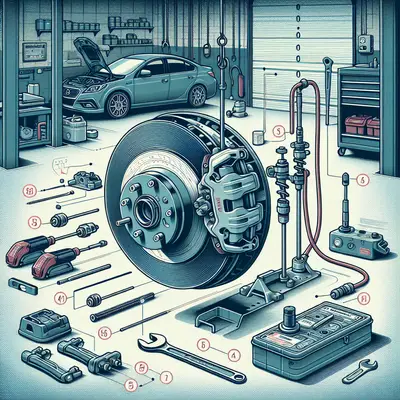
Modern braking systems are complex interactions of friction, hydraulics, electronics, and heat management. Pads, rotors, calipers, fluid, hoses, and control modules (such as ABS and stability control) must operate in exact concert. An oversight in one area—such as aging fluid or slightly warped rotors—can quietly influence braking distance, steering feel under braking, or vehicle stability during evasive maneuvers. Treating brake maintenance as a core element of “control maintenance” reframes the task: you’re not just preserving parts, but the precision of your driving.
A sophisticated brake maintenance routine blends regular inspection, proactive service intervals, and attention to driving environment. Urban stop-and-go commuting, mountain descents, towing, and high-speed highway driving all impose different thermal and mechanical demands on the system. The discerning driver understands that intervals in the owner’s manual are baselines, not absolutes, and that real-world use can justify more frequent attention.
Insight 1: Your Pedal Is a Diagnostic Instrument—If You Pay Attention
Most drivers treat the brake pedal as a simple on/off control; refined drivers treat it as feedback. The pedal is the most immediate, tactile indicator of the system’s internal health, and subtle changes often appear long before obvious symptoms.
A gradually lengthening pedal travel can suggest pad wear, minor air ingress, or fluid beginning to degrade. A subtly “spongy” sensation may indicate moisture-contaminated brake fluid, which reduces boiling point and can lead to brake fade under repeated stops. A pedal that firms up only after a brief pump may signal early issues with calipers, master cylinder, or small leaks that haven’t yet left a visible trace.
Pay attention to micro-changes: Does the pedal feel slightly softer after descending a long hill? Does modulation—the ease with which you can slow the car gently from speed—feel less precise than it did a few months ago? Make a habit of noticing pedal feel at least once per drive under controlled conditions (for example, a gentle stop on a known road). When your baseline becomes instinctive, you are more likely to detect problems in their earliest, quietest phase—when they are simpler, safer, and often less expensive to resolve.
Insight 2: Brake Fluid Is the Unsung Guardian of Consistency
Among all brake maintenance tasks, fluid service is the one most frequently postponed, largely because it rarely screams for attention. Yet brake fluid is central to consistent, reliable stopping power. As a hygroscopic fluid, it gradually absorbs moisture from the atmosphere through hoses, seals, and reservoir vents, even in otherwise well-maintained vehicles.
Over time, this absorbed moisture reduces the fluid’s boiling point. Under strenuous use—steep descents, repeated highway stops, spirited driving on mountain roads—this can cause vapor formation within the lines. Vapor compresses; fluid does not. The result is a soft, sinking pedal and degraded braking performance at precisely the wrong moment. Additionally, moisture accelerates internal corrosion of brake components, including lines, calipers, and ABS modules.
Refined maintenance treats brake fluid as a scheduled service, not an emergency fix. Many manufacturers recommend replacement every two to three years, but high-demand usage can justify shorter intervals. A professional fluid test (measuring moisture content or boiling point) is an excellent way to tailor the schedule to your driving. Insisting on a quality DOT-rated fluid that meets or exceeds your vehicle’s specification is not an indulgence; it is a safeguard for braking consistency across temperature, altitude, and load.
Insight 3: Rotor Condition Is About More Than Thickness
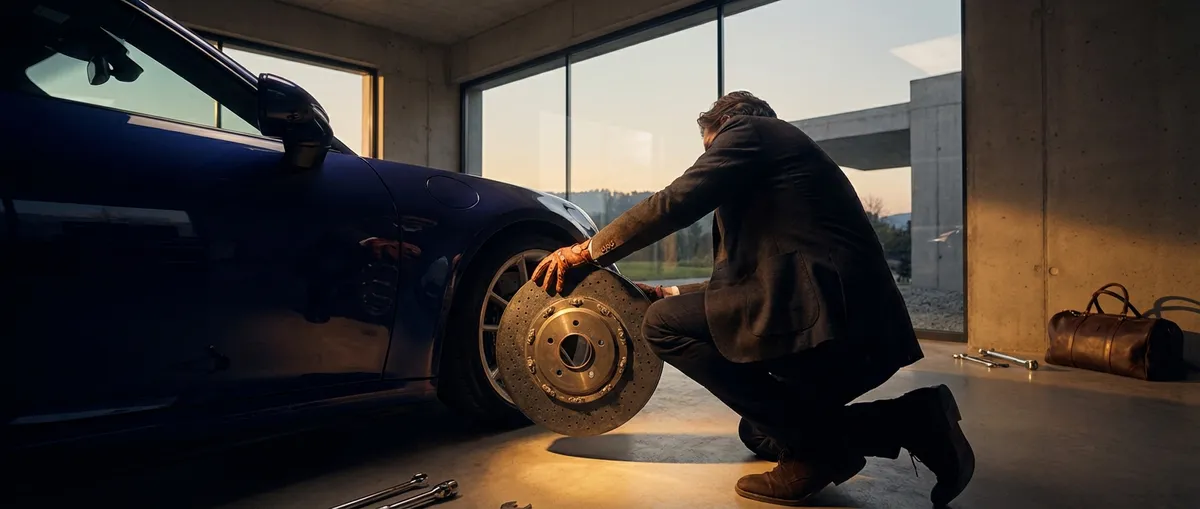
Most drivers know rotors can wear thin, but those focused on exceptional safety look far beyond minimum thickness. Rotors are critical to heat management and friction consistency; they are not merely metal discs but precision surfaces that dictate how predictably your pads can bite.
Even when technically “within spec,” rotors can develop subtle issues—light warping, uneven deposits, or minor run-out—that translate into vibration, pulsing, or uneven braking. This not only affects comfort but can undermine confidence during hard stops or emergency maneuvers, where stable steering feedback under braking is essential. On modern vehicles equipped with sophisticated stability and traction systems, marginal rotors can also interfere with optimal operation by creating inconsistent wheel deceleration signals.
A refined rotor strategy focuses on surface quality and pairing. When replacing pads, consider either resurfacing rotors (if permitted by thickness and condition) or replacing them with quality components rather than simply “making do” with borderline parts. Ensure both sides of the axle are treated symmetrically—mixing a new rotor on one side with a heavily worn rotor on the other can create braking imbalances. For vehicles that regularly encounter heavy loads, mountain routes, or high speed, an upgrade to rotors with improved cooling design (where appropriate and reputable) can meaningfully enhance durability and consistency.
Insight 4: Cleanliness and Hardware Are the Quiet Heroes of Brake Feel
Pad and rotor selection often receive the spotlight, but the elegance of your braking experience is equally shaped by less glamorous hardware—slides, pins, shims, clips, and anti-rattle components. Ignoring these elements can sabotage even the best pads and rotors.
Caliper slide pins that are dirty, dry, or corroded impede the caliper’s ability to move freely. This can cause uneven pad wear, pulling to one side, or inconsistent engagement that is felt as vague or delayed response. Hardware that is not properly lubricated with the correct high-temperature, brake-specific lubricant may bind or seize over time. Cheap or reused, fatigued clips and shims can introduce noise, vibration, and suboptimal pad alignment.
A sophisticated brake service insists on a methodical cleaning and inspection of all hardware, with replacement of worn or corroded components rather than simply “reusing what’s there.” Brake dust, road grime, and winter road treatments can accumulate in surprising places, so a careful, component-level approach matters. The result is not only quieter braking but also more linear, predictable pedal response and enhanced pad life. In this context, quality hardware is not cosmetic—it is structural to the braking experience.
Insight 5: Driving Style Is the Most Underestimated Maintenance Tool
Brake maintenance is not confined to the service bay; it begins with how you drive. For the attentive driver, every mile is either preserving the braking system or unnecessarily taxing it. The most elite form of brake care is a driving style that treats the system as a finite resource to be managed with foresight rather than constantly rescued at the last second.
Smooth, anticipatory driving—looking far ahead, modulating speed early, and using engine braking where appropriate—reduces repeated high-energy stops that overheat pads and rotors. Avoiding “riding the brakes” on long descents and instead using lower gears (within manufacturer guidance) helps keep temperatures in a safe operating band and prevents fade. Maintaining a generous following distance not only improves safety but also allows more gradual, less stressful braking input.
This approach doesn’t mean driving slowly; it means driving thoughtfully. Many high-performance drivers understand that preserving brake performance is essential to both speed and safety. For everyday owners, that same philosophy translates to longer component life, fewer emergency repairs, and a consistently composed feel at the pedal. Over time, this refined driving style becomes an invisible but powerful form of maintenance—one that elevates both safety and serenity.
Conclusion
Elevated brake maintenance is less about reacting to noise and warning lights and more about cultivating a calm, deliberate relationship with the system that stops your vehicle. By treating the pedal as a diagnostic tool, respecting the importance of brake fluid, insisting on rotor integrity, honoring the role of clean hardware, and driving in a way that protects your brakes rather than abuses them, you build a safety margin that few drivers ever experience.
For the refined driver, this is where true confidence lives—not in the moment of panic, but in the quiet assurance that every prior decision has been made with care. The reward is not simply shorter stopping distances; it is the peace of knowing that, when you ask your brakes to perform, they respond with the precision and composure your driving deserves.
Sources
- [National Highway Traffic Safety Administration (NHTSA) – Vehicle Brakes](https://www.nhtsa.gov/equipment/brakes) - Official U.S. government guidance on brake systems, safety considerations, and defect investigations
- [Car Care Council – Brake System Service](https://www.carcare.org/car-care-resource/car-care-guide/brake-system/) - Independent, industry-backed overview of brake maintenance best practices and recommended service intervals
- [Bendix – Understanding Brake Fluid and Brake Fade](https://www.bendix.com/en/serviceresources/brake-school-online/technical-topics/brake-fluid-and-brake-fade/) - Technical explanation of brake fluid behavior, moisture absorption, and its impact on braking performance
- [AAA – How to Know When You Need New Brakes](https://newsroom.aaa.com/2018/09/know-need-new-brakes/) - Practical signs of brake wear and safety-focused advice from a widely recognized automotive authority
- [University of Nebraska–Lincoln – Brake Systems (Nebraska Transportation Center)](https://civil.engr.unl.edu/avt/nae/publications/documents/BrakeSystems.pdf) - Technical background on brake system components, operation, and performance considerations
Key Takeaway
The most important thing to remember from this article is that this information can change how you think about Maintenance.