For discerning drivers, “good enough” is never truly enough—especially when it concerns brakes. Beyond simply stopping the vehicle, a well‑maintained brake system offers composure, predictability, and a sense of quiet assurance at every deceleration. This is where maintenance stops being a chore and becomes a deliberate standard: a way of driving that protects your time, your investment, and everyone sharing the road with you.
Maintenance as a System, Not a Single Service
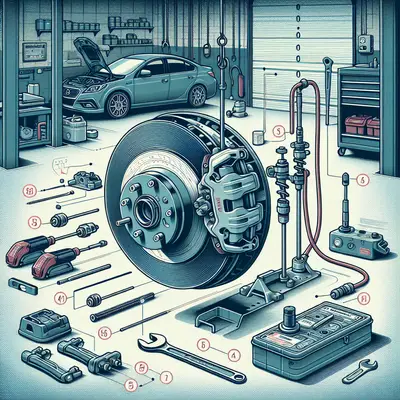
Brake maintenance is often reduced to a single act: replacing pads when they squeal. In reality, your braking performance is the outcome of an entire system working in harmony—pads, rotors, calipers, brake lines, fluid, electronics, and even tires.
When you view brakes as a cohesive system instead of isolated parts, your approach to maintenance changes. You stop asking “When do I replace pads?” and start asking “How do I preserve consistent performance over years of driving?” That shift leads naturally to better scheduling, more precise inspections, and fewer unpleasant surprises at the shop. It’s not over-maintaining; it’s curating how your car behaves when it matters most.
Premium maintenance means aligning service intervals with how and where you drive, not blindly following a generic mileage figure. Frequent city traffic, steep hills, or spirited highway driving all demand a tighter, more nuanced maintenance rhythm than the owner’s manual might suggest.
Exclusive Insight #1: Brake Feel Is a Measurable Signature, Not a Vague Impression
Most drivers describe brake feel in vague terms—“soft,” “grabby,” or “fine.” A refined maintenance strategy treats pedal feel as a repeatable, measurable signature of system health.
Pay attention to:
- Pedal travel: How far the pedal moves before the brakes bite. A gradual increase over months can signal pad wear, caliper issues, or fluid problems long before obvious noise or grinding appears.
- Initial bite: The crispness (or lack of it) when you first touch the pedal. A dull or delayed response can reflect glazing on pads, uneven rotor surfaces, or contamination.
- Modulation: Your ability to add or release brake pressure smoothly. A “steppy” or inconsistent feel may foreshadow rotor warping or uneven pad deposits.
- Consistency over a single trip: If feel changes from the first stop of the day to the tenth—firmer when cold, spongier when hot—that’s valuable diagnostic information.
Maintaining a mental “baseline” of how your brakes feel when freshly serviced allows you to sense small deviations early. The best brake maintenance begins the moment you detect those subtleties, not when a warning light finally illuminates.
Exclusive Insight #2: Brake Fluid Is the Hidden Lifespan of Your System
Brake fluid is often neglected because it doesn’t make noise, doesn’t leave dust on wheels, and rarely draws attention—until it’s too late. Yet it is one of the most decisive elements of brake performance.
Brake fluid is hygroscopic, meaning it absorbs moisture from the air over time. This lowers its boiling point and can cause:
- Brake fade under repeated hard stops, as moisture in the fluid vaporizes and compresses, creating a soft or sinking pedal.
- Internal corrosion in lines, calipers, and ABS components, quietly shortening the life of key hardware.
- Inconsistent pedal feel on hot days or long downhill descents.
A sophisticated maintenance plan doesn’t wait for obvious symptoms. Instead, it includes:
- Periodic fluid testing for moisture content or boiling point at reputable shops.
- Scheduled brake fluid changes, typically every 2–3 years or sooner for performance-oriented or heavy-use driving.
- Use of the correct DOT specification, as specified by the manufacturer—resisting the temptation to “upgrade” without understanding compatibility.
By treating brake fluid on the same level of importance as engine oil, you protect the entire system and keep the pedal response crisp and predictable, year after year.
Exclusive Insight #3: Rotor Condition Shapes How Your Car Behaves in Emergencies
Rotors are more than simple steel discs; they directly define the surface on which your pads grip, and they influence how the car behaves in a sudden, forceful stop. Under a refined maintenance philosophy, you evaluate rotors with as much attention as pads.
Subtle rotor issues can show up as:
- Mild pulsation through the pedal or steering wheel at highway speeds under gentle braking.
- Audible “shhh” or faint scraping even with adequate pad thickness.
- Longer stopping distances despite seemingly healthy pads.
Rather than waiting for obvious warping or deep scoring, informed owners:
- Check rotor minimum thickness and runout (wobble) during regular inspections.
- Prefer replacement over aggressive machining when rotors are marginal, to maintain optimal thermal capacity and structural integrity.
- Choose quality rotors designed to match the original design (or better), not the cheapest generic metal available.
In emergency braking, the difference between a properly maintained rotor and a marginal one is felt not just in stopping distance, but in how stable and controllable the car remains as weight transfers forward. That composure is not an accident—it’s maintained.
Exclusive Insight #4: Tires and Brakes Form a Single, Shared Safety Zone
It’s tempting to think of brakes as what stops the car, and tires as an entirely separate concern. In reality, the system that saves you in a panic stop is “brakes plus tires” acting as a single safety zone. Superior brake components are only as effective as the contact patches available to use them.
A premium-minded owner understands that:
- Tread depth and tire compound matter as much as pad quality when it comes to real-world stopping distances.
- Uneven tire wear can silently mask or mimic brake issues (pulling under braking, instability, or longer stops in wet conditions).
- Season-appropriate tires (especially in cold or wet climates) unlock the full potential of modern ABS and stability systems.
Instead of treating tire purchases as a completely separate decision from brake service, consider pairing major brake work with a serious look at tire condition and alignment. Your goal is not just to stop; it’s to stop straight, predictably, and with maximal grip, every time.
Exclusive Insight #5: High-Quality Parts Are Only as Good as the Installation
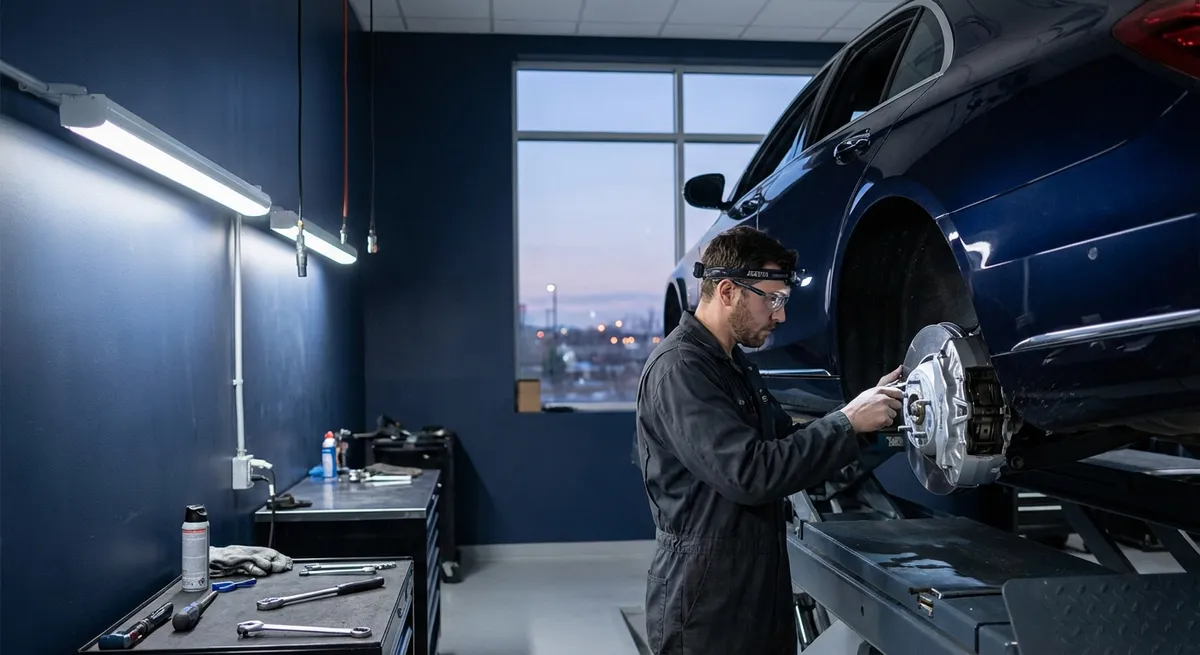
Many careful owners invest in premium pads and rotors, then hand the installation to the lowest bidder and hope for the best. Yet the difference between a merely functional brake job and an exceptional one often lies in the quality of workmanship.
A truly refined brake service includes:
- Meticulous cleaning of mating surfaces (hubs, caliper brackets, and pad slides) to prevent noise, vibration, and premature wear.
- Correct torque of all hardware—not just “tight enough”—to protect against warping and ensure consistent clamping force.
- Appropriate lubrication of contact points, using high-temperature, brake-specific lubricants only where specified.
- Proper bleeding procedures, particularly on vehicles with advanced ABS and electronic brake distribution systems.
Equally important is the bedding-in process for new pads and rotors—a controlled series of stops that conditions the friction surfaces for uniform performance. Skipping or rushing this step is a quiet way to sabotage the investment you just made in quality components.
Choosing a shop that respects these details—or, if you are a capable DIYer, adhering to them yourself—elevates your brake system from “freshly serviced” to “meticulously prepared.”
Crafting Your Personal Brake Maintenance Standard
Brake maintenance does not need to be theatrical, expensive, or obsessive. It simply needs to be intentional. By viewing brakes as a system, paying attention to pedal feel, respecting brake fluid, scrutinizing rotors, aligning tire care with stopping performance, and insisting on precise workmanship, you establish a personal standard that most vehicles on the road never achieve.
That standard pays dividends quietly: shorter stopping distances, fewer surprises, calmer emergency responses, and the reassuring sense that your car behaves as elegantly under hard braking as it does at a gentle cruise. On every drive, that level of care is the difference between merely operating a vehicle and truly curating its safety.
Sources
- [National Highway Traffic Safety Administration (NHTSA) – Brakes and Stopping](https://www.nhtsa.gov/equipment/brakes-and-stopping) – Federal safety guidance on braking systems and performance
- [U.S. Department of Transportation – Brake Fluid Safety](https://www.transportation.gov/mission/safety/brake-fluid) – Information on brake fluid properties, maintenance, and safety considerations
- [AAA – How to Know When Your Brakes Need Service](https://newsroom.aaa.com/2020/06/how-to-know-when-your-brakes-need-service/) – Practical advice on recognizing brake wear and planning service
- [Consumer Reports – How to Maintain Your Car](https://www.consumerreports.org/cars/car-maintenance/how-to-maintain-your-car-a1098952688/) – General maintenance guidance, including braking systems and fluid changes
- [University of California, Berkeley – Vehicle Braking and Tire-Road Interaction (PDF)](https://escholarship.org/content/qt5w97m9ht/qt5w97m9ht.pdf) – Technical discussion of braking performance and tire-road dynamics
Key Takeaway
The most important thing to remember from this article is that this information can change how you think about Maintenance.