Modern brake systems are the quiet custodians of every journey—rarely celebrated, instantly blamed, and all too often misunderstood. For drivers who value refinement as much as reliability, treating brakes as a mere “wear item” is no longer enough. A truly sophisticated approach to brake safety acknowledges not only stopping power, but also feel, consistency, noise, and long-term integrity. This is where everyday maintenance becomes an elevated, almost executive-level discipline.
Below, we explore how discerning car owners can think differently about their brake systems—going beyond the obvious to uncover subtle, exclusive insights that keep every stop composed, confident, and impeccably controlled.
Understanding Your Brake System as a Whole, Not Just as Parts
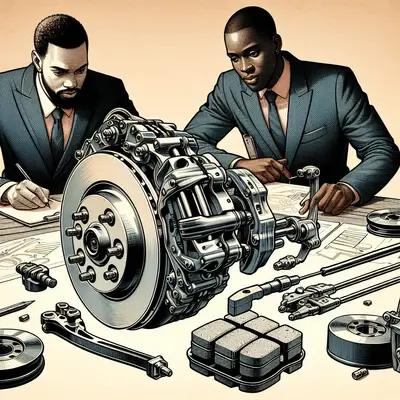
Many drivers think of brakes as a collection of isolated components—pads, rotors, calipers—swapped in and out as they wear. In reality, a brake system behaves more like a carefully tuned ensemble, where each element must harmonize with the others to deliver smooth, predictable performance.
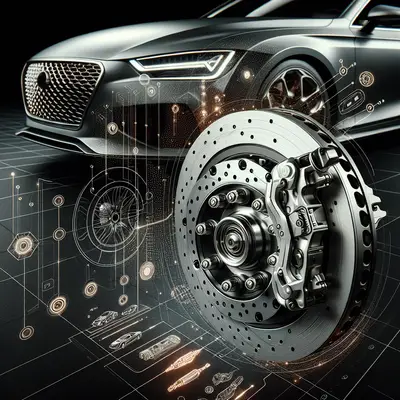
Your brake pedal feeds a master cylinder, which converts your foot’s force into hydraulic pressure. That pressure moves through brake lines to calipers, which squeeze pads against rotors, translating fluid dynamics into friction and heat. At the same time, electronic systems such as ABS (anti-lock braking system), ESC (electronic stability control), and brake assist continuously monitor wheel speed, steering angle, and vehicle behavior to preserve stability under demanding conditions.
For a premium driving experience, it’s not enough that each component works; they must work together seamlessly. Using mismatched parts, ignoring aged brake fluid, or neglecting hardware such as shims and clips introduces subtle irregularities that you may first notice as a slightly spongy pedal, inconsistent bite, or faint shudder. Sophisticated brake care begins with an understanding that a brake system is less about individual parts and more about maintaining a balanced ecosystem.
Exclusive Insight #1: Brake Feel Is a Safety Indicator, Not a Luxury
Most drivers only react when something is clearly wrong—grinding, severe vibration, or warning lights. Discerning owners, however, pay attention much earlier, particularly to “brake feel.” That refined sensitivity is more than preference; it’s an early-warning system.
Changes in pedal travel, initial bite, and linearity (how steadily braking force increases with pressure) often signal subtle degradation:
- A slightly longer pedal stroke can indicate air in the system or rubber hoses beginning to age and flex.
- A softer, less decisive initial bite may reflect glazed pads or contamination on the rotors.
- A “stepped” feel, where braking power rises in noticeable increments rather than smoothly, can hint at uneven pad deposits or rotor thickness variation.
Treating brake feel as a diagnostic tool allows issues to be addressed before they become visible or audible. A sophisticated driver learns how the car feels on a good day, then notices when that standard quietly slips. That attentiveness can mean resolving a minor concern with a fluid service or pad change—long before it turns into a safety risk or costly repair.
Exclusive Insight #2: Brake Fluid Is the Unsung Guardian of High-Performance Stops
Brake fluid is often treated as an afterthought, swapped only when a shop suggests it or when a component fails. Yet for those who expect crisp, composed braking under all conditions, fluid is the hidden foundation of confidence.
Brake fluid is hygroscopic—it absorbs moisture over time. As water content rises, the fluid’s boiling point drops. Under repeated or hard braking, overheated fluid can produce vapor bubbles, leading to a soft pedal, fade, or, in extreme cases, momentary loss of braking force. Importantly, you do not need to be driving on a racetrack to experience this. Long downhill drives, heavy traffic in hot weather, or towing can expose the same vulnerabilities.
Refined brake care acknowledges fluid as a “performance consumable,” not just a technical requirement. A premium standard might involve:
- Following or slightly exceeding the manufacturer’s fluid replacement interval.
- Using high-quality, name-brand fluid that meets or surpasses the DOT specification recommended for your vehicle.
- Ensuring proper bleeding procedures to eliminate air and maintain a firm, confident pedal.
Regular fluid testing—either through a trusted shop or with a moisture tester—brings this invisible element into clear focus. The result is a brake system that feels consistently composed, even when conditions ask more of it.
Exclusive Insight #3: Rotor Surface Quality Matters as Much as Thickness
Most drivers hear about rotors only when they are “too thin” and must be replaced. While rotor thickness is indeed critical for strength and heat capacity, sophisticated brake care pays equal attention to rotor surface quality.
Even when rotors are technically within spec, issues such as uneven pad deposits, micro-cracks from thermal stress, and subtle runout (wobble) can degrade braking performance:
- Light steering-wheel shake or pedal pulsation during braking often indicates rotor thickness variation or uneven deposits rather than catastrophic damage.
- High-gloss “mirrored” surfaces may appear efficient but can signal glazing, which reduces friction and increases stopping distances.
- “Hot spots” on the rotor surface, visible as darker patches, can lead to inconsistent friction and unpredictable braking behavior.
Premium maintenance may involve replacing rotors rather than repeatedly resurfacing them, particularly on vehicles where precision and consistency are valued. When rotors are replaced, ensuring correct hub cleaning, proper torque of wheel nuts, and careful bedding-in of new pads and rotors helps create a uniform friction layer. This careful attention produces smoother stops, reduced noise, and a more refined, repeatable braking response.
Exclusive Insight #4: Clean, Correctly Installed Hardware Is Your Noise and Vibration Insurance
Brake pads and rotors do the heavy lifting, but hardware—the shims, clips, pins, and slides—determines how quietly and consistently that work is done. Skipping hardware replacement or ignoring its condition is a subtle shortcut that can undermine an otherwise premium repair.
Key details that sophisticated owners insist upon:
- Stainless or coated hardware: High-quality clips and shims resist corrosion, allowing pads to move freely and preventing uneven wear or sticking.
- Proper lubrication: High-temperature brake grease at pad contact points and guide pins reduces noise and ensures smooth caliper movement—but must be applied sparingly and correctly to avoid contamination.
- Correct fitment: Pads that fit loosely or bind in the bracket can cause rattles, dragging, or tapered wear, even if the friction material itself is excellent.
A meticulous technician will disassemble, clean, and prepare each contact point, rather than merely swapping parts. While this may add a little time to the service, the reward is a braking system that remains quiet, composed, and free of harshness—mile after mile. For the discerning driver, this level of refinement is not a luxury; it is the benchmark.
Exclusive Insight #5: Your Driving Style Is a Powerful Brake Preservation Tool
Even the finest components can be compromised by harsh, inconsistent use. A driver who understands how brakes convert motion into heat can subtly adapt their style to protect the system without sacrificing pace or enjoyment.
A refined approach includes:
- Looking further ahead: Anticipating traffic lights, curves, and congestion allows for smoother, earlier braking rather than abrupt, last-second pedal stabs.
- Progressive pressure: Firm, progressively increasing pressure is more controlled than an immediate, hard stomp, reducing sudden heat spikes and minimizing ABS activation.
- Strategic coasting: Allowing the car to decelerate slightly before applying the brakes reduces load and heat, prolonging pad and rotor life.
- Respecting cool-down: After long downhill stretches or repeated hard braking, avoiding a complete, prolonged stop with hot brakes clamped in one position helps prevent uneven pad deposits and rotor hot spots.
These habits do more than extend component life; they maintain consistency. With a steadier temperature profile and less thermal shock, pads and rotors age more gracefully, retaining their refinement and predictability far beyond basic expectations.
Conclusion
For car owners who see their vehicle not simply as transportation but as a carefully considered extension of their standards, brake systems deserve more than reactive maintenance. They warrant the same level of attention usually reserved for fine mechanical instruments: regular evaluation, quality components, precise installation, and an operating style that respects the engineering at work.
By viewing brake feel as a diagnostic tool, treating fluid as a performance essential, insisting on rotor and hardware excellence, and refining driving habits, you create a quiet yet formidable safety net. The result is not just shorter stopping distances, but a driving experience in which every deceleration feels deliberate, controlled, and elegantly assured—exactly as a sophisticated driver expects.
Sources
- National Highway Traffic Safety Administration (NHTSA) – Brakes and Safety Systems - Technical and safety-focused information on brake systems and related vehicle technologies
- U.S. Department of Transportation – Brake Fluid Safety Advisory - Federal guidance and safety considerations surrounding critical vehicle fluids and components
- AAA – Understanding Brake Service - Consumer-oriented explanation of brake components, symptoms, and service best practices
- SAE International – Brake System Fundamentals - Engineering standards and technical resources related to modern brake system design and performance
- MIT School of Engineering – How Brakes Work - Educational overview of braking physics and system operation from an academic perspective
Key Takeaway
The most important thing to remember from this article is that this information can change how you think about Brake Systems.