Brake maintenance is not merely a service interval—it is the quiet standard by which a discerning driver measures control, confidence, and care. When executed with intention, every stop becomes an expression of precision rather than a negotiation with risk. This is where attentive ownership lives: in the subtle details, the early cues, and the decision to treat braking performance as a craft, not a commodity.
Why Thoughtful Brake Maintenance Matters More Than You Think
Most drivers encounter their brakes only when something feels unmistakably wrong: a squeal, a shudder, a warning light. By the time these symptoms emerge, the system is often already compromised. Thoughtful maintenance shifts the timeline forward, recognizing that safety is best preserved in the quiet, uneventful miles where nothing seems amiss.
Modern braking systems operate under extreme thermal and mechanical stress. Pads, rotors, fluid, hoses, and electronic assists such as ABS and stability control work together with remarkable precision. When any one of these elements deteriorates, the system compensates—until it can’t. A slightly lengthened stopping distance, a subtle pull to one side, or a barely perceptible vibration is the vehicle whispering that its margin of safety is thinning.
Driving with well-maintained brakes is not simply about avoiding failures; it is about preserving the feel of the car—its ability to respond cleanly and predictably to your input. For drivers who care about composed, confident motion, brake maintenance is less a chore and more an ongoing refinement of the experience behind the wheel.
Five Exclusive Insights for Owners Who Refuse to Compromise on Brake Safety
The following insights are not the usual reminders about “replace your pads when they squeal.” They are the quieter, more exacting practices that set cautious, informed owners apart.
1. Listening for Change, Not Just Noise
Squeaks and grinding sounds are obvious red flags, but the most valuable cues often arrive long before the soundtrack of worn pads. Pay attention to how your pedal feels and responds over time: the initial bite, the firmness under pressure, the way the car settles as it slows.
A pedal that needs a fraction more travel to achieve the same stop, or a deceleration that feels slightly less linear, can signal issues such as glazing on the pads, minor air intrusions in the hydraulic system, or early rotor irregularities. These changes are often too subtle for casual drivers to notice, but you can train yourself to sense them.
To do this, choose a familiar stretch of road and periodically perform gentle, controlled stops from the same speed, concentrating on the pedal and the car’s posture. You’re not testing limits; you’re observing consistency. This habit allows you to detect small deviations in feel long before they become urgent repair items.
2. Treating Brake Fluid as a Precision Component, Not an Afterthought
Brake fluid is often the most neglected element in the system, yet it is fundamental to safe, consistent stopping. Over time, brake fluid absorbs moisture from the atmosphere—a characteristic known as hygroscopic behavior. As water content increases, the fluid’s boiling point drops, making it more prone to vapor formation under heavy braking, which leads to a soft or sinking pedal.
Even if you never drive aggressively, moisture-rich fluid quietly invites corrosion inside calipers, lines, and ABS components. This type of internal wear is both invisible and expensive. The refinement-focused owner treats brake fluid changes like a quiet investment in long-term reliability and pedal feel.
Consult your owner’s manual for the recommended interval—often every 2–3 years—but be aware that vehicles in humid climates or that sit unused for long periods may benefit from more frequent changes. When servicing, insist that the system be properly bled and that the correct specification fluid (DOT 3, 4, or 5.1, as required) is used; mixing incompatible fluids can undermine the system’s integrity.
3. Considering Brake Pad and Rotor Pairings as a Matched Set
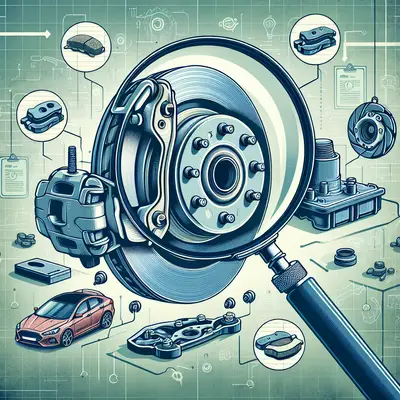
To the uninitiated, brake pads and rotors are simple wear items. To the meticulous owner, they are a matched pair with distinct personalities: bite characteristics, noise tendencies, dust production, and thermal behavior. Choosing them thoughtfully can mean the difference between brakes that merely stop the car and brakes that stop it with quiet consistency and minimal drama.
Pads range from comfort-oriented organic compounds to low-dust ceramic formulations and high-friction semi-metallic options. Rotors vary in metallurgy, design, and cooling efficiency. A pad that performs beautifully on a robust, ventilated rotor may feel harsh or noisy on a thinner, budget disc. Conversely, an economy pad may glaze, fade, or wear irregularly on a premium rotor under repeated hard stops.
When replacing components, think in terms of a “system feel” rather than individual parts. Communicate your driving style—commuter, spirited, urban stop-and-go, frequent highway travel—to your technician or parts supplier. An optimized pad-and-rotor pairing tailored to your usage can reduce noise, limit brake dust, enhance pedal modulation, and extend service life, all while maintaining strong safety margins.
4. Maintaining Caliper Freedom: The Hidden Art of Smooth Braking
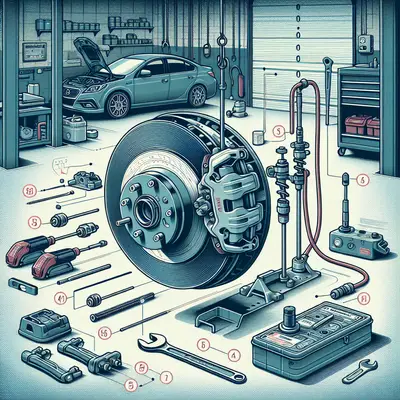
Calipers are the unsung choreography directors of your braking system. They must move freely and evenly for the pads to contact the rotor with proper balance. Over time, caliper slide pins can dry out, corrode, or bind; pad abutment surfaces can accumulate debris; and seals can begin to stiffen. None of this necessarily produces immediate noise, but it quietly undermines even braking.
The result can be subtle pull to one side, uneven pad wear, localized rotor hot spots, or a slightly “lumpy” deceleration that the sensitive driver feels as inconsistency in the pedal. During every major brake service, caliper slide pins should be cleaned and lubricated with the correct high-temperature brake grease, pad hardware should be inspected or replaced, and pistons checked for smooth movement.
Insist that your brake work includes this level of detail rather than a simple pad swap. Elegant braking performance is not just about new friction material; it is about preserving the effortless, symmetric motion of every component that brings pad and rotor together.
5. Aligning Driving Style With Maintenance Strategy
The most refined brake maintenance plan is tailored not just to the car, but to the way it is driven. An owner who navigates dense city traffic, with constant low-speed stops, creates entirely different brake stresses than someone who spends most of their time cruising on the highway. Similarly, hilly terrain, towing, or frequent spirited driving all alter the thermal profile of your braking system.
Rather than relying solely on mileage intervals, consider your maintenance schedule in terms of “brake events.” A driver who makes short, frequent trips with repeated cold stops may see pad glazing, surface rust on rotors, and sticky calipers sooner than the odometer suggests. A driver who regularly descends steep grades or tows may benefit from earlier inspections, fluid changes, and potentially from upgrading to higher-temperature friction materials and rotors.
Be candid with your service professional about your real-world usage—not just how the vehicle was intended to be driven, but how it actually lives day to day. This conversation can lead to adjusted inspection intervals, more appropriate parts choices, and a maintenance strategy that respects both your habits and your safety priorities.
The Role of Environment, Storage, and Time
Vehicles that live outdoors, sit for extended periods, or endure harsh climates face additional brake challenges. Moisture, de-icing chemicals, sea air, and temperature swings accelerate corrosion on rotors, calipers, and lines. Surface rust on rotors after a rainy night is normal, but chronic flaking, pitting, or deep scoring is not.
If your car is not driven frequently, consider taking it for a deliberate drive that includes several gentle, longer braking events to clean off rotor surfaces and keep caliper components moving. This helps prevent sticking and uneven pad deposits. For owners who store vehicles seasonally, a pre‑storage inspection and a post‑storage brake check are prudent safeguards.
Likewise, vehicles used only for short trips often never allow brakes to reach and sustain stable operating temperatures. Moisture can accumulate in the system, and rotors may never fully clean their surfaces. In these cases, more frequent visual inspections and disciplined fluid changes are particularly valuable.
Building a Personal Brake Inspection Ritual
A driver who values elevated safety can benefit from a simple, repeatable self‑inspection routine. This is not about replacing a professional inspection; it is about developing familiarity and catching small concerns early.
Periodically, and especially before long trips, walk around the vehicle in a quiet area and:
- Look through the wheel spokes for approximate pad thickness; if the friction material appears very thin, schedule an inspection.
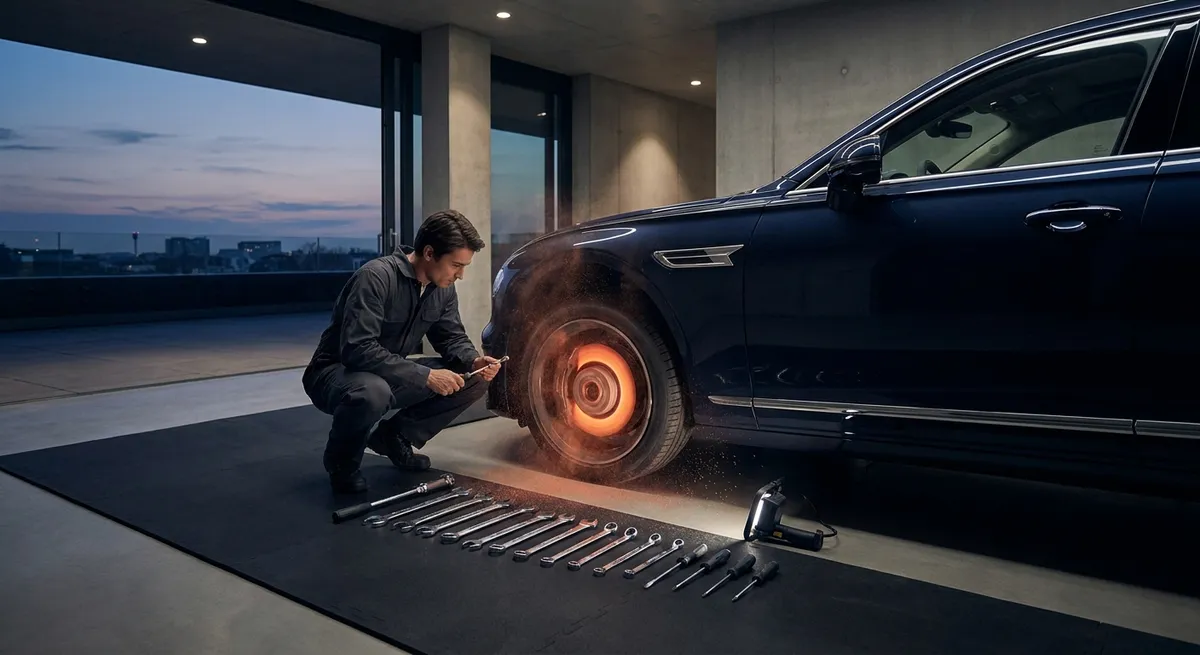
- Note any uneven rotor coloration—bluish spots or heavy grooves suggest heat or wear issues.
- Listen for repetitive scraping, rhythmic thumping, or metallic noises at low speeds with the windows down.
- Gently test braking at different speeds in a safe, straight stretch, feeling for pull, pulsation, or inconsistent engagement.
- Confirm that brake and ABS warning lights illuminate briefly at startup, then clear as designed.
This ritual takes only a few minutes yet reinforces your awareness of the car’s condition. Over time, you will develop an intuitive sense of what “normal” feels and sounds like for your vehicle.
Conclusion
Refined brake maintenance is less about reacting to crisis and more about honoring the quiet, uneventful stops that define safe driving. It lives in the way you notice subtle changes in pedal feel, the respect you give to brake fluid and caliper motion, the care with which you select components, and the honesty with which you assess your own driving habits.
For the owner who refuses to compromise on safety, every service decision becomes part of a larger standard: a commitment to brakes that are not just functional, but predictably, consistently excellent. In that commitment, every journey—whether across town or across states—begins and ends with the assurance that your most important safety system is not merely adequate, but intentionally, elegantly maintained.
Sources
- National Highway Traffic Safety Administration (NHTSA) – Vehicle Maintenance – Federal guidance on vehicle safety and the importance of proper maintenance, including braking systems.
- U.S. Department of Transportation – Brake Fluids Safety Advisory (PDF) – Technical discussion of brake fluid properties, moisture absorption, and safety implications.
- AAA – The Importance of Brake Fluid Maintenance – Explains why routine brake fluid changes matter and how they affect braking performance.
- Car Care Council – Brakes and Brake System Overview – Consumer-focused overview of brake components, symptoms of wear, and recommended service practices.
- University of Nebraska–Lincoln – Brake System Basics (Extension Publication) – Educational material on brake system operation, wear, and maintenance considerations.
Key Takeaway
The most important thing to remember from this article is that this information can change how you think about Maintenance.