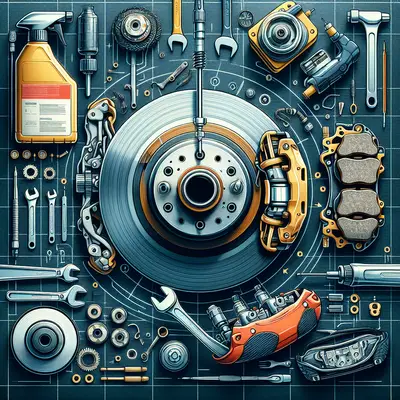
For the discerning driver, a braking system is more than a means to stop; it is the quiet arbiter of safety, control, and composure. When it comes time for repair, the difference between “good enough” and genuinely excellent work is measured in millimeters, torque values, and the discipline behind each decision. This guide is designed for owners who expect their brake repairs to meet a higher standard—technically precise, thoughtfully specified, and executed with the kind of care usually reserved for fine mechanical instruments.
Below are five exclusive, detail‑oriented insights that elevate your perspective from “customer” to informed curator of your vehicle’s safety.
1. Reading the Brake Pedal as a Precision Instrument
Most drivers treat the brake pedal as an on/off switch. You, however, can treat it as feedback from an intricate hydraulic system.
A well‑repaired brake system offers a pedal that is firm yet progressive, with the initial bite arriving predictably rather than abruptly. A spongy or slowly sinking pedal can point to air in the lines, deteriorating rubber hoses, or an internal master cylinder leak—issues that may follow a hurried or poorly executed repair. Conversely, an excessively hard pedal with poor stopping power could indicate a failed vacuum booster or contamination of friction surfaces.
After any brake repair, evaluate not just whether the car stops, but how it stops: Is pedal travel consistent every time? Does the pressure build smoothly? Does the car maintain composure during light, moderate, and firm braking? Treat this as your post‑repair acceptance test. When you can articulate these sensations to your technician, you dramatically improve the quality and accuracy of any follow‑up work.
2. Specifying the Right Friction Material for Your Driving Style
Brake pads are not a commodity; they are tuned components that define the character of every stop. Too often, repair shops default to a mid‑range pad that “works for most drivers.” If your standards are higher, you should be actively involved in that choice.
Ceramic pads generally provide quieter operation, less dust, and a more refined pedal feel—ideal for daily driving and tourers who value cleanliness and composure. Semi‑metallic pads typically offer stronger initial bite and better heat tolerance but often generate more dust and noise. Within each category, there are premium lines with more consistent friction coefficients, better backing plate coatings, and advanced shims to control vibration.
Ask your shop for the pad’s friction rating (the two‑letter code embossed on the backing or box, such as “FF” or “GG”) and ensure it’s appropriate for your vehicle’s weight and use. For a driver who demands predictable, repeatable braking, this friction rating matters more than marketing terms. You are entitled to the same seriousness about pad selection that a manufacturer applies to a performance or luxury model.
3. Insisting on Systemic Repair, Not Just Component Replacement
Brake work is often sold as discrete jobs—“pads and rotors,” “rear pads,” “front calipers.” But safety‑driven owners understand that a brake system functions as a unified whole. Elegant braking comes from harmony, not just new parts.
When one corner of the car receives new components and others are neglected, subtle imbalances appear: uneven pedal feel, slight yaw during hard stops, premature wear on the “untouched” side. At each major brake service, discuss the entire system: pad wear patterns across all wheels, rotor thickness and runout, condition of rubber lines, fluid age, and the cleanliness of caliper slides and hardware.
A shop that takes a truly refined approach will clean and lubricate sliding surfaces with high‑temperature brake grease, renew hardware (clips, pins, anti‑rattle springs) when fatigue or corrosion is visible, and verify caliper piston return. They will also measure rotor thickness rather than merely “eyeballing” it. This systemic mindset does more than improve safety; it preserves the poised, unhurried stopping behavior that separates a well‑cared‑for vehicle from one that simply passes inspection.
4. Elevating Brake Fluid from Afterthought to Safety Asset
Brake fluid is frequently ignored until it looks visibly dark, by which time its performance has already been compromised. For a driver who prioritizes consistency and safety, fluid is not a footnote; it is a consumable with a measurable service life.
Brake fluid is hygroscopic, quietly absorbing moisture from the atmosphere. Over time, this lowers its boiling point, increasing the risk of brake fade under heavy or repeated braking and accelerating internal corrosion in lines, calipers, and ABS components. A premium approach to brake repair includes periodic fluid testing or proactive flushing according to the vehicle manufacturer’s time‑based recommendation—typically every two to three years, even for vehicles that are driven gently.
When booking brake work, request a fluid service that includes:
- Complete flush using fluid that meets or exceeds the factory‑specified DOT rating
- Proper bleeding sequence for your specific vehicle and ABS configuration
- Attention to reservoir cleanliness and cap seals
This ensures your brake pedal remains reassuringly consistent, even during demanding situations such as mountain descents, emergency stops, or fully loaded highway travel.
5. Verifying the Repair with a Structured Post‑Service Road Test
The most overlooked portion of a brake repair is the evaluation drive. For owners who treat safety as non‑negotiable, this is where craftsmanship is either confirmed or called into question.
After any brake job, perform a deliberate, structured road test (ideally with plenty of open space and no distractions). Start with gentle stops to bed the pads and rotors, following any specific break‑in procedure recommended by the manufacturer. Listen carefully for subtle noises: light scraping, intermittent chirps, or low‑frequency droning under moderate braking can signal issues with rotor finish, hardware fitment, or pad glazing.
Progress to firmer stops, noting:
- Does the vehicle track straight, hands lightly resting on the wheel?
- Does the ABS engage smoothly and predictably during a controlled hard stop on a safe, empty road?
- Does the pedal retain its firmness over a series of stops, or does it soften, indicating possible fluid or heat issues?
If anything feels inconsistent, return promptly and describe your observations clearly. A premium‑oriented shop will welcome this level of detail and see it not as criticism, but as evidence that you value precision as much as they do.
Conclusion
Brake repair, when approached thoughtfully, becomes a discipline of refinement: selecting the right friction materials, respecting fluid as a lifeline, caring for the system as an integrated whole, and validating the work with your own informed senses. As a car owner who refuses to delegate safety entirely to chance, you are not merely approving estimates—you are curating the invisible standard that governs every journey.
When you insist on these elevated practices, you transform every stop from a routine action into a quiet demonstration of control, preparedness, and respect for the mechanics that protect you.
Sources
- National Highway Traffic Safety Administration (NHTSA) – Brakes - U.S. government guidance on brake safety, performance, and defect investigations
- U.S. Department of Transportation – Brake Fluids (FMVSS No. 116) - Official standards defining DOT brake fluid specifications and performance criteria
- AAA – Car Brake Systems: How They Work and When to Service Them - Accessible overview of brake components, warning signs, and recommended service intervals
- Consumer Reports – How to Know When You Need New Brakes - Independent guidance on recognizing brake problems and evaluating repair quality
- Society of Automotive Engineers (SAE) – Brake System Standards Overview - Technical reference for industry standards governing modern automotive braking systems
Key Takeaway
The most important thing to remember from this article is that this information can change how you think about Repair Guides.