In truly well‑sorted cars, confident braking feels less like an emergency response and more like a quiet contract between engineering and intention. The pedal’s resistance, the way the chassis settles, the absence of drama—none of this is accidental. It is the result of a precisely orchestrated brake system whose details often remain unseen, yet decisively shape your safety. For discerning drivers, understanding these subtleties is not about becoming a mechanic; it is about aligning your expectations with what refined stopping performance should feel like—and noticing the moment it begins to slip.
This article explores how modern brake systems communicate through feel, sound, and behavior. Along the way, you’ll find five exclusive insights that reward drivers who refuse to treat braking as an afterthought.
Understanding Brake Architecture: More Than Pedal and Pads
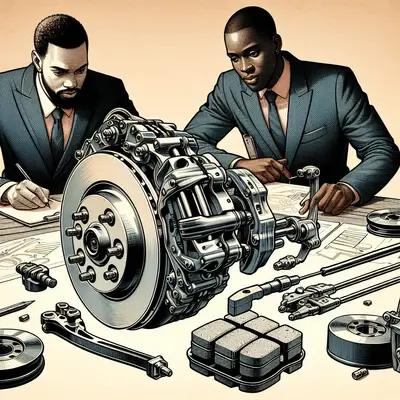
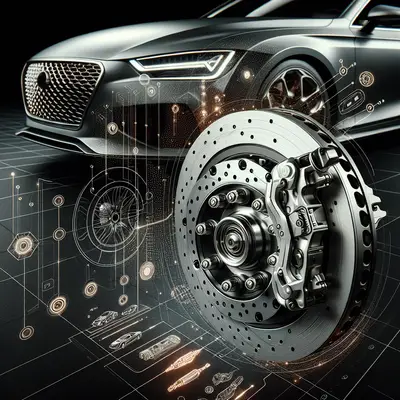
Beneath a seemingly simple pedal lies a network of components designed to translate gentle foot pressure into controlled deceleration. At its core, your brake system consists of a master cylinder, brake lines, calipers, pads, rotors (or drums), and, in most modern cars, electronic control units governing ABS and stability functions.
When you press the pedal, fluid is pressurized in the master cylinder and routed through brake lines to each wheel. Calipers clamp the pads against the rotors, converting kinetic energy into heat, which is then dissipated into the air. What separates a merely adequate system from an exceptional one is not just component quality, but how cohesively each part is matched to the others—rotor size to vehicle weight, pad compound to driving style, and fluid specification to intended operating temperatures.
This “architecture” matters because a weak link anywhere—soft hoses, subpar pads, or neglected fluid—compromises the entire chain. For owners who are particular about ride quality and steering feel, the brake system deserves to be treated with the same scrutiny as tires and suspension. The result is not just shorter stopping distances, but a distinctly composed, predictable response every time you ask the car to slow.
Exclusive Insight #1: Pedal Feel Is Your Most Underrated Safety Instrument
Most drivers treat the brake pedal as a simple on/off control. In reality, it is one of the most sensitive diagnostic tools in the car, constantly reporting on system health.
A refined brake system has:
- A clear initial “bite” when the pads first contact the rotors
- A firm, progressive increase in resistance as you press further
- Minimal travel change over time when the system is healthy
A slowly “sinking” pedal at a stoplight, a spongy sensation after a few hard stops, or an inconsistent response from day to day are not just annoyances—they are early warnings. These changes may indicate air in the lines, degraded fluid, swollen rubber hoses, or even internal wear in the master cylinder.
The sophisticated approach is to mentally calibrate your sense of normal. Pay attention to how the pedal feels after professional service, on a crisp morning, or after a long downhill. Once you imprint that baseline, you’re far more likely to catch subtle degradations weeks or months before they escalate into a real risk.
Takeaway: Treat pedal feel as a daily status report, not a background sensation. When it changes, the system is telling you something important.
Exclusive Insight #2: Heat Management Determines How Your Brakes Behave Under Pressure
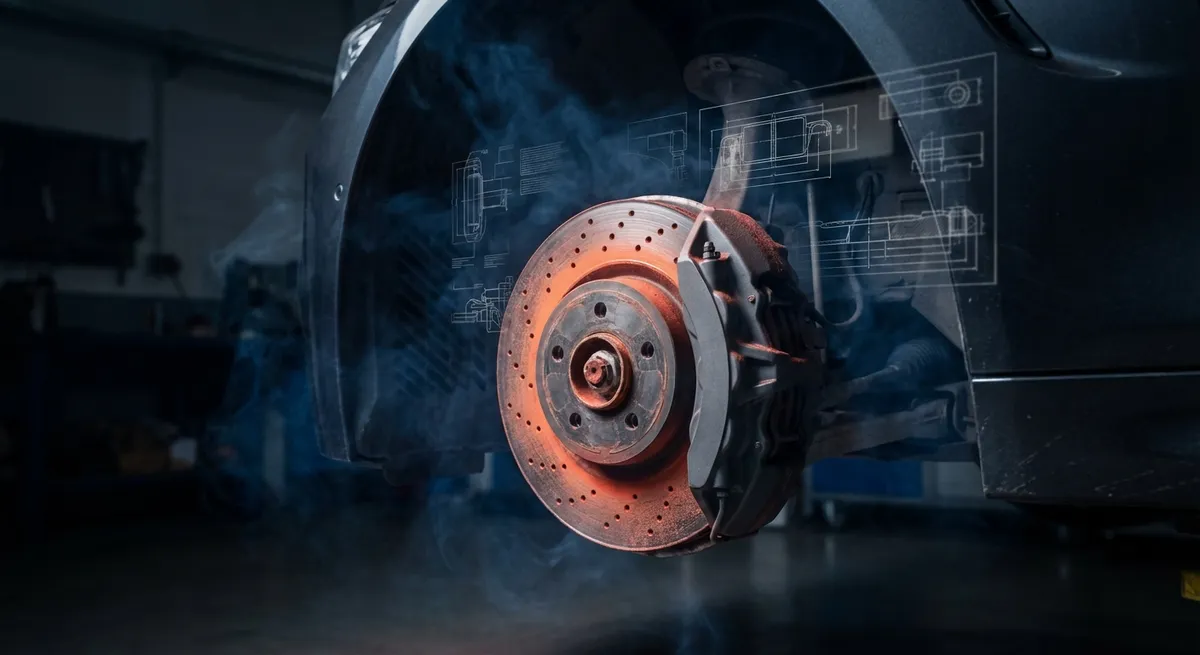
Braking is a controlled conversion of motion into heat. In demanding conditions—mountain descents, spirited driving, towing, or hot climates—your safety depends on how gracefully your system manages that heat.
Excessive heat can:
- Temporarily reduce pad friction (brake fade)
- Boil brake fluid, introducing vapor and causing a softer pedal
- Warp rotors, leading to vibration and uneven braking
- Accelerate pad and rotor wear dramatically
What separates an average setup from a well‑optimized one is thermal resilience. Larger rotors, ventilated designs, high‑boiling‑point brake fluid, and well‑chosen pad compounds all contribute to a system that remains consistent even when pushed.
For the attentive owner, the key is recognizing the early, elegant warning signs of thermal stress:
- A slightly longer pedal travel after repeated hard stops
- A faint, hot, metallic smell near the wheels after a steep descent
- A subtle “glazing” sheen on pads or rotors visible through open‑spoke wheels
If you frequently drive in conditions that challenge your brakes, discussing higher‑spec pads or fluid with a qualified technician is not an indulgence—it’s a refined form of risk management.
Takeaway: Think of your brake system as a heat‑management device first. The more gracefully it handles temperature extremes, the more consistent and trustworthy it will feel.
Exclusive Insight #3: The Front–Rear Balance Shapes How Your Car Behaves in a Crisis
Many drivers focus solely on the front brakes, assuming they carry all the responsibility. While it’s true that the front axle does more of the work under braking, the balance between front and rear is what determines how composed the car remains when you need it most.
An imbalanced system can manifest as:
- Excessive front‑end dive, giving a nose‑heavy, unsettled feel
- Rear instability, where the car feels nervous or light under hard braking
- Premature ABS intervention, especially on one axle more than the other
- Uneven pad and rotor wear between front and rear
Modern vehicles rely on both mechanical and electronic strategies to maintain this balance—proportioning valves, electronic brake‑force distribution, and stability control all orchestrate how braking is shared between axles.
The refined owner watches for changes in how the car’s weight shifts when coming to a stop. If the rear feels unusually lively, or if the front wheels lock or trigger ABS sooner than expected, it may signal issues like seized rear calipers, contaminated rear pads, or a malfunctioning proportioning system.
Takeaway: True brake confidence comes not just from how quickly you stop, but from how gracefully the car remains in line while doing so. Balance between axles is a crucial part of that composure.
Exclusive Insight #4: Brake Noise, Dust, and Vibration Are Data—Not Just Irritations
Squeaks, squeals, grinding, dust on wheels, and steering‑wheel vibration are often dismissed as cosmetic issues. For the driver who values refinement and safety, they are useful—and sometimes urgent—signals.
Consider how to interpret them:
- Light squeal at low speeds may indicate surface rust, harmless glazing, or inexpensive pad material; persistent squeal under many conditions warrants inspection.
- Grinding or scraping is a red‑flag symptom that pads may be worn down to their backing plates, potentially damaging rotors.
- Pulsation or vibration in the pedal or steering wheel under braking can signal rotor thickness variation, uneven pad deposits, or improper wheel torque.
- Excessive dust may reflect pad composition; in some premium setups, slightly more dust is the trade‑off for superior friction and consistency.
Rather than insisting on absolute silence at all times, the sophisticated approach is to distinguish between benign character and concerning change. A new noise that appears suddenly and grows over days or weeks deserves attention—even if braking performance initially feels acceptable.
Takeaway: Your brakes are constantly communicating. Listening with intention allows you to separate harmless quirks from early warnings of a developing problem.
Exclusive Insight #5: Brake Fluid Is the Quiet Custodian of Modern Safety Systems
Pads and rotors are easy to see and understand; brake fluid, by contrast, is invisible and frequently ignored. Yet in modern vehicles, this single component underpins not just basic braking, but advanced systems such as ABS, traction control, and electronic stability programs.
Over time, brake fluid absorbs moisture from the air—a process called hygroscopicity. This:
- Lowers its boiling point, making vapor lock more likely in high‑heat situations
- Encourages internal corrosion in lines, calipers, and ABS components
- Degrades pedal consistency, especially after repeated heavy braking
For a driver concerned with subtle, predictable control, adhering to the manufacturer’s recommended fluid‑change interval is non‑negotiable. In certain climates or demanding driving conditions, a more conservative interval or a higher‑spec fluid may be advisable.
A premium mindset treats brake fluid not as a background consumable, but as an essential part of the vehicle’s “nervous system.” Clear documentation of when it was last changed—and with what specification—belongs in the same folder as your tire data and service history.
Takeaway: If pads and rotors are the muscles of your brake system, fluid is the bloodstream. Keeping it fresh is one of the most cost‑effective ways to preserve refined, consistent stopping performance.
Conclusion
Exceptional braking is not defined solely by how quickly a car can come to a halt on a test track. It is measured by the quiet certainty you feel every time your foot meets the pedal—the assured, repeatable response, the absence of drama, the sense that the car is entirely on your side when conditions deteriorate.
By becoming attuned to pedal feel, heat behavior, front–rear balance, acoustic and tactile feedback, and the condition of your brake fluid, you evolve from a passive user of your braking system into a discerning steward of it. That shift in attention is subtle, but its impact on safety and driving satisfaction is profound.
When you recognize that your brake system is not just hardware but a finely coordinated geometry of pressure, heat, and control, you begin to insist—rightly—on nothing less than elegance in every stop.
Sources
- National Highway Traffic Safety Administration (NHTSA) – Brake Systems Overview - Explains core brake system components and safety considerations from a regulatory perspective
- U.S. Department of Transportation – FMVSS No. 135: Light Vehicle Brake Systems - Details federal performance standards that modern passenger vehicle brake systems must meet
- University of Nebraska–Lincoln – Automotive Brake Systems Educational Module - Provides technical insights into brake system design, operation, and heat management
- Brembo – Technical Insights on Brake Fade and Heat - Discusses how heat affects braking performance and the mechanisms behind brake fade
- Continental Teves – Brake Fluid FAQ - Offers in‑depth information on brake fluid properties, moisture absorption, and replacement intervals
Key Takeaway
The most important thing to remember from this article is that this information can change how you think about Brake Systems.