In a world where vehicles are increasingly complex yet deceptively effortless to operate, the brake system remains the quiet sentinel between control and catastrophe. For drivers who expect more than mere functionality—who value precision, predictability, and a sense of composed safety—understanding brakes is not a hobby; it is a form of stewardship. This guide steps beyond basic maintenance to explore how a discerning driver can cultivate true brake system integrity, from pedal feel to thermal management, with five exclusive insights that transform “it stops” into “it stops exactly as intended.”
The Character of a Brake Pedal: Reading Feel Like a Fine Instrument
Most drivers register only two brake states: “working” and “not working.” The refined driver, however, treats the pedal as an instrument—subtle, communicative, and diagnostic.
A firm, progressive pedal that responds consistently from one stop to the next indicates a system in harmony: properly bled hydraulic lines, healthy master cylinder seals, and compatible pad and rotor materials. A pedal that feels spongy, travels farther than usual, or changes character after repeated stops is not merely “annoying”; it is a sign that heat, moisture, or component wear is compromising hydraulic precision.
Drivers who pay attention to pedal personality can often sense air in the lines, degraded brake fluid, swollen rubber hoses, or early master cylinder failure well before a dash light ever illuminates. Treat pedal feel as you would a luxury timepiece’s movement—any change in smoothness, resistance, or response is worth investigating, not tolerating.
Exclusive Insight #1:
Refined drivers keep a mental “pedal journal”—not on paper, but in awareness. Notice how the pedal behaves during the first stop of the day, in heavy traffic, on long descents, and during emergency braking practice. A consistent pedal character over time is not an accident; it is the signature of a well-maintained, uncompromised brake system.
Brake Fluid as a Precision Medium, Not an Afterthought
Brake fluid is often ignored because it is invisible under normal use, quietly transferring force from your foot to each corner of the car. Yet it is the lifeblood of hydraulic braking—and its condition strongly influences stopping power, pedal consistency, and system longevity.
Over time, brake fluid absorbs moisture from the air, even in a closed system. This lowers its boiling point and invites internal corrosion. Under demanding conditions—spirited driving, mountain descents, or repeated hard stops—contaminated fluid can vaporize, creating compressible bubbles that cause brake fade and a soft pedal. This is not a theoretical risk; it is a predictable outcome of neglect.
Premium ownership means respecting the brake fluid change interval not as a suggestion, but as a standard. Many manufacturers recommend replacing fluid every 2–3 years, even if mileage is low. For drivers who tow, regularly drive in hilly regions, or simply insist on crisp pedal response, a more frequent schedule can be justified.
Exclusive Insight #2:
Serious drivers treat brake fluid like they treat engine oil: a consumable with a service life, not an eternal component. Specifying the correct fluid type (DOT 3, DOT 4, DOT 5.1, etc.) and refreshing it proactively preserves not only stopping power but also the internal dignity of calipers, ABS valves, and master cylinders.
Beyond Pads and Rotors: Calipers, Hoses, and Hardware as a System
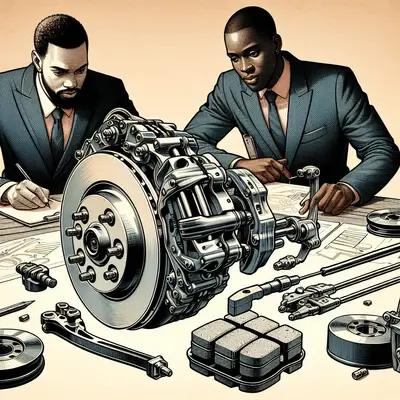
Brake pads and rotors receive most of the attention because they are obvious wear items. Yet a truly trustworthy system depends on a cadre of quiet supporting actors: calipers, slide pins, hoses, and mounting hardware. When these are neglected, even excellent pads and rotors cannot deliver refined, predictable braking.
Caliper slide pins that are dry, corroded, or partially seized can cause uneven pad wear, pulling under braking, and hot spots on the rotor. Aging rubber hoses may swell internally, creating a delayed release of pressure—resulting in brakes that feel “sticky” or inconsistent. Hardware like anti-rattle clips and shims, often dismissed as trivial, actually influence noise, pad stability, and even wear patterns.
Discerning drivers insist that any brake service be more than a pad-and-rotor swap. Proper cleaning, lubrication of slide pins with high-temperature brake grease, inspection of caliper piston boots, evaluation of flexible hoses for cracking or bulging, and replacement of fatigued hardware are all part of a refined standard.
Exclusive Insight #3:
When evaluating a shop or technician, ask how they treat caliper slide pins, hoses, and hardware during a brake job. A vague answer is a warning sign. Precision braking is not just about what goes on; it is about what gets properly inspected, cleaned, and renewed around it.
Thermal Management: Treating Heat as the Silent Adversary
Brakes are, fundamentally, heat machines. They convert kinetic energy into thermal energy, and how gracefully they manage that heat determines both performance and longevity. Drivers who understand brake temperature dynamics gain a significant safety advantage.
Heavy braking on long descents, repeated aggressive stops, or sudden panic braking from highway speeds can push pads and rotors to their thermal limits. When overheated, pads can outgas, forming a thin layer between pad and rotor that reduces friction; rotors can glaze or develop subtle surface irregularities, and fluid near the caliper can approach its boiling point. The sensation to the driver: a longer pedal travel, reduced bite, and a vague, uneasy lack of confidence.
Thoughtful techniques—such as using lower gears to assist with speed control on descents, allowing brief cooling intervals after hard stops when possible, and avoiding riding the brakes downhill—protect the system. For vehicles frequently exposed to heavy loads or spirited driving, upgraded components designed for higher temperature tolerance can provide a more consistent, fade-resistant experience.
Exclusive Insight #4:
Refined drivers think of their brakes the way a connoisseur thinks about a high-performance engine: sustained abuse without cooling will always extract a price. Giving your brakes a chance to shed heat—strategically using engine braking and avoiding unnecessary prolonged pedal pressure—preserves not just stopping power, but also the graceful, predictable feel that distinguishes a well-kept system.
The Sound and Silence of Confidence: Listening with Intention
Noise is often dismissed as a mere nuisance, but for those attuned to their car, sound is information. Not all squeals or chirps are causes for alarm, but they are rarely meaningless.
Many pads incorporate wear indicators—small metal tabs designed to emit a high-pitched squeal when pads reach a service threshold. A faint, consistent squeal under light braking may be your system’s polite request for attention, long before braking performance is compromised. Grinding, on the other hand, is not a request; it is a declaration that friction material may be gone and metal is contacting metal.
Even subtle changes—the occasional chirp when reversing, a brief squeak in damp conditions, or a light hum at highway speeds under braking—can be clues. They may point to pad glazing, rotor surface irregularities, rust buildup on rotor edges, or inexpensive pads with poor acoustic design. A refined brake system is not merely powerful and consistent; it operates with an almost unremarkable quiet, even under demanding use.
Exclusive Insight #5:
Thoughtful drivers curate an aural baseline for their vehicle. They know what their brakes normally sound like during cold starts, in the rain, and after spirited driving. Any new or persistent noise is treated not with anxiety, but with curiosity—and, when appropriate, a timely inspection. The reward is early detection, lower repair costs, and fewer unwelcome surprises.
Conclusion
Brake systems reward attention in a way few other components do. They reveal their condition through feel, sound, heat behavior, and even the character of the fluid that moves within them. For drivers who embrace a premium standard of safety and control, brakes are not just a maintenance line item; they are a deliberately maintained instrument of confidence.
By reading pedal feel like a precision gauge, respecting brake fluid as a vital medium, insisting on full-system care beyond pads and rotors, managing heat with intention, and listening carefully to the system’s acoustic signals, you anchor your driving experience in something far deeper than “it stops.” You cultivate a brake system that is composed, consistent, and quietly prepared—every time you press the pedal.
Sources
- [National Highway Traffic Safety Administration (NHTSA) – Brakes and Safety](https://www.nhtsa.gov/equipment/brakes) – Overview of brake system components, safety considerations, and regulatory information.
- [U.S. Department of Transportation – Brake Systems Basics (FMVSS Reference)](https://www.ecfr.gov/current/title-49/subtitle-B/chapter-V/part-571) – Federal Motor Vehicle Safety Standards related to braking performance and system requirements.
- [University of Texas at Austin – Automotive Brake Systems Teaching Module (ME Dept.)](https://www.me.utexas.edu/~longoria/pubs/brakes_module.pdf) – Educational overview of brake system dynamics, heat, and hydraulic behavior.
- [Brembo – Technical Insights on Brake Systems](https://www.brembo.com/en/company/news/braking-system-how-it-works) – Detailed explanation of modern disc brake systems, components, and performance considerations from a leading brake manufacturer.
- [Car and Driver – The Basics of Brakes](https://www.caranddriver.com/features/a15145034/brakes-tech-department) – Accessible yet technical discussion of pads, rotors, fluid, and brake fade in real-world driving.
Key Takeaway
The most important thing to remember from this article is that this information can change how you think about Brake Systems.