For the discerning driver, the braking system is not merely a mechanical necessity; it is the quiet guardian of every journey. Understanding it at a nuanced level transforms routine maintenance into a deliberate act of protection—of your passengers, your vehicle, and your peace of mind. This briefing explores how modern brake systems truly work and offers five exclusive, detail‑oriented insights that safety‑conscious owners rarely hear from a quick-service counter.
How a Modern Brake System Actually Orchestrates a Stop
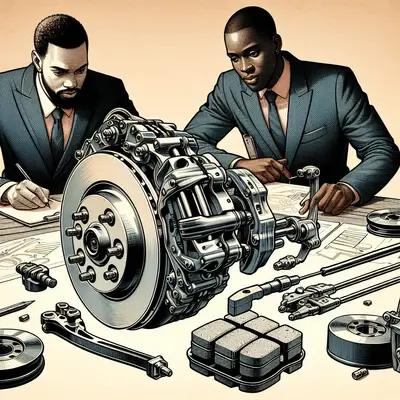
Beneath the pedal, your brake system is a carefully balanced hydraulic network. When you apply the brake, a piston inside the master cylinder pressurizes brake fluid, sending force through steel lines and flexible hoses to the calipers (or wheel cylinders in drum setups). The caliper clamps brake pads onto the rotors, transforming kinetic energy into heat through friction.
An anti‑lock braking system (ABS) then refines this process. Wheel speed sensors constantly watch each wheel’s rotation. If a wheel begins to lock under hard braking, the ABS module rapidly modulates pressure at that corner, allowing the tire to regain grip while maintaining deceleration. The result is steering control even under panic braking—provided the tires and suspension are in equally meticulous condition. Electronic stability control and brake assist further augment this orchestra, leveraging braking power to stabilize the vehicle when the system detects a potential loss of control.
The Often‑Ignored Role of Brake Fluid Condition
Brake fluid is the lifeblood of hydraulic braking—and it ages in ways that are visually subtle yet functionally significant. Most brake fluids are hygroscopic, meaning they absorb moisture from the air over time, even through microscopic permeation of rubber hoses and seals. As water content rises, the fluid’s boiling point falls. Under repeated or hard braking, fluid in overheated calipers can boil, allowing compressible vapor bubbles to form. The pedal may feel spongy or sink toward the floor, exactly when decisive stopping power is essential.
Beyond boiling concerns, moisture accelerates internal corrosion in lines, ABS valves, and calipers. Rust flakes and sludge can compromise delicate passages and seals, leading to uneven braking or ABS malfunctions. A refined brake maintenance approach therefore treats fluid not as “lifetime” but as a consumable. Rather than waiting for a vague symptom, many safety‑focused owners adopt an interval of 2–3 years for a full brake fluid exchange, verified by measuring fluid moisture content or boiling point with professional equipment.
Insight 1: Pedal Feel as an Early Warning Instrument
Most drivers notice noisy brakes; far fewer pay attention to the subtleties of pedal feel. Yet the pedal is your most immediate diagnostic interface with the system. A crisp, consistent pedal that firms predictably as pressure is applied usually suggests a healthy hydraulic system. Deviations from that familiar sensation are often the first, quiet signals of trouble.
A gradually softening pedal over weeks or months may indicate internal seal wear, minor fluid leaks, or air entering the system. A pedal that is initially firm but slowly sinks under steady pressure can point to an internal leak in the master cylinder. Conversely, a pedal that becomes excessively hard—requiring more effort for the same stopping effect—can implicate vacuum booster issues, a failing vacuum pump, or restricted lines. The sophisticated driver intentionally notes pedal character during normal commutes. Even slight, progressive changes, especially when accompanied by increased stopping distances, deserve a professional inspection long before an obvious failure appears.
Insight 2: Rotor Surface and Thickness as a Reflection of Brake Health
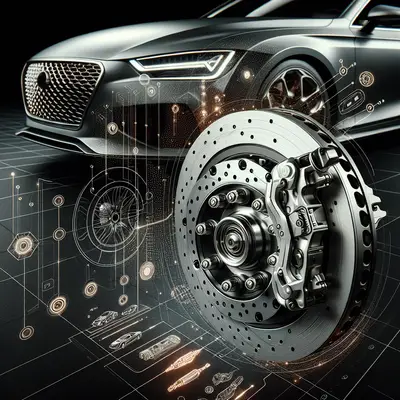
Brake rotors are more than simple discs; they are precision components whose surfaces tell a story. A carefully machined, even rotor with a faint, uniform wear pattern indicates healthy pad contact and stable braking forces. Deep grooves, heavy scoring, blue discoloration, or patchy rust patterns point to issues that extend beyond mere aesthetics.
Overheating (often visible as a blue or purple hue) suggests sustained high temperatures frequently caused by seized caliper slide pins, sticking pistons, or improper driving habits such as riding the brakes downhill. Uneven pad deposits can create brake “judder,” often misinterpreted as “warped rotors.” In many cases, the rotor is not physically warped but has inconsistent friction layers from the pad, leading to vibration through the steering wheel or pedal. A premium approach considers rotor thickness and runout measurements, not just visual inspection. Machining or replacing rotors before they approach minimum thickness maintains thermal capacity and helps prevent heat‑related fade during emergency braking.
Insight 3: Caliper Hardware and Lubrication as the Hidden Guardians
Many quick brake jobs focus on pads and rotors while neglecting the small hardware and lubrication that enable precise caliper movement. Slide pins must glide freely, allowing the caliper to center itself and apply even pressure across the pad. If these pins corrode or dry out, the caliper may bind, causing one pad to wear significantly faster than the other, producing uneven braking force and additional heat on a single wheel.
The abutment clips that the pads rest against should be clean, undamaged, and lightly lubricated with high‑temperature, brake‑specific lubricant—not general-purpose grease. Rust buildup under these clips can prevent pads from retracting smoothly, leading to persistent light contact, noise, and premature wear. A premium‑minded owner insists that any brake service includes careful cleaning, inspection, and proper lubrication of hardware, not just pad replacement. This attention to detail not only extends component life but also stabilizes and refines braking response over thousands of miles.
Insight 4: Tire and Suspension Condition as Extensions of Your Braking System
It is easy to think of brakes as isolated components, but in practice, stopping performance is the combined work of tires, suspension, and brakes acting together. Even a flawless brake system cannot overcome worn tires with compromised tread depth or hardened rubber. In the wet, a near‑bald tire can more than double stopping distance compared with a new, quality tire, regardless of pad brand or rotor size. For a safety‑oriented owner, routine tread depth measurements (in multiple locations across each tire) and awareness of tire age—typically replacing around six years from manufacture, even if tread remains—are non‑negotiable.
Likewise, worn shocks or struts degrade how effectively weight transfers to the front tires under braking. Excessive dive can unsettle the vehicle, reduce tire contact patch efficiency, and activate ABS sooner and more frequently, lengthening real‑world stopping distances. A premium perspective treats the suspension as a structural part of the brake ecosystem. If the vehicle feels floaty, bouncy, or unstable under hard braking, the solution may be as much about dampers and bushings as about pads and rotors.
Insight 5: ABS Behavior and the Value of Controlled Familiarization
Many drivers have never intentionally activated their ABS in a controlled setting, leading to confusion in emergencies. The pulsation in the pedal, rapid clicking sounds, and momentary changes in braking feel can be startling. Some drivers mistakenly lift off the pedal at precisely the wrong moment, forfeiting the major advantage ABS provides. An informed and refined approach is to become familiar with this system long before it is needed.
On a safe, open, and legal surface—such as a driver training facility or closed course—experiencing an ABS stop under instruction allows you to recognize the sensations: the pedal pulsation, the noise, and the way the vehicle remains steerable even when braking heavily. This calm familiarity translates into composed reactions when an actual emergency arises. Instead of panic, the driver simply maintains firm pressure and steers around hazards, allowing ABS and electronic stability systems to fulfill their design. Understanding that ABS is not about shortening every stop, but about preserving control and stability, reframes it as a subtle yet indispensable partner in advanced driving safety.
Insight 6: Brake Noise as a Precisely Decodable Signal
While some minor noise can be characteristic of high‑performance pads or occur briefly in damp conditions, persistent changes in brake sound deserve careful attention. A discreet, high‑pitched “chirp” often comes from built‑in wear indicators—metal tabs that gently contact the rotor when pad material reaches a defined minimum. This is an intentionally engineered early warning, not yet a crisis, but an invitation to schedule service soon under calm conditions.
Grinding, on the other hand, indicates that friction material is likely depleted, allowing the metal backing plate to contact the rotor directly. At that stage, heat, rotor damage, and compromised stopping power escalate rapidly. Rhythmic scraping or cyclical noises that vary with wheel speed may point to warped or damaged rotors, trapped debris, or a partially stuck caliper. The sophisticated approach is not to panic at every squeak, but to recognize and interpret sound changes as specifically as possible, and then seek professional evaluation before minor issues become structural repairs.
Elevating Routine Care into Predictable Safety
A braking system in excellent condition is rarely dramatic; it simply performs with calm authority every time you ask it to. By attending not just to obvious symptoms, but to the more refined indicators—the nuance of pedal feel, the condition of fluid, the precision of hardware movement, the health of supporting tires and suspension—you turn brake maintenance into a deliberate safety strategy rather than an emergency expense.
For the attentive owner, these five (and more) insights are not about becoming a technician, but about becoming an expert steward of your own vehicle. When you treat your brakes as a carefully engineered safety instrument rather than a set of expendable parts, every stop becomes a quiet affirmation that you have invested wisely in control, confidence, and the well‑being of everyone who rides with you.
Sources
- [National Highway Traffic Safety Administration (NHTSA) – Brake Safety](https://www.nhtsa.gov/equipment/brakes) – Overview of brake system safety, ABS, and recalls from a U.S. government authority
- [Federal Motor Carrier Safety Administration – Brake Systems](https://www.fmcsa.dot.gov/safety/driver-safety/driving-tips-brake-systems) – Technical and safety guidance on braking systems and braking technique
- [Continental – How Anti-Lock Braking Systems Work](https://www.continental-automotive.com/en-gl/Passenger-Cars/Vehicle-Dynamics/Brakes/ABS) – Detailed explanation of ABS technology from a major braking and safety systems manufacturer
- [Brembo – Brake Discs, Pads and Brake Fluid Essentials](https://www.brembo.com/en/company/news/brake-fluid-brake-discs-and-pads) – Technical insights on rotors, pads, and brake fluid behavior from a leading performance brake brand
- [University of Nebraska–Lincoln – Tire Safety and Performance](https://truckingsafety.org/resources/tire-safety) – Educational material explaining how tire condition affects braking and overall vehicle safety
Key Takeaway
The most important thing to remember from this article is that this information can change how you think about Brake Systems.