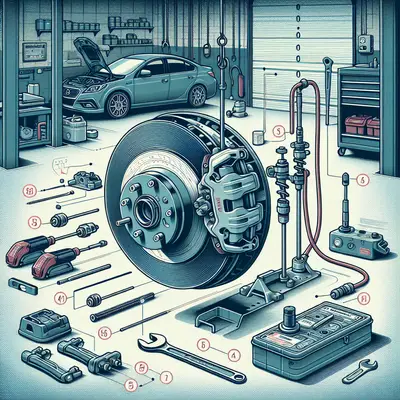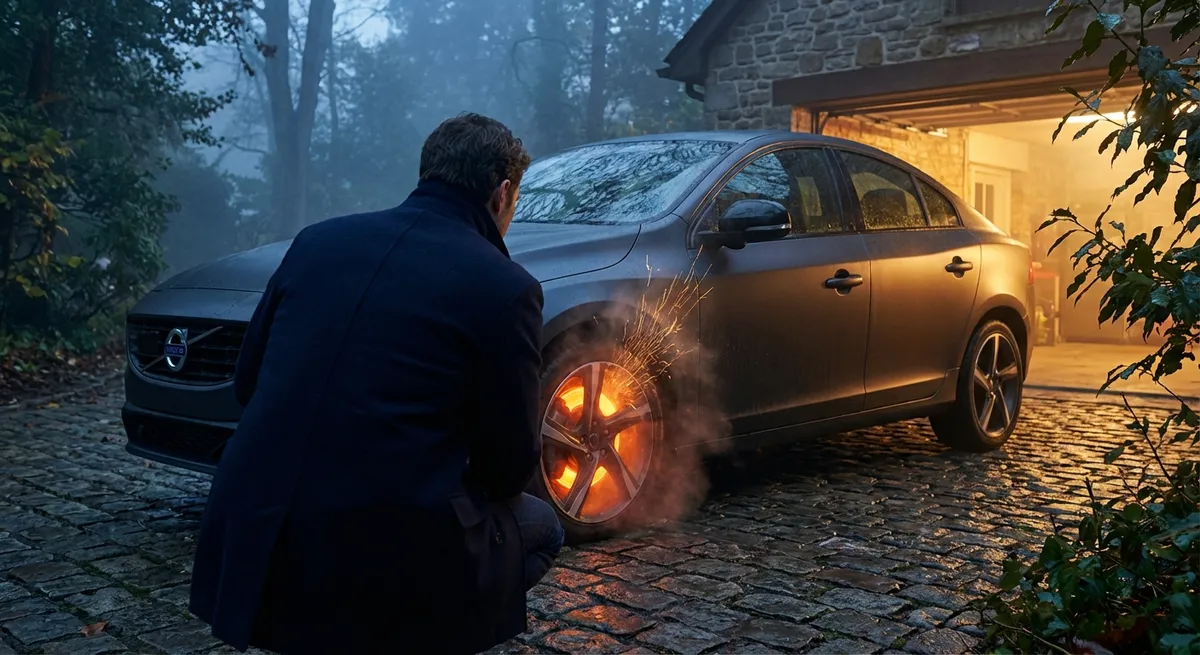
For discerning drivers, brake maintenance is not merely a line item on a service invoice; it is an ongoing ritual that shapes every mile and every stop. Rather than waiting for squeals, shudders, or warning lights, a refined approach treats the brake system as a precision instrument—one that deserves measured attention, thoughtful observation, and deliberate upkeep.
What follows is a premium, detail-oriented perspective on brake care: five exclusive insights that move beyond basic maintenance and into the realm of confident, composed braking.
Elevating the “Brake Check” Into a Driving Habit
Most drivers think of a brake check as something a technician performs in a service bay. The attentive owner, however, treats every drive as a subtle assessment.
As you enter a familiar stretch of road, gently test the pedal feel: note how far it travels before engagement, how firmly it responds, and whether the vehicle tracks straight under light and moderate braking. This quiet audit takes only seconds but, repeated over time, builds an internal benchmark for what “normal” feels like.
Any deviation—sponginess, a longer pedal stroke, a slight pull to one side, or a new vibration—becomes immediately noticeable. Instead of dismissing it as “road texture” or “just the wind,” you recognize it as early data. This habit transforms you from a reactive owner into a proactive steward of your braking system, catching subtle changes before they become urgent repairs or safety risks.
Treating Brake Fluid Like a Precision Component, Not a Footnote
Brake fluid is often the most neglected part of the system, yet it has a disproportionate impact on performance and safety. It is hygroscopic—meaning it absorbs moisture over time—which lowers its boiling point and can corrode internal components.
A refined owner does not wait for a dramatic symptom like pedal fade on a steep descent to consider fluid health. Instead, brake fluid is treated with the same seriousness as engine oil in a performance vehicle: something to be tested, monitored, and replaced according to both time and usage, not simply mileage.
Investing in periodic brake fluid testing (many shops can measure moisture content and boiling point) provides objective data. If you frequently drive in hilly regions, tow, or navigate stop‑and‑go urban traffic, your fluid may degrade faster than the factory interval suggests. Replacing it proactively preserves pedal firmness, protects calipers and ABS modules from corrosion, and ensures that when you ask the system for maximum effort, it responds without hesitation.
Matching Brake Components to Driving Style and Environment
Pads, rotors, and hardware are not one-size-fits-all items; they are tuning choices that should reflect how and where you drive. Many owners simply accept whatever “standard” parts are installed during a quick service, unaware that different formulations can refine noise, dust, bite, and longevity.
The sophisticated approach is to match components to your reality. For predominantly urban driving, a high-quality ceramic pad can offer quiet operation and low dust, preserving the appearance of premium wheels. For frequent mountain drives or spirited highway use, a premium semi-metallic pad with rotors designed for better heat management can maintain consistent braking under repeated high-energy stops.
This isn’t about turning your daily driver into a track car; it’s about aligning the character of the brake system with your expectations. By consulting your owner’s manual and discussing your typical driving profile with a trusted technician, you can specify components that align with both safety and refinement—minimizing squeal, harshness, and premature wear.
Seeing Beyond the Wheel: The Art of Visual Brake Inspection
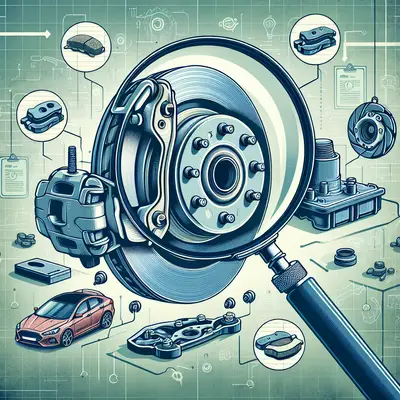
You don’t need a lift or a full workshop to cultivate a visually attentive relationship with your brakes. A simple, deliberate look through the wheel spokes or behind the wheel during tire rotations can reveal a surprising amount of information.
Observe pad thickness: if the friction material (not the backing plate) looks extremely thin or uneven from side to side, it’s an early sign that attention is due. Look at the rotor surface: a smooth, even, metallic sheen is ideal, whereas deep grooves, heavy ridges at the outer edge, or obvious discoloration (blue or purple spots) may signal heat stress or uneven contact.
On vehicles with open-wheel designs, you can occasionally spot rust buildup on rotors if the car is parked outside for extended periods. While light surface rust after rain is normal and often cleared with driving, persistent heavy scaling or flaking may affect braking smoothness. This quiet, visual discipline allows you to notice trends over time—turning routine glances into meaningful safety checks.
Curating a Brake-Friendly Driving Style Without Sacrificing Pace
Brake longevity and consistency are not just about parts and service intervals; they are also shaped by driving technique. A refined driver cultivates a smooth, anticipatory style that is as kind to the brake system as it is to passengers.
Look further ahead than the car in front of you, using traffic flow, signals, and road gradient to reduce last-second braking. Gentle, early deceleration with light to moderate pedal pressure keeps temperatures controlled, reduces pad glazing, and lowers the risk of rotor warping. On long downhill stretches, engage lower gears (in automatic or manual mode) to share the work with engine braking, rather than relying solely on the pedal.
This is not about driving slowly; it is about driving intelligently. The reward is twofold: your brake components last longer and retain their composure under demanding situations, and your stops become smoother, quieter, and more predictable—hallmarks of an experienced driver who respects both the machine and its occupants.
Conclusion
Brake maintenance, at its highest level, is not an emergency response; it is a cultivated practice rooted in observation, intention, and respect for engineering. By integrating these five insights into your routine—continuous pedal feel awareness, serious attention to brake fluid, thoughtful component selection, purposeful visual inspections, and a brake-conscious driving style—you elevate safety from a minimum standard to a defining characteristic of your driving.
The result is not merely shorter stopping distances; it is the calm assurance that every press of the pedal is supported by careful choices, refined habits, and a system maintained to a premium standard.
Sources
- [National Highway Traffic Safety Administration (NHTSA) – Brakes](https://www.nhtsa.gov/equipment/brakes) – Official U.S. government guidance on brake systems and safety considerations.
- [Car Care Council – Brake System Overview](https://www.carcare.org/car-care-resource/car-care-guide/brake-system/) – Detailed explanations of common brake components, maintenance, and inspection tips.
- [AAA – How to Know When You Need Brake Service](https://www.aaa.com/autorepair/articles/how-to-know-when-you-need-brake-service) – Practical indicators and professional advice on determining when brake service is necessary.
- [YourMechanic – How Often Should Brake Fluid Be Changed?](https://www.yourmechanic.com/article/how-often-should-brake-fluid-be-changed) – Discussion of brake fluid properties, contamination, and service intervals.
- [Bridgestone – Brake Pad Types Explained](https://www.bridgestonetire.com/learn/maintenance/brake-pad-types/) – Overview of ceramic, semi-metallic, and other pad formulations and how they affect performance.
Key Takeaway
The most important thing to remember from this article is that this information can change how you think about Maintenance.