For drivers who expect their vehicle to feel composed, confident, and absolutely predictable at every stop, brake maintenance is not a chore—it is a craft. Beyond routine pad changes and the occasional inspection, there is a higher standard of care that preserves both safety and driving satisfaction. This elevated approach focuses on subtleties: how the pedal feels at rush-hour crawl, how the car settles under hard braking, and how quietly the system performs after years of use.
Below, we explore a more refined perspective on brake maintenance—designed for owners who want their vehicle to respond with the same precision in an emergency stop as it does pulling into a favored valet stand.
Beyond “Good Enough”: Defining a Higher Brake Standard
Most drivers interact with their brakes only when something is obviously wrong: noise, vibration, or fading performance. A more cultivated approach rejects the idea of “good enough” and instead pursues consistent, benchmark-quality performance every time you press the pedal.
A premium brake standard evaluates three dimensions: stopping power, composure, and predictability. Stopping power is the obvious one—how quickly the car can come to rest. Composure is how the car behaves during that stop: no darting to one side, no steering wheel shimmy, and no unstable body motions. Predictability is subtler but essential; the pedal should feel the same on a cool morning commute as it does during a hot afternoon highway run.
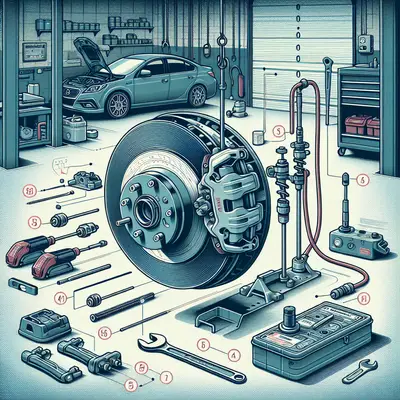
This higher standard also respects the system as a whole. Pads and rotors are only part of the story; fluid, hoses, calipers, and even wheel torque practices all influence performance. An owner who aspires to impeccable braking understands that maintenance is not a single event but a carefully managed rhythm over the life of the vehicle.
Exclusive Insight #1: Treat Brake Feel as a Diagnostic Instrument
Most owners notice only extremes: a soft pedal or an obvious grinding noise. Discerning drivers, however, use pedal feel as a precise diagnostic tool long before problems become urgent.
A consistently firm pedal that engages early in its travel, with a clean, linear build-up in resistance, usually indicates a healthy hydraulic system and properly bedded pads. Subtle changes—such as the pedal catching slightly lower than usual, requiring more effort in stop-and-go traffic, or feeling spongy after repeated downhill braking—are early signals worth investigating.
By paying attention to these nuances, you can often anticipate issues like fluid degradation, minor air intrusion, or beginning caliper sticking before they progress to hazardous fade or uneven wear. Keeping a mental “baseline” of how your brakes feel when they are freshly serviced allows you to notice when something is beginning to drift out of specification, even if there is no noise or warning light yet.
Exclusive Insight #2: Brake Fluid as a Luxury Item, Not a Lifetime Fill
Brake fluid is often treated as an afterthought, yet it is one of the most critical components for consistent, confidence-inspiring braking. High-end performance and luxury vehicles often specify more frequent fluid changes—not as a marketing tactic, but because fluid condition directly affects pedal feel and fade resistance.
Brake fluid is hygroscopic; it absorbs moisture over time. As water content rises, the fluid’s boiling point drops, making it more susceptible to vapor bubbles under heavy or repeated braking. This can lead to a softer pedal and longer stopping distances, especially during aggressive driving or mountain descents. Even if you never track your car, that same principle applies during fast highway driving followed by a sudden emergency stop.
For a refined maintenance schedule, consider brake fluid less as a “when necessary” service and more as a recurring, proactively timed upgrade. Adhering to a two- to three-year preventive fluid replacement (or as recommended by your manufacturer, especially for performance models) keeps the hydraulic system crisp and consistent, rather than merely functional. Opting for a high-quality fluid that meets or exceeds the manufacturer’s specifications ensures your brake system can deliver its engineered performance when you demand it.
Exclusive Insight #3: Rotor Integrity Is About More Than Thickness
Most quick inspections focus on measuring rotor thickness: if it is above the minimum specification, it is often considered “acceptable.” A more thorough, safety-conscious approach recognizes that a rotor’s behavior under stress matters as much as its remaining material.
Micro-cracking, uneven wear, and subtle hotspots can all degrade braking performance without being obvious at a glance. These issues may manifest as mild pulsation at the pedal, faint steering wheel vibration on downhill stops, or intermittent noise under moderate braking. While such symptoms can seem trivial, they indicate that the rotor’s friction surface is no longer uniform.
For drivers who prioritize refinement, replacing rotors before they reach their absolute minimum thickness—especially when significant surface irregularities or heat spots are present—helps maintain a smoother braking experience and more predictable pedal response. It also reduces the risk of severe brake judder developing over time. Selecting quality, well-machined rotors and pairing them with compatible pads avoids the “budget compromise” that often leads to early warping or uneven deposits.
Exclusive Insight #4: Caliper Health as the Hidden Guardian of Even Braking
Calipers rarely receive attention unless they seize completely, yet their subtle decline can quietly undermine brake quality. A caliper that is slightly sticky may not produce dramatic symptoms at first, but it can cause one wheel to run hotter, one pad to wear prematurely, and the car to pull gently to one side during braking.
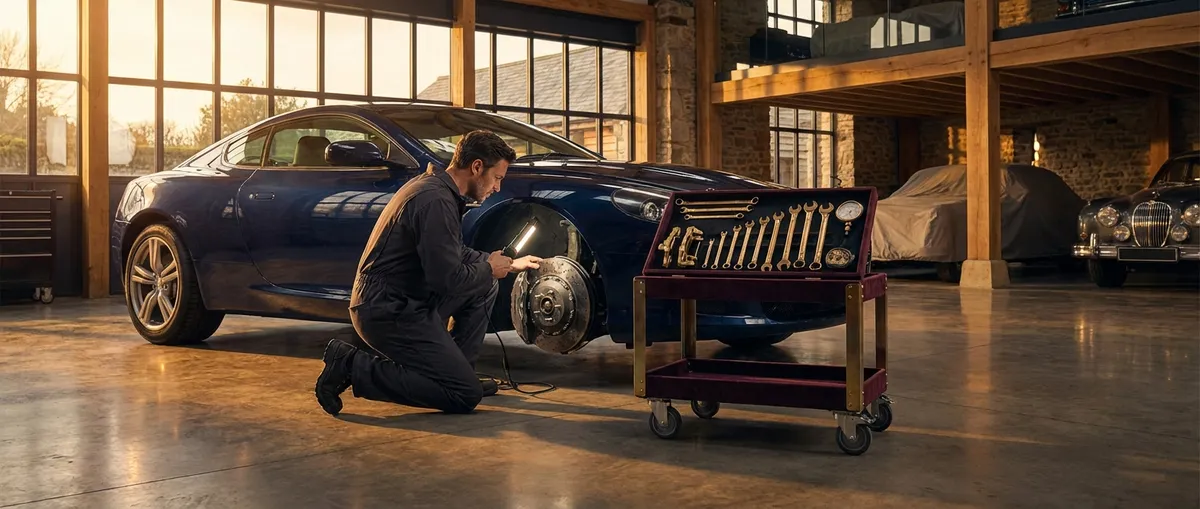
An elevated maintenance approach insists on inspecting caliper slide pins, dust boots, and pistons whenever pads and rotors are replaced. Proper cleaning and lubrication with the correct high-temperature compounds keep the caliper moving freely and evenly distributing force across the pad surface. This helps avoid the common pattern where one pad is worn almost to the backing plate while the other still has life remaining.
Attentive owners might also periodically feel each wheel after a long drive or a series of stops. One wheel that is noticeably hotter than the others can be an early indicator of a dragging caliper or sticking parking brake mechanism. Identifying and correcting such issues early not only preserves braking symmetry and confidence but also reduces unnecessary strain on tires and wheel bearings.
Exclusive Insight #5: The Alignment–Brake–Tire Triangle
Brake performance is often discussed in isolation, yet its real-world effectiveness is inseparable from alignment and tire condition. A perfectly functioning brake system can still feel unsettled or unpredictable if worn tires or improper alignment distort how the car responds when decelerating hard.
Uneven tire wear, low tread depth, or mismatched tires across axles can cause instability during emergency braking or on wet roads. Similarly, misalignment can lead the vehicle to drift or pull when the brakes are applied, even if every brake component is mechanically sound. For a driver who expects the car to track straight and settle cleanly during hard stops, brake maintenance must be coordinated with a disciplined tire and alignment regimen.
The refined strategy is to treat brake service as an ideal moment to evaluate tire health, tread depth, and alignment status. Pairing fresh brake components with properly inflated, evenly worn tires and a verified alignment creates a cohesive system: the car stops not only in a short distance, but with calm, reassuring composure.
Conclusion
Impeccable braking is not an accident; it is the outcome of intentional, elevated maintenance decisions made well before any emergency arises. By using pedal feel as a diagnostic tool, treating brake fluid as a consumable performance asset, judging rotors by their integrity rather than their survival, safeguarding caliper health, and respecting the relationship between brakes, alignment, and tires, you move beyond basic safety into a realm of finely tuned control.
This is where every stop feels measured, precise, and quietly confident—where your vehicle responds exactly as you expect, whether easing into your garage or responding decisively to the unexpected. For the discerning driver, that level of assurance is not a luxury. It is the standard.
Sources
- NHTSA – Brakes and Safety Systems - U.S. government guidance on brake system safety and performance considerations
- AAA – Brake System Basics - Overview of brake components, maintenance intervals, and warning signs
- U.S. Department of Transportation – Brake Fluids Standard (FMVSS No. 116) - Federal standards describing brake fluid specifications and performance requirements
- SAE International – Brake System Technical Papers - Engineering research on brake performance, materials, and system behavior under various conditions
- Bridgestone – How Tires, Alignment, and Braking Interact - Explanation of how alignment and tire condition influence braking stability and control
Key Takeaway
The most important thing to remember from this article is that this information can change how you think about Maintenance.