For the discerning driver, true confidence on the road is not about horsepower—it is about how precisely, how predictably, and how quietly the car can come to a halt. Modern brake systems are no longer just pads and rotors; they are carefully tuned, computer-assisted safety instruments. Understanding how they work, and how to care for them, transforms braking from a reactive necessity into a refined, proactive safeguard.
Below, we explore the anatomy of contemporary brake systems and share five exclusive, often-overlooked insights that safety-conscious owners genuinely value.
Under the Skin: How a Modern Brake System Really Works
At its core, every hydraulic brake system follows the same elegant principle: your foot’s force is multiplied and transmitted via fluid to clamp the wheels. But the way this happens today is subtly—and significantly—more sophisticated than in the past.
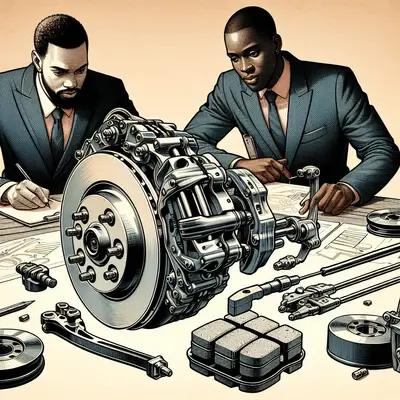
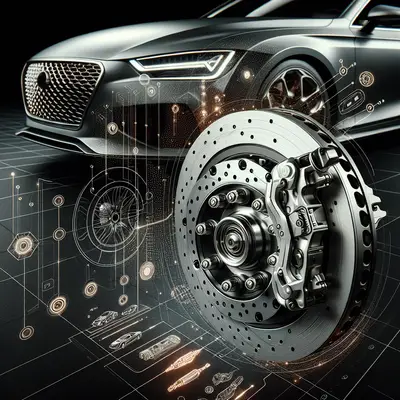
Pressing the brake pedal moves a pushrod into the brake booster (usually vacuum- or electronically-assisted), reducing the effort you feel. The master cylinder converts that pedal movement into hydraulic pressure, sending brake fluid through lines to calipers at each wheel. The calipers squeeze pads against discs (rotors), converting motion into heat and, ultimately, a controlled stop.
Layered on top of this fundamental system are electronic overseers: ABS (anti-lock braking system), stability control, traction control, and, in many vehicles, brake assist and autonomous emergency braking. These systems constantly measure wheel speed, yaw, steering angle, and sometimes even road friction, then modulate brake pressure within milliseconds—far faster than even a skilled driver could react. The result, when properly maintained, is a braking experience that feels composed, linear, and reassuringly predictable.
Understanding this interplay of mechanical precision and digital supervision is the first step toward appreciating why small lapses in maintenance can have disproportionately large effects on safety and refinement.
Beyond “Do They Work?”: Defining Truly Premium Brake Performance
Many owners evaluate their brakes in binary terms: they either work or they don’t. A premium approach, however, appreciates several subtler dimensions:
- Pedal feel – A smooth, firm, and consistent pedal tells you the system is well-bled, the components are healthy, and the hydraulic balance front-to-rear is appropriate. Sponginess, sudden changes in pedal travel, or a “wooden” feel are early warning signs.
- Noise character – Any brake can make noise under extreme conditions, but quality systems, correctly specified and installed, are quiet the vast majority of the time. Persistent squeal, grinding, or groaning is never just “normal.”
- Temperature management – High-quality pads and rotors maintain consistent friction as they heat and cool. When braking performance changes noticeably during a long descent or repeated stops, the system is telling you it is near its thermal limits.
- Balance and stability – The car should remain composed under firm braking: no pulling to one side, no instability when braking and turning, and no vibration through the steering wheel or seat.
- Recovery and consistency – After heavy use, a superior system regains its normal feel quickly. If hard braking leaves the pedal soft or long for an extended period, something is amiss.
This more nuanced lens is how professional drivers and engineers judge brakes—and it is available to any conscientious car owner willing to pay attention.
Five Exclusive Insights Savvy Owners Should Know
Below are five less-discussed, but highly consequential, insights that separate ordinary brake care from truly informed, safety-first ownership.
1. Pedal Feel Is a Diagnostic Tool—Not Just a Comfort Feature
Most drivers notice a change in pedal feel only when it is dramatic. The attentive owner treats subtle changes as early diagnostics.
- A gradually lengthening pedal travel over months often points to pad wear combined with minor fluid degradation. This is the perfect moment for a proactive inspection—before performance is compromised.
- A sudden, softer pedal after a single hard stop may indicate localized boiling of old brake fluid (which has absorbed moisture) or a small internal leak.
- A high, very firm pedal that feels less responsive can suggest seized slide pins, sticking caliper pistons, or pads that are too hard for normal street use.
By making a mental note of pedal feel during your weekly driving—particularly in the first few stops of the day and during one or two firm, controlled stops—you create a powerful, cost-free monitoring habit. When something changes, you’ll notice early.
2. Brake Fluid Has an “Age,” Not Just a Level
Brake fluid is hygroscopic—it absorbs moisture over time from the atmosphere. Even in a sealed system, tiny permeation through hoses and seals is inevitable. The result: lower boiling point, internal corrosion, and eventually degraded braking performance.
Many owners check the level of fluid but ignore its age and condition. Sophisticated maintenance treats brake fluid like any other critical, aging performance fluid:
- Time-based replacement (often every 2–3 years) is at least as important as mileage-based service.
- Dark, murky fluid is not merely cosmetic; it can indicate corrosion and contamination inside calipers and lines.
- For vehicles frequently driven in mountainous regions, with trailers, or at higher speeds, a higher-spec DOT fluid (if compatible with your system) and more frequent changes can materially improve fade resistance.
A professional fluid flush, done properly, restores not only safety margins but also pedal consistency—one of the most noticeable upgrades for drivers attuned to feel.
3. Pad and Rotor Selection Should Match How—and Where—you Drive
Brakes sold as “upgrades” are not automatically safer for every driver. The friction materials and rotor designs that shine on a racetrack can be suboptimal on a cold, wet commute.
A refined approach considers:
- Operating temperature range – Many performance pads require heat to reach their best friction. For mostly city and suburban driving, premium OE-spec or “street performance” pads often deliver better initial bite and quieter operation than aggressive track-oriented compounds.
- Climate and environment – Coastal and snowy regions are especially hard on metal. Rotors and hardware with corrosion-resistant coatings and high-quality stainless components pay dividends in longevity and reliability.
- Driving profile – A driver who routinely descends long, steep grades or tows a trailer may genuinely benefit from larger rotors, pads with better high-temperature performance, and carefully selected brake fluid. A low-mileage city commuter may see greater value in ultra-low-dust, low-noise premium pads that keep wheels and calipers cleaner.
The exclusive insight here is that “best” is contextual. The most sophisticated brake system is not the most aggressive—it is the one calibrated precisely to your real-world usage.
4. Electronic Safety Systems Are Only as Good as Their Mechanical Foundation
ABS, electronic stability control (ESC), and advanced driver assistance features such as automatic emergency braking are often marketed as fully independent safety nets. In reality, they are only as effective as the basic brake hardware beneath them.
- ABS relies on accurate wheel speed sensors and responsive hydraulics. Corroded tone rings, damaged wiring, or sticking calipers can delay ABS intervention or cause it to behave unpredictably.
- Stability control assumes that brake bias and friction at each wheel remain within a normal range. A dragging rear caliper or mismatched pad compounds can subtly disturb how the vehicle corrects a skid or evasive maneuver.
- Autonomous emergency braking systems can engage with astonishing speed, but they cannot overcome severely worn pads, contaminated rotors, or boiled fluid.
Premium brake care means treating every warning light and intermittent ABS/ESC behavior as more than an annoyance. It is an invitation to ensure the mechanical and electronic layers are in harmony. When they are, the difference in real-world emergency performance is profound.
5. The Sound of Your Brakes Is a Language—Learn to Listen
Many drivers associate brake noise only with annoyance. In reality, it is one of the system’s most accessible forms of self-reporting.
- High-pitched squeal at low speeds often indicates glazing, light surface rust, lack of proper chamfer or shims, or pads at the end of their life contacting wear indicators.
- Grinding or growling is a late-stage warning: pad material may be worn through, allowing metal-on-metal contact that rapidly damages rotors and compromises braking.
- Intermittent clicks or clunks on application or release can point to loose hardware, worn slide pins, or minor caliper movement—issues that can become safety concerns if ignored.
- Rhythmic scraping or chirping that varies with speed can suggest a warped rotor, stuck stone, or a bent backing plate lightly contacting the disc.
The sophisticated owner does not try to “tune out” these cues with louder music. Instead, they take note of when the noise occurs (cold vs. hot, light vs. heavy braking, straight vs. turning) and share that detail with a qualified technician. This elevates a vague complaint into a sharply focused diagnostic lead—and often reduces both repair time and cost.
Elevating Your Brake Care to a True Safety Strategy
When you view your vehicle’s brakes not as a simple wear item but as a layered safety system, your relationship with them changes. Routine checks become an informed ritual rather than a chore; service decisions shift from “minimum required” to “optimal for how I actually drive.”
A premium brake strategy includes:
- Periodic, intentional evaluation of pedal feel and braking behavior.
- Time-based replacement of brake fluid, not just reactive topping-off.
- Thoughtful selection of pads and rotors tailored to your environment and driving style.
- Respect for the interplay between electronic safety aids and their mechanical foundation.
- Active listening to the subtle auditory and tactile cues your brakes provide.
The reward is not merely quieter stops or cleaner wheels. It is the quiet assurance that, when you ask your car to stop decisively—on a wet highway, on a mountain descent, or in a sudden city emergency—it will do so with composure and precision. That is the true hallmark of a well-kept, genuinely sophisticated braking system.
Sources
- [National Highway Traffic Safety Administration (NHTSA) – Brakes and Safety Systems](https://www.nhtsa.gov/equipment/brakes) – Overview of brake safety, ABS, and related technologies from a U.S. government agency
- [Federal Motor Carrier Safety Administration – Brake Safety Resources](https://www.fmcsa.dot.gov/brake-safety-week) – Regulatory perspectives and inspection focus areas that illuminate how professionals evaluate brake condition
- [SAE International – Brake Systems Technical Papers](https://www.sae.org/browse/?subtopic=3003) – Engineering research on brake performance, materials, and electronic integration
- [University of Illinois – Brake Systems Basics](https://mechanical.illinois.edu/undergraduate/virtual-labs/automotive-brakes) – Educational explanation of hydraulic brake operation and key components
- [Brake Manufacturers Council / Auto Care Association – Brake Safety Awareness](https://www.autocare.org/detail-pages/article/brake-safety-awareness) – Industry guidance on best practices for brake maintenance and safety awareness
Key Takeaway
The most important thing to remember from this article is that this information can change how you think about Brake Systems.