For the driver who values composure as much as acceleration, the brake system is more than hardware—it is the silent curator of every confident mile. Beneath the polished exterior of any well-kept vehicle lies a complex interplay of hydraulics, friction materials, and electronic guardians that determine how gracefully you can come to a stop when it matters most. Understanding that system at a more refined level is not just a matter of curiosity; it’s a deliberate choice to elevate safety, longevity, and driving poise.
This article looks past the obvious “squeaks and shakes” and instead explores how an attentive owner can read the subtleties of a braking system. Along the way, you’ll find five exclusive insights—specific, often overlooked cues and habits—that separate routine maintenance from truly disciplined brake stewardship.
The Architecture of Modern Brakes: More Than Pads and Rotors
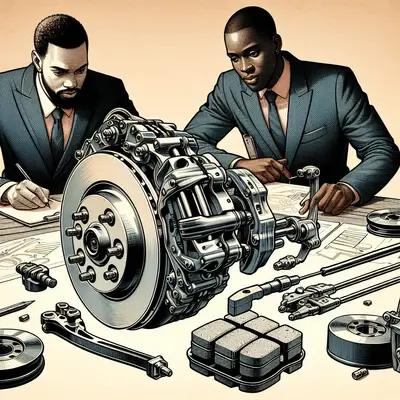
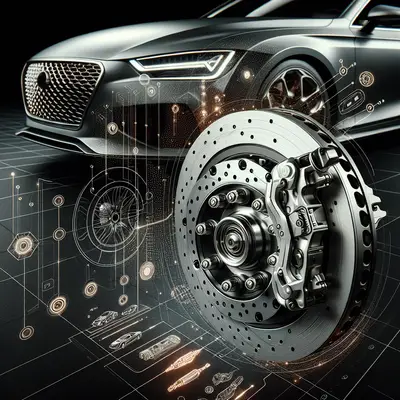
While “pads and rotors” are the usual shorthand, a contemporary brake system is a symphony of components working in exacting coordination. At your foot lies the brake pedal, connected to a brake booster that multiplies your effort, feeding into a master cylinder where mechanical input is translated into hydraulic pressure. From there, brake fluid travels through rigid lines and flexible hoses to calipers or wheel cylinders that clamp pads against rotors (disc brakes) or press shoes against drums (drum brakes).
Modern vehicles overlay this hydraulic foundation with electronic layers—ABS (anti-lock braking system), traction control, and electronic stability control. Wheel-speed sensors monitor rotation hundreds of times per second; a control module compares that data to steering input and vehicle behavior, then modulates braking at individual wheels to maintain stability. What feels like a smooth, drama-free stop is often the result of rapid micro-adjustments you never perceive.
Recognizing the brake system as a tightly integrated network, not a collection of isolated parts, is key. A minor fluid issue can compromise ABS function; a worn suspension bushing can change how weight transfers under braking; even tire compound and pressure affect how effectively brake force is translated into real-world stopping power. The cultivated driver considers all of these elements part of a single, coherent safety system.
Beyond the Dashboard Light: Reading Subtle Brake Feedback
Most drivers wait for a warning light, a grinding noise, or a failed inspection to address brake issues. A more discerning approach is to treat every drive as a micro-inspection, quietly collecting feedback from the car. Small changes in sound, feel, or response are often early notes in a symphony you do not want to hear reach its crescendo.
Listen first. A faint, consistent chirp during light braking can signal a pad wear indicator contacting the rotor—a deliberate early alert that pads are nearing the end of their useful life. A hollow, echoing sound under harder stops might suggest rotor glazing or uneven pad deposits. Even a change in the tonal quality of ABS engagement on slick surfaces can hint at a sensor issue or uneven tire grip.
Feel next. A brake pedal that used to be firm but now feels slightly longer or softer—even if the car still stops—deserves attention. It could indicate slowly advancing pad wear, minor air ingress in the lines, or moisture-laden fluid beginning to boil under heavy use. A steering wheel that gently tremors under braking, especially from highway speeds, is a quiet invitation to inspect rotors for thickness variation or warping and to evaluate suspension components.
Finally, note consistency. A car that stops confidently in the morning but feels slightly less composed after repeated city stops or a downhill drive may be suffering from mild brake fade, often tied to pad material quality or contaminated fluid. The attentive owner does not wait until fade is dramatic; they recognize subtle changes as prompts for an inspection rather than a curiosity to be ignored.
Brake Fluid as a Precision Medium, Not a Maintenance Afterthought
Brake fluid is often described as “hydraulic fluid,” but for the safety-conscious driver, it is better viewed as a precision medium. Its role is to transmit force without meaningful compression, without boiling under stress, and without corroding the fine internal passages of your master cylinder, calipers, and ABS unit. Over time, however, brake fluid quietly changes personality.
Most road vehicles use glycol-based fluids (DOT 3, DOT 4, or DOT 5.1), which are hygroscopic—they absorb moisture from the air, even through microscopic permeability in hoses and seals. That moisture gradually lowers the fluid’s boiling point. In spirited driving, steep descents, or emergency stops, localized heat can cause moisture-laden fluid to form vapor bubbles. Vapor compresses, unlike liquid, resulting in a longer pedal travel or a soft, unsettling feel just when maximum confidence is required.
A premium perspective on brake care treats fluid replacement not as an occasional upsell, but as scheduled precision. Rather than relying solely on a time or mileage interval, consider periodic testing with a brake fluid tester that measures moisture content or boiling point. When results begin to drift away from the specification—often before a manual suggests replacement—proactive owners refresh the system. This approach protects the intricate channels inside ABS and stability control modules, which are far more expensive than routine fluid service.
For vehicles that see heavy use, mountain driving, or towing duty, choosing a high-quality fluid with a higher dry and wet boiling point can be a discreet but powerful upgrade. The change is invisible, but the reserve capacity it provides in demanding situations is substantial, and the difference is felt as unwavering pedal confidence when conditions are at their most challenging.
Five Exclusive Insights for Owners Who Insist on Braking Excellence
Beyond routine service, these five refined insights help transform brake care from basic compliance into deliberate craftsmanship:
Treat Tire Grip as Part of Your Brake System
Brakes do not actually “stop” the car; tires do. The brakes only regulate how aggressively those tires are asked to work. Premium brake pads and rotors paired with aged, hardened, or underinflated tires are a mismatch. Pay attention to tread depth across the full width of the tire, not just the legal minimum. Uneven shoulder wear can signal alignment or suspension issues that will compromise braking stability, especially in wet conditions. For the safety-focused driver, brake inspections naturally include a tire and alignment review.
Watch for Asymmetry, Not Just Severity
Many owners focus solely on how strongly the car stops. A more revealing metric is how evenly it stops. During a straight, controlled brake from moderate speed on a flat road, the steering wheel should remain neutral. If the car subtly drifts to one side, or if one wheel tends to lock earlier on loose surfaces, consider it an early indication of caliper sticking, pad contamination, or uneven rotor condition. Addressing asymmetry early preserves balance, shortens stopping distances, and reduces stress on steering components.
Respect Bedding-In as a Safety Procedure, Not a Formality
New pads and rotors are not at their best straight out of the box. Bedding-in (or burnishing) creates a consistent transfer layer of pad material on the rotor surface and stabilizes friction characteristics. A thoughtful bedding process—several medium stops from moderate speeds, with cooling intervals and no full lockups—reduces noise, improves pedal feel, and decreases the risk of pulse-inducing thickness variation. For the refined driver, bedding-in is a brief, intentional ritual after any major brake service, not something hurried or skipped.
Align Brake Choices With Your Driving Profile, Not Just Price
Not all friction materials are created equal. Ceramic pads, for example, often offer cleaner wheels and quieter operation, while semi-metallic options may provide superior high-temperature performance at the cost of more dust and potential noise. Rather than defaulting to whatever is “standard,” articulate your actual usage: heavy city traffic, regular highway touring, mountain roads, towing, or occasional spirited driving. Choosing a pad compound and rotor design calibrated to your reality—perhaps with slightly higher temperature tolerance or improved corrosion resistance—produces a braking character that feels composed, predictable, and tailored, not generic.
Regard ABS and Stability Control as Systems to Protect, Not Rely On
ABS, traction control, and stability control are extraordinary safety nets, but they still rely on the mechanical health of your brakes and the integrity of your tires. Frequent or early ABS engagement in everyday driving is not simply a “feature in action”; it can be a signal of overtaxed tires, uneven brake performance, or poor surface conditions. When ABS intervenes, pay attention. Was the road genuinely slick, or did the system have to compensate for mechanical shortcomings? Instead of “trusting the electronics,” the sophisticated owner uses these interventions as data points, prompting inspection when they seem excessive or out of character for conditions.
Designing a Personal Brake Standard That Exceeds the Minimum
Regulations define what is legally acceptable; refined owners quietly aspire to something more. That elevated standard is not about over-maintaining or chasing unnecessary upgrades. It is about adopting a deliberate, informed relationship with your brake system—listening for quiet changes, choosing components intentionally, and scheduling service before degradation becomes obvious.
Establish your own internal benchmarks: how the pedal should feel, how the car should track under braking, how often fluid should be tested rather than guessed at, and what level of tire health you consider non-negotiable. Partner with service professionals who respect these preferences and can document measurements—pad thickness, rotor runout, fluid condition—over time, allowing you to spot trends rather than react to surprises.
In a world where acceleration often takes center stage, it is your capacity to stop with grace, precision, and predictability that ultimately defines your safety margin. When your brake system is treated not as an afterthought, but as a finely tuned instrument, every journey gains an added layer of quiet assurance—felt not in what the car does, but in what it never allows to happen.
Sources
- [National Highway Traffic Safety Administration (NHTSA) – Brakes and ABS](https://www.nhtsa.gov/equipment/brakes) – Overview of brake and ABS safety, regulatory context, and consumer guidance
- [Federal Motor Vehicle Safety Standards (FMVSS) – Standard No. 135: Light Vehicle Brake Systems](https://www.ecfr.gov/current/title-49/subtitle-B/chapter-V/part-571/section-571.135) – Technical and performance requirements governing modern light-vehicle brake systems
- [SAE International – Brake System Fundamentals](https://www.sae.org/binaries/content/assets/cm/content/topics/brake-systems/brake-systems-fundamentals.pdf) – Engineering perspective on brake design, friction materials, and performance considerations
- [U.S. Department of Energy – How Vehicle Braking Systems Work](https://www.energy.gov/eere/vehicles/articles/fotw-1168-april-5-2021-how-do-vehicle-braking-systems-work) – Accessible technical explanation of braking components and energy conversion
- [AAA – Understanding Your Car’s Braking System](https://exchange.aaa.com/automotive/understanding-your-cars-braking-system/) – Practical owner-focused guidance on brake maintenance, warning signs, and service intervals
Key Takeaway
The most important thing to remember from this article is that this information can change how you think about Brake Systems.