In the world of refined motoring, true confidence does not come from acceleration—it comes from the certainty that you can stop, precisely and predictably, every single time. For drivers who demand more than “good enough,” the brake system is not a mundane component but a finely tuned safety instrument. Understanding how that instrument works—and how to preserve its integrity—transforms routine maintenance into a deliberate act of protection for yourself, your passengers, and everyone sharing the road.
This perspective goes beyond the usual warnings about “squeaks and grinding.” It is about cultivating a deeper appreciation of how your vehicle manages energy, heat, and friction under pressure, and how subtle choices in care and driving behavior shape your stopping performance over years, not months.
Inside the Modern Brake System: A Coordinated Safety Ensemble
A modern brake system is a coordinated ensemble of mechanical, hydraulic, and electronic components, each performing with split‑second precision. When you press the brake pedal, you are not merely “slowing down”—you are instructing a complex network to convert kinetic energy into heat and to do so in a controlled, repeatable way.
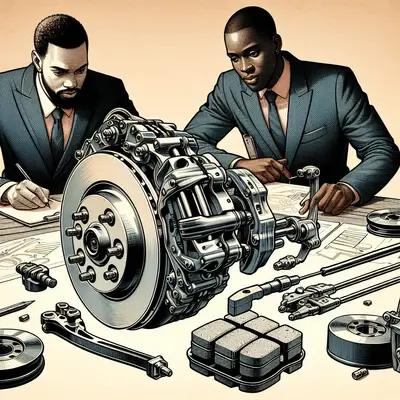
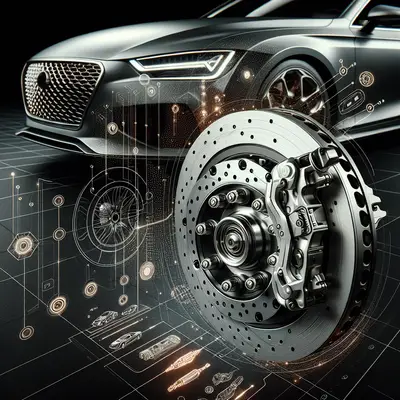
At the core is the hydraulic circuit: your pedal press activates the master cylinder, which sends pressurized brake fluid through lines to calipers (or wheel cylinders in drum systems). The calipers clamp the pads against the rotors, generating friction that translates into stopping force. The system is assisted by the brake booster, which amplifies your input, allowing strong braking with modest pedal effort.
Overlaying this mechanical choreography are electronic guardians such as Anti-lock Braking Systems (ABS), Electronic Brake-force Distribution (EBD), and, in many vehicles, stability and traction control. These systems constantly interpret wheel speed, pedal pressure, and vehicle dynamics, then modulate braking at each wheel in milliseconds. For the attentive driver, understanding that these technologies are fine-tuning your braking behind the scenes underscores the importance of keeping the entire system—not just the pads—in impeccable condition.
Five Exclusive Insights for Drivers Who Refuse to Compromise
Drivers with elevated expectations of safety look for subtleties most people overlook. The following five insights move beyond the usual advice and into the nuanced realities of real-world brake performance.
1. Brake Feel Is a Diagnostic Language, Not an Opinion
Brake “feel” is often dismissed as subjective, but for the discerning driver, it is a remarkably precise diagnostic language. The way the pedal responds—its initial resistance, the linearity of its travel, and the consistency over repeated stops—reveals a great deal about system health.
A pedal that feels spongy or slowly sinks under steady pressure often signals air or moisture contamination in the brake fluid, or internal seal issues within the master cylinder. An overly “grabby” initial bite can indicate mismatched pad compounds or contamination on the rotors. A long but firm pedal may point to excessive pad or rotor wear, or improperly adjusted rear brakes in certain designs.
Thoughtful drivers learn their car’s normal brake personality when the system is freshly serviced and use that as a baseline. Any deviation—however slight—is treated as data, not dismissed as “it’s probably fine.” This refined attentiveness often catches issues early, before they advance into true safety concerns.
2. Heat Management Is the Hidden Currency of Stopping Power
Every brake application is a heat event. The system’s true competence is not just how quickly the vehicle slows, but how gracefully it manages temperature over repeated stops. Excessive or poorly controlled heat accelerates pad glazing, rotor warping, fluid degradation, and even premature caliper wear.
City commuters who experience frequent stops, mountain drivers who manage sustained descents, and performance‑oriented drivers who occasionally brake from higher speeds all subject their brakes to distinct thermal profiles. Premium braking performance, in these scenarios, is less about raw stopping distance once and more about consistency on the tenth, twentieth, or thirtieth stop.
Thoughtful choices—such as selecting quality pads formulated for your driving environment, ensuring rotors are properly sized and vented, and maintaining adequate airflow around the brakes—can dramatically improve heat dissipation. Equally important is driving technique: using lower gears on long descents, anticipating traffic to avoid abrupt, repeated heavy braking, and allowing brief “cooling windows” after sustained hard stops. Elite brake care is, in large part, deliberate heat management.
3. Brake Fluid: The Most Overlooked Luxury in Your Safety Portfolio
While pads and rotors receive most of the attention, brake fluid quietly determines how faithfully your pedal input translates into stopping force. This fluid is hygroscopic—it naturally absorbs moisture over time. As water content increases, the fluid’s boiling point drops, and its ability to perform under repeated heavy braking diminishes.
Under intense use, contaminated fluid can approach its boiling point, creating vapor bubbles that compress when you press the pedal. The result is suddenly softer or longer pedal travel, and in severe cases, temporary loss of braking efficiency. Even for everyday drivers, moisture in the system can corrode internal components, slowly eroding reliability.
For those who view safety as non‑negotiable, brake fluid is not a “change it if it looks dark” component. It is serviced to a schedule, often every two to three years (or as specified by the manufacturer), and ideally verified with a professional brake fluid tester that measures its condition. In this context, a brake fluid flush is not an upsell; it is a deliberate investment in the clarity and consistency of your braking response.
4. Pad and Rotor Choices Are a Strategic Decision, Not a Commodity Purchase
Not all brake pads and rotors are created for the same priorities. Original equipment (OE) or high-quality equivalent parts are engineered to harmonize quiet operation, dust levels, stopping distance, pedal feel, and rotor life. Aggressive performance pads might offer higher friction at elevated temperatures but can be noisier, dustier, or less effective when cold. Budget pads may compromise in critical areas such as fade resistance or lifespan.
Discerning drivers treat pad and rotor selection as a calibrated decision, aligned with how the vehicle is actually used. A luxury sedan with frequent highway use, a compact urban commuter, and a performance coupe taken on spirited drives all benefit from different friction profiles and thermal tolerances. Matching front and rear compounds appropriately also preserves the vehicle’s intended brake balance and stability under ABS activation.
The key is to resist the temptation to treat brakes as a simple “price-driven” replacement. Instead, view them as a curated component of your vehicle’s safety and driving character—worthy of research, specification checking, and, when appropriate, consultation with a skilled technician who understands both your car and your driving style.
5. Cleanliness and Precision Installation Are as Critical as the Parts Themselves
Even the most advanced brake components can underperform if installed without attention to detail. A truly premium brake service extends beyond bolting on new pads and rotors; it is a meticulous process of cleaning, measuring, lubricating, and verifying.
Contact surfaces on the hub must be clean and free of rust or debris to ensure the new rotor sits perfectly true. Even a thin layer of corrosion can introduce lateral runout, which eventually manifests as pedal pulsation or steering wheel vibration. Slide pins must be properly cleaned and lubricated with the correct high‑temperature grease, allowing the caliper to move freely and apply even pressure across the pads.
Hardware—such as abutment clips, anti-rattle springs, and wear indicators—should be inspected and replaced as necessary, not reused out of convenience. Torque specifications for caliper bracket bolts and wheel lug nuts should be followed precisely, preventing distortion of the rotor and preserving consistent clamping force. This emphasis on cleanliness and precision does not merely produce quieter, smoother brakes—it significantly extends the life and reliability of the entire system.
Elevating Your Brake System from Routine to Reassuring
For the sophisticated driver, brake care is not a reactive exercise that begins only once a warning light appears or a squeal becomes too obvious to ignore. It is a deliberate, ongoing commitment to driving with confidence and composure, in all conditions.
By learning to read brake feel as a language, respecting heat as a critical design constraint, elevating brake fluid to its proper importance, making intentional choices about pads and rotors, and insisting on meticulous installation, you transform brake maintenance into a refined safety practice. The reward is not only shorter stopping distances—it is the quiet assurance that when you ask your vehicle to stop, it will respond with the same precision and poise you expect from every other aspect of your driving experience.
In a world captivated by horsepower and acceleration, the true mark of a cultivated driver remains the same: the one who takes stopping power just as seriously as going fast.
Sources
- National Highway Traffic Safety Administration (NHTSA) – Brake Systems Overview - Federal guidance and fundamentals on brake system safety and performance
- U.S. Department of Transportation – Brake Fluid Safety Advisory - Safety information and advisories related to vehicle systems, including fluids and maintenance best practices
- SAE International – Brake System Technical Papers - Engineering research on braking performance, heat management, and component design
- University of California, Berkeley – Vehicle Dynamics and Control Resources - Academic insights into braking, stability control, and vehicle dynamics
- Car and Driver – In-Depth: How Your Car’s Brakes Work - Accessible yet detailed explanation of modern brake components and operation
Key Takeaway
The most important thing to remember from this article is that this information can change how you think about Brake Systems.