Modern vehicles disguise enormous mechanical complexity behind a calm, confident stop. For drivers who value refinement, safety, and control, the brake system is not a background detail—it is the core of every composed journey. Understanding how your brakes truly work, and how to care for them with intention, is one of the most sophisticated investments you can make in your own safety and driving experience.
This guide steps beyond basic checklists to explore how a well‑maintained brake system supports not just shorter stopping distances, but a more poised, predictable car. Along the way, you’ll find five exclusive insights that discerning owners can use to elevate everyday brake care into a quiet form of craftsmanship.
Beneath the Pedal: How Modern Brake Systems Create Confidence
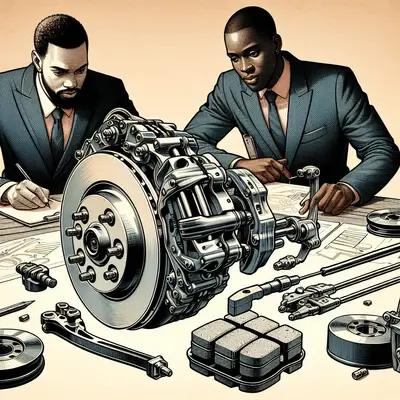
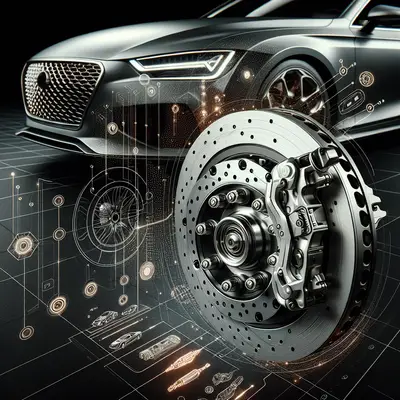
Pressing the brake pedal starts a precisely orchestrated sequence. Your foot applies force to the master cylinder, which pressurizes brake fluid and sends it through rigid lines and flexible hoses to each wheel. At the wheels, calipers (for disc brakes) or wheel cylinders (for drum brakes) convert this hydraulic pressure into mechanical clamping force on pads or shoes, which then create friction against rotors or drums.
Most contemporary vehicles also layer advanced electronics on top of this hydraulic core. ABS (anti‑lock braking systems) prevent wheel lockup during hard stops, electronic brakeforce distribution (EBD) modulates how much force goes to front vs. rear wheels, and stability control can brake individual wheels to help maintain directional control.
The result is a system that constantly balances three outcomes: shortest practical stopping distance, maximum stability, and driver comfort. When any single component falls out of tolerance—whether a glazed pad, a swollen hose, or air in the lines—that delicate balance shifts. A refined owner learns to sense these subtle changes and respond before they become emergencies.
The Five Exclusive Insights Informed Owners Rely On
Owners who treat brake safety as a priority rather than a formality often share a common trait: they notice the details most drivers ignore. These five less‑discussed insights can help you maintain a higher standard of safety and composure at every stop.
1. Pedal “Texture” Is as Important as Pedal Travel
Most drivers only react when the brake pedal becomes obviously “soft” or sinks too far toward the floor. Discerning drivers pay attention earlier—specifically to the texture of the pedal’s resistance.
A healthy system has firm, progressive resistance: the harder you press, the more solid the pedal feels. Subtle graininess, a faint pulsing even in gentle stops, or a slight “springiness” can signal:
- Early rotor irregularities or mild warping
- Developing pad deposits on the rotor face
- Microbubbles or slight moisture contamination in the brake fluid
- Flexible hoses beginning to balloon under pressure
Noticing these changes early often turns a costly repair into a simpler, preventative service. If the character of your pedal changes—without any change in your driving habits—treat it as a prompt to schedule an inspection.
2. Brake Performance Degrades Long Before Warning Lights Appear
Dash lights such as ABS or brake warning indicators are late‑stage signals, not early detection tools. By the time an indicator illuminates, the system has typically crossed a threshold the manufacturer has defined as critical.
Quiet, earlier signs often appear thousands of miles sooner:
- A gentle pull to one side during smooth braking
- A slightly longer distance needed for the same stop from your usual speeds
- Brake noises that are faint, intermittent, or appear only when cold or only when hot
- A brief delay between pedal application and deceleration for the first stop of the day
Owners who make a mental note of these patterns—especially when they change—gain a meaningful safety margin. Treat your senses as an early warning network, and reserve dashboard lights as confirmation that action is now urgent.
3. “Premium” Pads Are Not Always Safer—They Are Purpose‑Built
Many owners equate “ceramic” or “performance” pads with universal improvement. In reality, pad compounds are tuned for specific priorities: some for quiet operation and low dust, others for high‑temperature track use, and some for everyday balance.
Key considerations:
- Daily city/highway use: A high‑quality ceramic or low‑metallic pad is often ideal—quiet, clean, stable in normal temperature ranges.
- Mountain driving or frequent towing: A pad with a higher temperature ceiling and better fade resistance (often semi‑metallic) may be more appropriate.
- High‑performance vehicles: Factory‑specified or equivalent performance pads ensure that ABS and stability systems work within their intended friction profiles.
A sophisticated approach is to match pad formulation to your actual driving environment, not to a label. When in doubt, review the manufacturer’s recommendations and consult with a shop that can explain the reasoning, not just the price.
4. Brake Fluid Is a Silent Partner—And Its Age Matters More Than Its Level
Most owners occasionally check brake fluid levels; far fewer ask about its age and condition. Yet brake fluid is hygroscopic—it absorbs moisture over time, even in a closed system. As water content rises, the fluid’s boiling point falls, and its corrosion risk increases.
Consequences of aged or contaminated fluid include:
- Vapor lock: Under repeated or hard braking, localized boiling can produce gas bubbles, leading to a spongy pedal or sudden loss of firmness.
- Internal corrosion: Master cylinders, calipers, and ABS components can corrode from within, shortening their service life and compromising reliability.
- Inconsistent braking feel: Particularly after long downhill segments or spirited driving.
A refined maintenance schedule includes periodic fluid replacement—often every 2–3 years or as recommended in your owner’s manual, regardless of mileage. For drivers in humid climates or who tow or descend long grades regularly, this interval becomes even more important. A simple brake fluid test (measuring moisture content or boiling point) can be a revealing check at each major service.
5. Brake System Health Extends Beyond Pads and Rotors
Many brake conversations stop at pads and rotors, yet several “supporting actors” determine whether the system performs to its potential:
- Rubber hoses and seals can harden, crack, or swell, particularly in older vehicles or in regions with extreme temperatures.
- Caliper slide pins and hardware must move freely and be properly lubricated; otherwise, pads can wear unevenly and braking may feel inconsistent.
- Wheel bearings and suspension bushings affect how evenly braking forces are distributed across the tire contact patch.
- Tires themselves are the final link—if the compound is hardened by age or the tread is uneven, even a perfect brake system will struggle to stop efficiently.
Sophisticated owners ask their technicians not only, “How are my pads and rotors?” but also, “Did you inspect hoses, caliper slides, wheel bearings, and suspension components that interact with the brake system?” This broader lens captures safety issues that traditional, pad‑only inspections may miss.
Building a Refined Brake Care Routine
Translating this knowledge into practice does not require becoming a technician; it requires being intentional.
A premium‑minded brake care habit might look like this:
- Seasonal self‑check: A quiet drive on an empty road, with a series of gentle, moderate, and firm stops. Listen for sounds, feel for pedal consistency, note any pull or vibration.
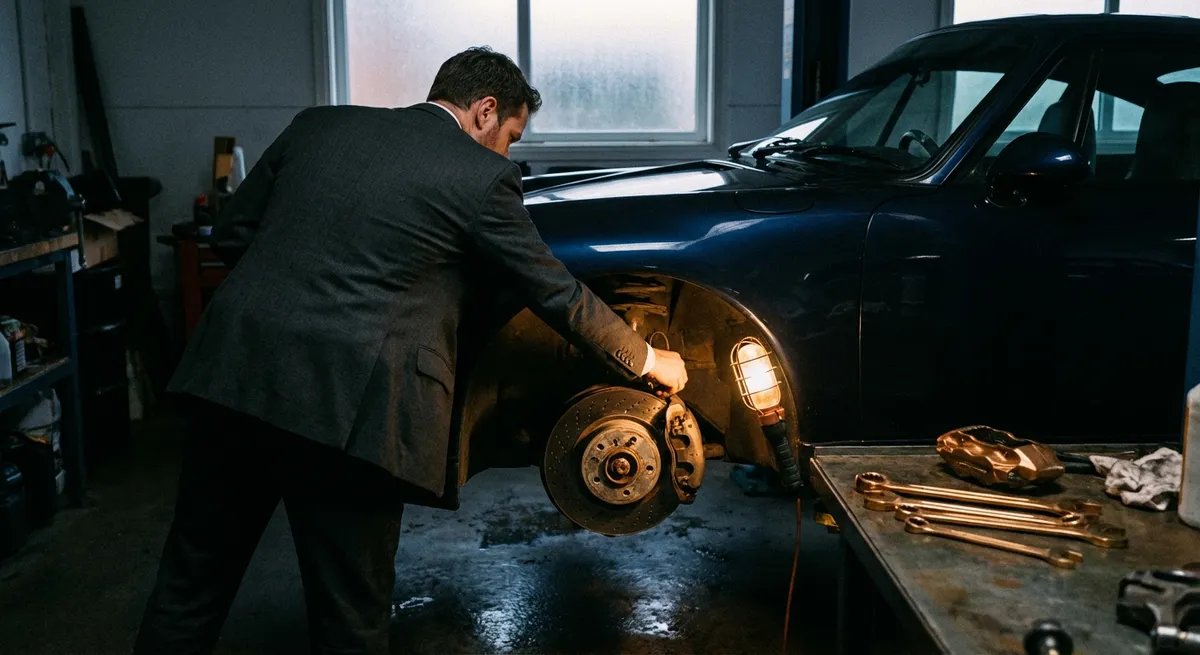
- Annual professional inspection: A comprehensive brake evaluation that covers pad thickness, rotor condition, fluid quality, hoses, caliper hardware, and related suspension components.
- Documentation mindset: Keep a record of what was done, what was measured, and the technician’s observations. Over time, patterns emerge—a higher‑resolution picture of your vehicle’s braking health.
- Driving style awareness: Smoother, anticipatory driving not only reduces wear but also maintains more consistent brake temperatures, minimizing fade and prolonging component life.
The goal is not perfection but predictability. A brake system that behaves exactly as you expect—every time, in every weather condition—is the true hallmark of refined maintenance.
Conclusion
Behind every serene stop is an intricate choreography of hydraulics, friction, and control. For owners who value safety and sophistication, understanding this system is less about technical obsession and more about cultivating awareness: how the pedal feels, how the car responds, how the system ages.
By paying attention to pedal texture, recognizing early performance changes, choosing pads with purpose, respecting brake fluid as a critical component, and looking beyond pads and rotors, you create more than just reliable braking—you create a driving environment characterized by confidence and composure.
Every journey is a sequence of accelerations and decelerations. Elevating the quality of each stop is one of the most meaningful ways to protect yourself, your passengers, and your vehicle—quietly, consistently, and with the kind of care that never calls attention to itself, yet makes all the difference when it matters most.
Sources
- [National Highway Traffic Safety Administration (NHTSA) – Vehicle Brakes Overview](https://www.nhtsa.gov/equipment/brakes) - Authoritative information on brake systems, safety recalls, and regulatory standards in the U.S.
- [U.S. Department of Energy – Alternative Fuels Data Center: Vehicle Braking Systems](https://afdc.energy.gov/vehicles/how-do-hydraulic-brakes-work) - Clear explanation of hydraulic brake operation and system components.
- [University of Texas at Austin – How Brake Systems Work](https://mechanicalengineering.utexas.edu/about/feature-stories/how-car-brakes-work) - Educational overview of braking fundamentals from a mechanical engineering perspective.
- [Continental Automotive – Brake Systems Technology](https://www.continental-automotive.com/en-us/trends/safety-technologies/brake-systems/) - OEM‑level insights into modern brake, ABS, and stability control systems.
- [Bosch Automotive – Brake Fluid and Brake Components](https://www.boschautoparts.com/en/auto/brakes) - Technical guidance on brake fluid, pads, and hardware from a leading brake component manufacturer.
Key Takeaway
The most important thing to remember from this article is that this information can change how you think about Brake Systems.