For discerning drivers, a brake pedal is not merely a control—it is a promise. A promise that when circumstances tighten and the road demands immediate authority, your vehicle will respond with calm, measured precision. Understanding how a brake system quietly orchestrates that outcome transforms routine maintenance into a considered act of self-preservation and mechanical stewardship.
This is an exploration of how refined brake systems truly work, and five exclusive insights that matter to those who expect more than “good enough” from their stopping power.
The Modern Brake System as a Coordinated Ensemble
A contemporary brake system is less a collection of parts and more a coordinated ensemble, each component contributing to a meticulously choreographed stop.
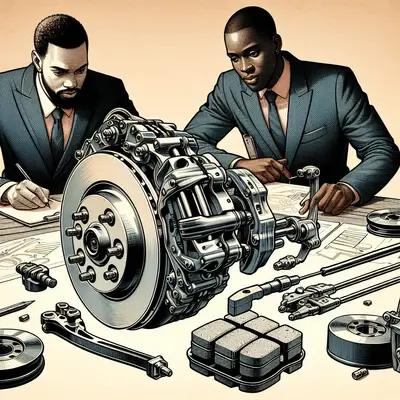
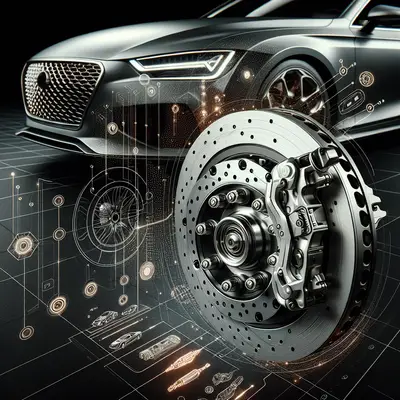
At the heart is the brake pedal, which initiates hydraulic pressure via the master cylinder. From there, brake fluid transmits force to calipers or wheel cylinders, which press pads or shoes against discs (rotors) or drums. On well-maintained vehicles, this process feels almost effortless—yet it hinges on extraordinarily tight tolerances and precise hydraulic balance.
The brake booster amplifies pedal effort, making strong braking possible without heroic pressure from the driver. Anti-lock braking systems (ABS), electronic brake-force distribution (EBD), and, in many vehicles, stability control further refine this process by subtly modulating pressure at each wheel to maintain grip and composure, not just brute stopping.
A premium approach to brake safety begins with appreciating that nothing in this system operates in isolation. Changing pads without evaluating rotor condition, or topping up fluid without addressing the underlying wear, is akin to tuning one instrument while ignoring the rest of the orchestra.
Materials, Heat, and the Signature of Your Brakes
Every braking event converts kinetic energy into heat. How gracefully your system manages that heat defines not only stopping distance, but also the character of your braking experience.
High-quality pads are engineered for specific friction profiles and temperature ranges. Entry-level pads often prioritize low cost and low noise at the expense of consistent performance under repeated or high-speed stops. More refined formulations—ceramic or high-grade semi-metallic—deliver stable friction, quieter engagement, and better recovery after intense braking, provided they are correctly matched to the vehicle and driving style.
Rotors, too, are not equal. Metallurgy, thickness, and surface finish dictate how effectively they absorb and shed heat. Slotted or drilled designs can improve gas and dust evacuation in demanding conditions, but they must be sourced from reputable manufacturers to avoid cracking or premature wear.
A considered driver understands that brake fade—the disconcerting loss of braking authority under sustained demand—is often a function of mismatched materials or neglected cooling capability. The most elegant braking systems are not the most aggressive; they are the most stable across real-world conditions.
Exclusive Insight #1:
Treat brake choice as you would tire selection—materials, intended use, and heat management matter more than marketing labels. A well-matched pad and rotor set, correctly bedded-in, will dramatically improve confidence without any visual drama.
Brake Fluid: The Unseen Guardian of Consistent Stops
Brake fluid is the understated custodian of your hydraulic system, and its condition quietly defines how your pedal feels on a demanding stop.
Brake fluid is hygroscopic—it naturally absorbs moisture from the atmosphere over time. This moisture lowers its boiling point and can eventually introduce corrosion into critical components. Under heavy braking, water-contaminated fluid can form vapor pockets, leading to a soft or sinking pedal precisely when you need firmness and predictability.
Different fluid specifications (DOT 3, 4, 5.1) offer varying boiling points and additive packages. Most modern passenger vehicles perform optimally on high-quality DOT 4, but the true differentiator is not the label—it is the maintenance interval. Even premium fluid degrades.
Exclusive Insight #2:
Treat brake fluid with the same seriousness as engine oil. Professional testing of fluid condition (measuring moisture content or boiling point) every 2–3 years is an elegant, data-driven way to preserve braking performance rather than waiting for symptoms to appear.
Listening to the System: Subtle Signs of an Imbalance
Refined drivers notice their car’s “brake language” well before it turns into a warning light or an emergency.
Changes in pedal travel, effort, or feel—longer strokes, softness, or sudden firmness—often precede obvious failures. A faint vibration during moderate braking can be early rotor thickness variation rather than dramatic warping. Slight pulling to one side can reflect caliper guide pin wear, uneven pad deposits, or tire and suspension issues masquerading as brake problems.
Similarly, brake noise is not always a sign of cheap parts; it can indicate glazing, incorrect bedding, or even pad formulations that are misaligned with your driving profile. A sophisticated approach doesn’t simply “live with” these changes; it investigates them before they evolve into compromised stopping performance.
Exclusive Insight #3:
Create your own “baseline memory” of how your brake pedal feels and sounds during a normal commute. Any departure—no matter how subtle—from that familiar signature is an early invitation to have the system inspected by a trusted professional, not a cue to ignore.
The Geometry of Stopping: Tires, Suspension, and Weight Transfer
A brake system does not stop a car alone; it works in partnership with tires and suspension, all governed by the physics of weight transfer.
During braking, weight shifts toward the front axle, loading the front tires and relieving the rear. Well-tuned brake bias, suspension damping, and tire grip ensure this transfer happens progressively and predictably. Worn shocks or struts, uneven tire wear, or incorrect tire pressure can all undermine braking distance and stability, even if the brake hardware is in excellent condition.
Electronic systems such as ABS and stability control are designed around assumptions of healthy tires and suspension geometry. When those assumptions are violated, the car can feel nervous, longer to stop, or prone to triggering ABS earlier than expected.
Exclusive Insight #4:
For truly premium braking performance, evaluate brakes, tires, and suspension as a single safety ecosystem. Investing in high-quality tires and maintaining proper alignment can have as much real-world impact on stopping distance as an upgrade to your brake components.
The Luxury of Predictability: Five Exclusive Insights for Brake-Conscious Owners
Bringing these elements together, the most safety-conscious owners elevate brake care into a deliberate, principled practice. These five insights embody that mindset:
Specify, Don’t Just Replace
When servicing brakes, request components by specification, not simply “what’s available.” Ask about pad friction class, rotor metallurgy, and compatibility with your vehicle’s ABS and stability systems. Decide based on performance and longevity, not only price.
Insist on Proper Bedding-In
New pads and rotors require a controlled series of gentle-to-moderate stops to establish an even transfer layer of pad material on the rotor surface. Proper bedding dramatically reduces noise, vibration, and uneven wear—yet it is often rushed or skipped. Confirm that your shop follows a defined bedding procedure, and complete any recommended on-road steps they provide.
Make Brake Fluid Service Time-Based, Not Symptom-Based
Include brake fluid replacement on your calendar (often every 2–3 years, or as recommended by your manufacturer), regardless of mileage. Request documentation of the fluid’s specification and consider shops that can verify fluid condition with actual test readings.
Request a Full Brake System Report, Not Just a Quote
A premium brake inspection should document pad thickness, rotor condition (including runout or thickness variation where appropriate), hose condition, caliper operation, and fluid state. Ask for a written or digital report with measurements, not only a recommendation. This transparency allows you to plan service intelligently.
Align Your Brakes with Your Driving Reality
A driver who regularly descends mountain passes, tows a trailer, or travels at higher highway speeds places different demands on brakes than a purely urban commuter. Discuss your real driving habits when choosing pads, rotors, and fluid. Elegant brake setups are tailored, not generic.
Exclusive Insight #5:
The most effective brake upgrade for many owners is not a race-inspired hardware change, but a combination of high-quality OEM-equivalent components, precise installation, fluid renewal, and a disciplined bedding routine. Quiet consistency is the true mark of a premium braking system.
Conclusion
A well-composed brake system is not defined by aggressive styling or oversized calipers; it is defined by its invisible virtues—predictability, composure, and unwavering response when the world shrinks to the few car lengths ahead of you.
By understanding how materials, fluid, geometry, and maintenance choices interact, you move beyond reactive repairs into proactive curation. In that space, every stop becomes an affirmation: your vehicle is not only ready for the routine, but more importantly, for the unexpected.
In a landscape crowded with shortcuts and generic solutions, choosing to cultivate a quietly exceptional brake system is one of the most sophisticated safety decisions a driver can make.
Sources
- National Highway Traffic Safety Administration (NHTSA) – Brake Safety - Federal guidance on brake systems, performance, and safety considerations
- U.S. Department of Transportation – Brake Systems Overview (FMVSS 105) - Regulatory standards governing hydraulic brake systems and performance requirements
- SAE International – Brake Systems Technical Papers - Engineering research and technical resources on friction materials, brake performance, and system design
- Continental Automotive – ABS and ESC Technology - Detailed explanations of modern electronic brake control systems and their interaction with vehicle dynamics
- University of Washington – Brake System Basics - Educational overview of brake components, operation principles, and the physics of braking
Key Takeaway
The most important thing to remember from this article is that this information can change how you think about Brake Systems.