Braking safely is not merely a mechanical act; it is a refined discipline that separates the merely cautious from the truly prepared. For drivers who value control, composure, and the assurance that every stop is as intentional as every start, brake safety becomes a quiet craft practiced on every journey. This is not about panic stops and worst‑case scenarios—it is about cultivating habits and insights that keep those moments rare and manageable.
Below are five exclusive, detail‑oriented insights designed for car owners who expect more from their braking system than basic functionality. These are the nuances that transform brake safety from routine maintenance into a deliberate standard of excellence.
Insight 1: Treat Pedal Feel as an Early Warning Instrument
Your brake pedal is not simply an on/off switch—it is a sensitive diagnostic tool that speaks in subtleties long before a dashboard light ever appears.
A firm, consistent pedal that responds predictably to pressure is the gold standard. Any change—sponginess, a slowly sinking pedal at a traffic light, a sudden need for more travel before the brakes “bite,” or a pulsing sensation under steady pressure—should be treated as a signal, not a curiosity.
Soft or sinking pedals may point to fluid leaks or air in the system; pulsation can indicate warped rotors or issues with ABS modulation; a higher‑than‑usual pedal might reflect an adjustment or component issue. Instead of waiting for symptoms to become dramatic, make a habit of assessing pedal feel in familiar situations: the same stretch of road, similar speed, and usual pressure. When something feels “off,” document the change (date, conditions, and sensation) and present that description to your technician. The ability to articulate these subtleties often shortens diagnosis time and can prevent minor concerns from evolving into critical failures.
Insight 2: Elevate Brake Fluid from Afterthought to Priority
Many owners fastidiously replace oil yet treat brake fluid as an invisible constant. In reality, brake fluid is the lifeblood of your stopping system, and its condition directly affects braking performance and consistency.
Most modern brake fluids are hygroscopic—they absorb moisture from the air over time, even in closed systems. This moisture gradually lowers the fluid’s boiling point, increasing the risk of fade under heavy or extended braking and accelerating internal corrosion in brake lines, calipers, and ABS components. The result can be subtle at first: slightly longer stopping distances, a softer pedal during prolonged descents, or a vague, less reassuring feel during aggressive stops.
A refined approach involves more than just “topping off.” Ask your service provider to measure brake fluid condition using a boiling point or moisture test rather than relying only on age or mileage. For many vehicles, a complete flush every 2–3 years is prudent, but fluid condition should always guide the final decision. Insisting on a documented brake fluid inspection—not merely a visual glance at the reservoir—places you in a small but safer minority of car owners.
Insight 3: Align Your Driving Style with Your Brake System’s Design
Modern brake systems vary significantly—different pad compounds, rotor materials, caliper designs, and electronic brake distribution strategies—all of which influence how your car is meant to be driven and slowed.
High‑performance or larger vehicles often use pads that perform best once warmed, and repeated heavy braking on a cold system may feel less reassuring. Conversely, eco‑oriented pads may offer quieter, gentler stopping but lengthen braking distances compared with sport compounds. If you have upgraded pads or rotors, understand that the intended balance between front and rear braking forces may have shifted, especially under emergency stops.
To refine your safety margin, consult your owner’s manual and, when applicable, the specifications of any upgraded parts. Learn whether your vehicle is tuned for aggressive deceleration, comfort‑oriented stops, or a blend of both. Then, adapt your technique: increase following distance in wet or cold conditions, anticipate stops earlier in city driving, and avoid unnecessary hard braking when pads and rotors are still cool. This is not about driving slowly—it is about braking in harmony with the engineering behind your car.
Insight 4: Use Environmental Conditions as Your Brake Strategy Compass
Attentive drivers adjust their braking to weather and surface conditions, but truly meticulous drivers pre‑plan their braking strategy the moment the road changes. This means consciously recalibrating how and when you brake, not just “being more careful.”
On wet roads, especially after a dry spell, the first rainfall can mix with oil and debris to create a slick film that significantly lengthens stopping distances. In such conditions, gently apply the brakes a few times early in your drive to clear water and surface contaminants from the rotors and pads. In cold climates, be aware that performance of both tires and brakes can differ dramatically until components warm slightly; your first few stops should be deliberate and measured.
On long descents, rely less on continuous braking and more on engine braking by selecting a lower gear where appropriate. This preserves pad integrity, reduces the risk of brake fade, and keeps pedal feel consistent. In heavy traffic, widen your following distance beyond what is merely legal, opting instead for what allows you to brake progressively, not abruptly. Using conditions as a guide—and adjusting early—turns you into an active manager of your brake system, not just a passive user.
Insight 5: Insist on Visual Evidence During Every Brake Inspection
The most safety‑conscious owners don’t just accept “your brakes are fine” as a complete answer. They request clarity, visuals, and specifics.
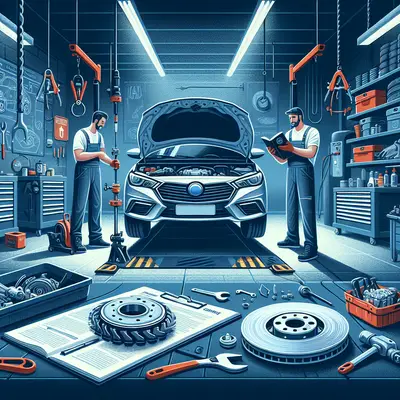
During service visits, ask your technician to measure and record the remaining thickness of your brake pads and the condition of your rotors and brake hoses. Photos or short videos taken during inspection (now a common practice at many premium service centers) can reveal early cracking in rubber lines, uneven pad wear, or rotor scoring that may not yet be audible or obvious from the driver’s seat. A slight lip on the edge of a rotor, uneven coloration, or minor surface rust patterns can tell a story about how evenly your system is working.
Keep these inspection notes—digitally or in a dedicated folder—so you can track changes over time. When you know that pads have gone from, for instance, 7 mm to 4 mm in a year, you can proactively schedule replacement rather than waiting for a warning light or grinding noise. This approach transforms brake care into a managed lifecycle rather than a series of urgent interventions.
Conclusion
Sophisticated brake safety is not loud or dramatic; it is quiet, consistent, and deliberately maintained. By treating pedal feel as a diagnostic, elevating brake fluid care, aligning your driving with your system’s engineering, tailoring your braking to conditions, and demanding visual, documented inspections, you move beyond basic maintenance into a realm of intentional control.
Every refined stop is the result of choices made long before your foot reaches the pedal. For the discerning driver, that is precisely the point.
Sources
- [National Highway Traffic Safety Administration (NHTSA) – Brakes](https://www.nhtsa.gov/equipment/brakes) - Overview of brake system safety, performance considerations, and related regulations
- [U.S. Department of Transportation – Brake System Safety](https://www.transportation.gov/mission/safety/brake-systems) - Federal guidance on brake system reliability and safety standards
- [University of Nebraska–Lincoln, Brake System Inspection Guide (PDF)](https://ops.unl.edu/documents/safety/vehicle/Brake-System.pdf) - Educational resource explaining brake component inspection and safety checks
- [Continental – Brake Fluid: Functions and Maintenance](https://www.continental-automotive.com/en-us/truck-trailer/solutions/topics/brake-fluid) - Technical discussion of brake fluid properties, aging, and maintenance recommendations
- [Car and Driver – How to Know When You Need New Brakes](https://www.caranddriver.com/research/a32865543/when-to-replace-brakes/) - Practical insights on brake wear symptoms, pad thickness, and replacement timing
Key Takeaway
The most important thing to remember from this article is that this information can change how you think about Safety Tips.