There is a particular kind of confidence that comes from knowing your vehicle will respond with poise when you ask it to stop. It is not loud, and it is not showy. It’s the quiet assurance that your brake system has been maintained with the same care you extend to every meaningful possession in your life. This is brake maintenance not as a chore, but as a discipline of refinement—where small, deliberate choices accumulate into exceptional safety.
Rethinking Routine: Why “Good Enough” Brake Care Isn’t Enough
Most brake maintenance advice stops at the obvious: replace pads when they’re worn, flush fluid occasionally, and respond quickly to squeals or grinding. For the attentive driver, however, “good enough” is an uncomfortable compromise. Brakes are a system, not a single component, and a system only performs as gracefully as its least-considered part.
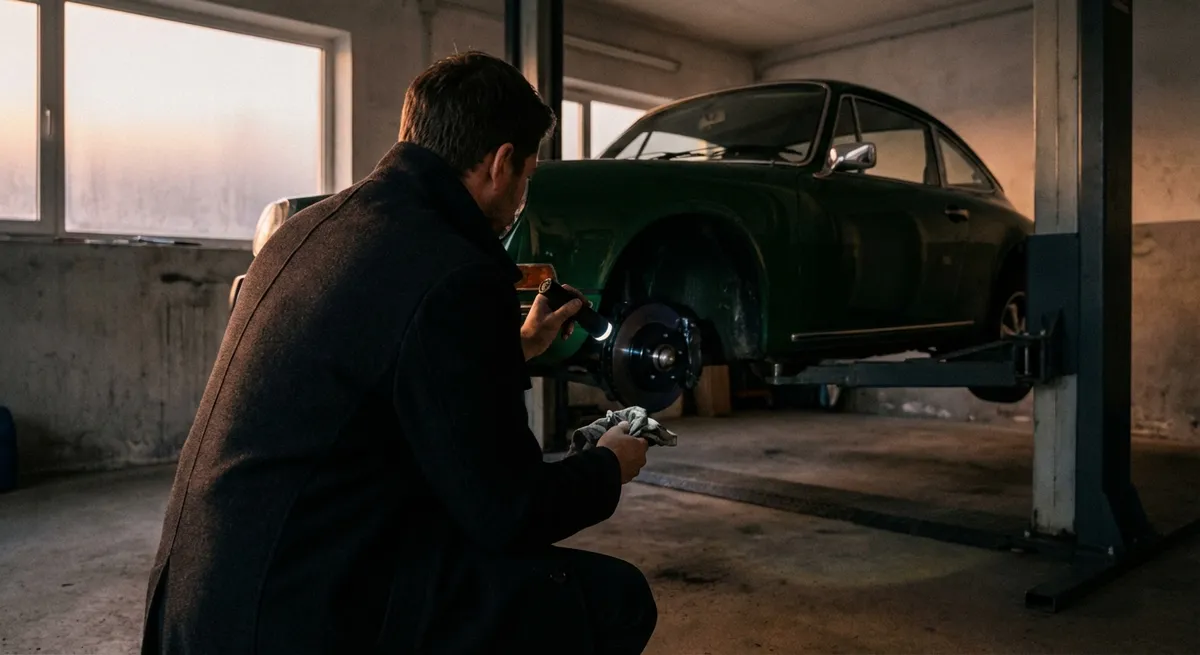
Premium brake care begins with understanding that performance, comfort, and safety are intertwined. Shorter stopping distances are important, but so is the way the vehicle communicates through the pedal, the absence of vibration, and the consistency of response in the rain, on a steep descent, or in dense traffic. When you maintain brakes with this level of nuance in mind, inspections become more than box-checking—they become an ongoing conversation with your vehicle.
That conversation starts with a critical mindset: you’re not simply asking, “Is anything wrong?” but “Could this be better, smoother, more consistent, and safer?” The answers live in details many owners (and some shops) overlook.
Exclusive Insight #1: Treat Brake Fluid Like a Precision Component, Not a Commodity
Brake fluid is often treated as an afterthought—topped off when low, occasionally flushed, rarely tested. For a driver who values composure under pressure, brake fluid is anything but trivial. It is the literal medium that translates your intention at the pedal into action at the wheel.
Brake fluid is hygroscopic—it absorbs moisture from the air over time. Even in a sealed system, this is inevitable. As water content increases, two things happen: the boiling point drops, and internal corrosion risk rises. Under hard or repeated braking (mountain drives, towing, spirited highway merges followed by quick stops), degraded fluid can reach its boiling point, forming vapor bubbles that compress easily. The result: a soft pedal or momentary loss of braking authority exactly when you demand the most.
The refined approach is to move beyond mileage-based intervals and ask your shop to test brake fluid for moisture content and boiling point during scheduled maintenance. A simple test strip or electronic tester can reveal when fluid performance no longer meets its specification—often before visible discoloration. For drivers in humid climates, near the coast, or in cities with steep grades, a more proactive flush schedule is not overkill; it is quiet, intelligent insurance.
Exclusive Insight #2: Brake Pedal Feel Is a Diagnostic Language—Learn to Read It
Many drivers notice only extremes: a pedal that goes too low or feels obviously hard. The discerning driver, however, pays attention to subtle shifts in pedal character over time. Pedal feel is the most immediate feedback loop your brake system offers, and treating it like a language allows you to detect issues long before they become emergencies.
A gradually lengthening pedal travel, even if stopping power still feels adequate, can hint at pad wear, rear brake imbalance, or early-stage fluid degradation. A pedal that feels “mushy” or slightly inconsistent from stop to stop can indicate trapped air, a minor hydraulic leak, or deforming rubber brake hoses. A pedal that firms up abruptly after a short pump might signal a caliper that isn’t moving freely or a master cylinder that’s not holding pressure perfectly.
Train yourself to check in with your pedal at least once per drive: note how it feels at the first stop of the journey vs. after extended driving, in the rain vs. in dry conditions, at low speed vs. coming off the highway. If something feels even slightly different, log it—mentally or in a note—and mention the specifics during service. This level of awareness turns vague complaints into precise feedback that a skilled technician can act on.
Exclusive Insight #3: Calipers and Hardware Are the Unsung Guardians of Smooth Braking
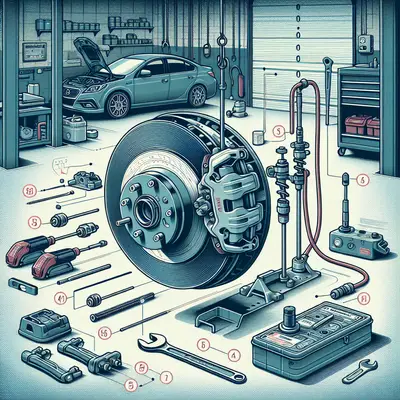
Pads and rotors are the visible stars, but calipers and their hardware determine whether your brake system operates with refinement or frustration. A premium brake experience depends on these components moving freely, evenly, and predictably.
Over time, caliper slide pins can dry out, corrode, or seize, particularly in regions where roads are salted or in coastal environments. When this happens, one pad may wear significantly faster than the other, the vehicle may pull gently to one side, or you might sense a faint dragging or heat after a drive. Similarly, neglected pad hardware—shims, clips, and abutment plates—can collect debris or corrosion, causing pads to bind rather than retract smoothly.
A refined maintenance approach insists that every brake service include attention to these details: cleaning and lubricating slide pins with the proper high-temperature brake grease, inspecting the condition of dust boots, replacing hardware rather than reusing tired components, and confirming caliper piston movement is smooth and symmetrical. This is the difference between brakes that simply work and brakes that feel composed, balanced, and quiet for tens of thousands of miles.
Exclusive Insight #4: Your Driving Environment Should Dictate Your Maintenance Strategy
Two vehicles of the same model and mileage can demand very different brake strategies depending on where and how they are driven. The cultivated driver accounts for climate, terrain, and usage pattern rather than relying solely on generalized recommendations.
In dense urban environments, constant stop-and-go traffic places heavy thermal load on pads and rotors, accelerating wear and risking glazing or hot spots. In mountainous regions, long descents can expose weaknesses in fluid and pads that would never appear on flat highways. Coastal and snowy climates are unforgiving to exposed metal, making corrosion on calipers, rotors, and hardware a central concern.
Align your brake maintenance with your environment:
- City driving: more frequent inspections of pad thickness, rotor condition, and brake balance to guard against heat-related wear.
- Mountain or hilly regions: heightened attention to fluid condition and rotor integrity, including watchfulness for vibration after extended descents.
- Coastal or high-salt areas: routine checks for corrosion on lines, calipers, and backing plates, and a greater willingness to replace compromised hardware preemptively.
By tailoring your care to the environment—not just the calendar—you preserve a level of braking consistency that generic schedules can’t guarantee.
Exclusive Insight #5: Alignment, Tires, and Suspension Quietly Shape Your Stopping Distance
Brake maintenance is often discussed as if it exists in isolation, but your stopping performance is shared by an entire supporting cast: tires, alignment, and suspension. The attentive owner understands that even a perfectly serviced brake system cannot overcome compromised grip or poor chassis control.
Tires determine the maximum friction available. Worn tread, uneven wear, incorrect inflation, or mismatched compounds can all extend stopping distances despite fresh pads and rotors. Similarly, alignment issues—such as excessive toe or camber out of spec—affect not only tire wear but also braking stability, especially under hard stops or in wet conditions. A suspension that is tired, with worn shocks or bushings, allows weight transfer to become abrupt and uneven, degrading both comfort and control when braking.
A premium brake strategy, therefore, includes ensuring:
- Tires are high quality, appropriate for your climate, and evenly worn.
- Alignment is checked after significant impacts, tire replacement, or reports of pulling or vibration under braking.
- Suspension components are inspected at regular intervals, with particular attention to shocks, control arm bushings, and ball joints.
When these elements are in harmony, your brake system can deliver not only shorter stops but also a sense of composure that distinguishes a merely functional vehicle from one that feels truly well-kept.
Conclusion
Refined brake maintenance is not about obsessing over every microscopic detail; it is about selecting the right details to care about—and caring about them consistently. Brake fluid treated as a precision medium, pedal feel regarded as a diagnostic tool, calipers and hardware maintained as the mechanical heart of the system, environment-aware strategies, and a holistic view that includes tires, alignment, and suspension: together, these practices elevate routine maintenance into a quiet form of craftsmanship.
For the driver who values discretion, safety, and control, this is where true confidence lives—not in dramatic interventions, but in a series of measured, thoughtful choices that ensure every stop feels as composed as the last.
Sources
- [National Highway Traffic Safety Administration (NHTSA) – Brakes and Safety](https://www.nhtsa.gov/equipment/brakes) – Federal guidance on brake safety, system function, and recall information.
- [U.S. Department of Transportation – Brake Fluid Safety Advisory](https://www.transportation.gov/mission/safety) – General safety resources from DOT; includes links and references related to vehicle braking and fluid considerations.
- [AAA – How Your Brakes Work and Why Maintenance Matters](https://www.aaa.com/autorepair/articles/how-your-brakes-work) – Consumer-focused explanation of brake systems and why regular, quality maintenance is important.
- [Car Care Council – Brake System Maintenance](https://www.carcare.org/brake-system/) – Practical guidance on brake inspections, fluid care, and component wear from an industry-supported organization.
- [MIT School of Engineering – The Physics of Braking](https://engineering.mit.edu/engage/ask-an-engineer/how-does-a-car-brake-work/) – Technical yet accessible overview of how brake systems operate and the physics behind stopping a vehicle.
Key Takeaway
The most important thing to remember from this article is that this information can change how you think about Maintenance.