For drivers who value composure as much as control, brake maintenance is not a chore—it is a quiet discipline. Beyond routine pad changes and fluid checks lies a more refined practice: subtle habits that preserve precision, extend component life, and keep every stop as poised as the first. This guide explores elevated, real-world maintenance practices that discerning owners use to protect both safety and sophistication on the road.
Elevating Routine Into Ritual: Listening to the System
Truly attentive brake maintenance begins with observation long before a warning light appears. Drivers who treat brakes as a precision instrument don’t just “notice noises”; they cultivate a baseline of how their vehicle feels and responds when everything is healthy. That reference point becomes the standard against which every drive is subconsciously compared.
This means paying attention to the firmness of the pedal at different speeds, the way the steering wheel behaves during gentle and firm stops, and how the vehicle settles at the final moment before a complete halt. A subtle increase in pedal travel, a new faint vibration at highway speeds, or the slightest tendency to pull to one side under braking can be early signs of pad wear, rotor irregularity, or even a developing hydraulic issue. By noticing and acting on these refined changes early, a sophisticated driver often resolves problems when they are still minor, avoiding both excessive wear and sudden, confidence-eroding surprises.
Exclusive Insight #1: Temperature-Conscious Driving Protects Premium Braking
Most drivers think of brakes as either “working” or “not working,” but the discerning owner understands that heat is the quiet enemy of refined stopping power. Every hard stop from high speed pours energy into the rotors and pads, accelerating wear, glazing friction surfaces, and stressing brake fluid. Over time, this can dull pedal feel and increase stopping distances—especially if the fluid is aging or contaminated.
Temperature-conscious driving means anticipating stops earlier and allowing more distance so that gentle, progressive braking replaces abrupt pedal stabs. On long downhill stretches, using engine braking (downshifting within reasonable RPM limits) eases the burden on the friction brakes, allowing them to run cooler and more consistently. After repeated hard stops—such as after spirited driving or a steep descent—letting the car roll forward slightly before parking can help avoid creating hot spots on rotors where overheated pads press into one area. This elevated awareness of heat management quietly extends pad and rotor life while preserving the crisp, predictable feel that refined drivers demand.
Exclusive Insight #2: Brake Fluid as a Performance Component, Not an Afterthought
Many owners think of brake fluid as a static, invisible fluid that needs attention only when the reservoir looks low. In reality, brake fluid is a performance component that ages, absorbs moisture, and gradually compromises both safety and pedal quality. Hygroscopic fluid (the type used in most vehicles) naturally takes on water over time, lowering its boiling point and increasing the risk of vapor formation under hard braking.
Sophisticated brake care treats fluid changes as a timed, proactive service—often every two to three years, or more frequently for vehicles that see steep grades, heavy loads, or performance driving, even if the mileage is modest. A professional bleed using the correct DOT specification for your vehicle (and never mixing incompatible types) restores the sharp, confident response you expect when you press the pedal suddenly. For some modern vehicles equipped with advanced driver assistance systems (ADAS) and electronic stability control, proper bleeding procedures are essential to keep these systems operating exactly as engineered. Considering brake fluid as a consumable with a defined lifespan—rather than a mere background fluid—is a subtle but powerful shift that elevates overall braking refinement.
Exclusive Insight #3: Rotor Condition Is About Feel, Not Just Thickness
Most discussions of rotors focus on minimum thickness, but sophisticated maintenance goes further, recognizing that the quality of the braking surface directly influences comfort, feedback, and confidence. A rotor can be technically within specification and yet still deliver a compromised experience: fine cracks from heat cycling, uneven pad deposits, and subtle runout can manifest as steering wheel shimmy, pulsation at the pedal, or a vague, inconsistent bite.
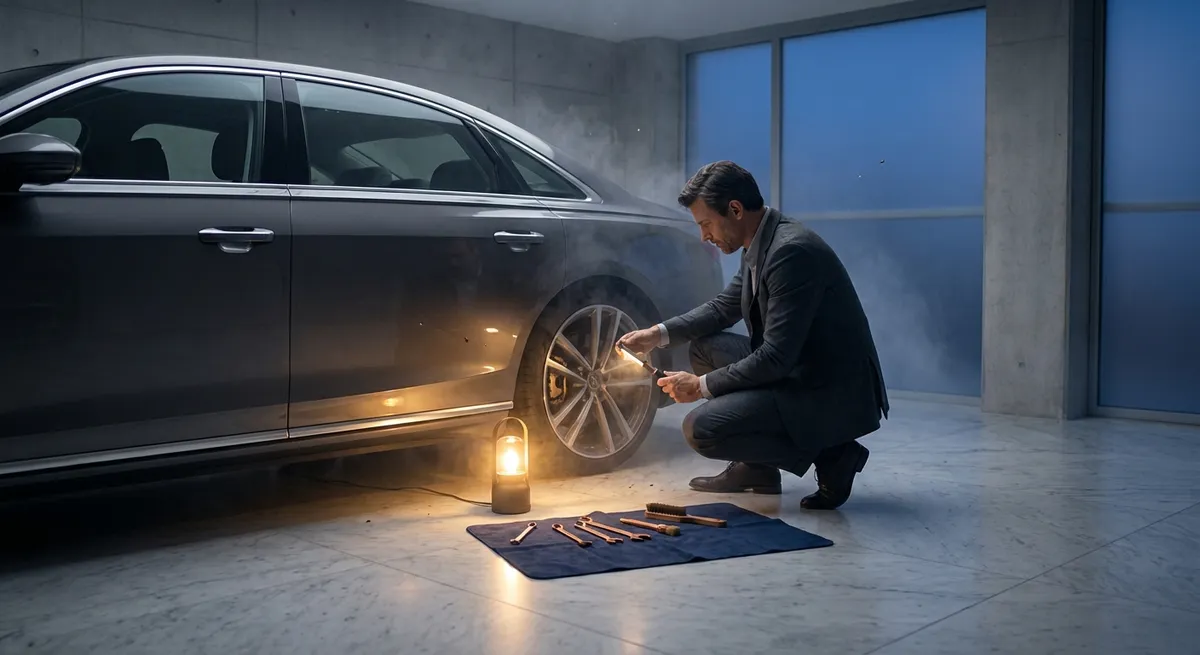
The discerning owner works with technicians who do more than “eyeball” rotors. They measure runout, check for lateral thickness variation, and assess the surface condition under good lighting. When replacing pads, pairing them with rotors that are either replaced or properly refinished (when appropriate per manufacturer guidance) can restore a glass-smooth, noise-free feel instead of layering new pads onto imperfect surfaces. This attention to the integrity of the friction surfaces is what separates an acceptable stop from a truly composed one—especially noticeable during gentle, low-speed braking, where any flaw is amplified.
Exclusive Insight #4: Caliper and Slide Care as the Guardian of Consistent Stops
Calipers are often overlooked because they are less frequently replaced than pads or rotors, yet they are central to consistency. Even a premium brake system can feel imprecise if caliper slides are sticking, pistons are sluggish, or seals are beginning to degrade. Uneven pad wear, one wheel that runs hotter than the others, or a faint drag when coasting can all hint at a caliper that is not releasing as it should.
Refined brake maintenance includes periodic inspection and lubrication of slide pins with the correct high-temperature brake grease, verification that rubber boots are intact and not torn, and attention to any signs of corrosion on the caliper brackets. On vehicles driven in harsh climates or where road salts are common, this care becomes even more critical. When calipers move freely and symmetrically, braking force is distributed evenly, pedal application feels linear, and the car remains unwaveringly straight during firm stops. This level of predictability is not only safer; it also contributes to the quiet confidence that discerning drivers insist upon.
Exclusive Insight #5: Aligning Brake Care With Tire and Suspension Health
Brake performance does not exist in isolation; it is part of a broader chassis ecosystem. Even the best-maintained brake components cannot deliver poised, repeatable stops if they are paired with worn tires or a tired suspension. Sophisticated owners understand that braking, grip, and stability are inseparable.
Integrating brake inspections with tire and suspension evaluations creates a more complete picture of stopping capability. Uneven tire wear may reveal alignment issues that cause the vehicle to wander under braking. Soft or leaking shock absorbers can increase nose dive and reduce tire contact patch consistency during hard stops. Worn bushings may allow subtle geometry shifts that undermine stability just when you demand maximum grip. When brake pad replacement is scheduled alongside alignment checks and tire condition reviews, the result is a cohesive, dialed-in system. The reward is not only shorter, more controlled stopping distances, but also a smooth, unruffled composure in emergency maneuvers.
Conclusion
For those who view driving as an experience rather than a mere necessity, brake maintenance becomes an intentional craft. It is the art of noticing small changes before they become major concerns, managing heat with foresight, treating brake fluid as a performance asset, insisting on flawless rotor and caliper behavior, and harmonizing braking with the rest of the chassis. These elevated habits do more than preserve hardware—they preserve serenity, authority, and confidence every time you touch the pedal.
By embracing these five exclusive insights, you move beyond basic maintenance into a more cultivated practice of brake care. The result is not just safety in the strictest sense, but a higher standard of driving refinement: smoother deceleration, quieter cabins, and the reassuring sense that your vehicle will respond with precision whenever you ask it to.
Sources
- National Highway Traffic Safety Administration (NHTSA) – Brakes and Safety Systems - Federal guidance on braking systems, performance, and safety considerations
- U.S. Department of Energy – Reducing Vehicle Idling and Aggressive Driving - Explains how driving behavior affects energy use, heat, and mechanical wear, including braking
- University of California, Berkeley – Understanding Braking Distance - Educational overview of how braking forces, friction, and vehicle dynamics interact
- StopTech / Centric Technical White Paper – Warped Brake Disc and Other Myths - Detailed discussion of rotor condition, pad deposits, and pedal pulsation
- BMW Group – Brake Fluid and Service Recommendations - Manufacturer perspective on brake fluid intervals and coordinated maintenance practices
Key Takeaway
The most important thing to remember from this article is that this information can change how you think about Maintenance.