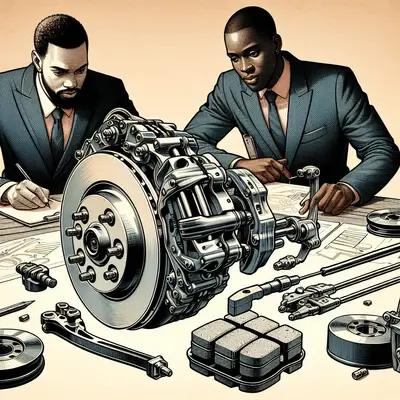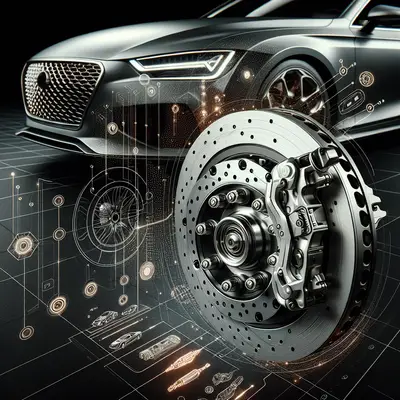
For discerning drivers, true confidence behind the wheel comes not from horsepower or trim packages, but from the quiet certainty that when you press the brake pedal, your vehicle will respond with absolute composure. Brake systems are not merely mechanical necessities; they are precision instruments that protect everything you value—passengers, reputation, and peace of mind.
Most owners notice their brakes only when something feels “off.” Yet the most sophisticated approach to safety lies in understanding the subtleties long before warning lights, grinding sounds, or spongy pedals ever appear. What follows are five exclusive, detail‑driven insights designed for drivers who expect more than basic braking—they expect flawless, predictable, and repeatable stopping power.
1. Pedal Feel Is a Language—And It Rarely Lies
The brake pedal is your most direct communication line with the system, and its feel is a highly refined diagnostic tool—if you know how to read it. A firm, linear pedal that responds consistently each time is the signature of a well‑maintained braking system. Any deviation from this baseline—a slightly longer pedal travel, a delayed response before the brakes “bite,” or an inconsistent firmness from one stop to the next—should be treated as an early warning, not an inconvenience.
A gradually softening pedal can signal moisture‑contaminated brake fluid, internal master cylinder wear, or flexible rubber hoses beginning to deteriorate under pressure. A high, rock‑hard pedal may indicate a booster or vacuum issue that’s depriving you of proper assist, forcing the system to rely more heavily on your leg rather than the engineered assist. Just as a seasoned wine enthusiast can distinguish quality by subtle notes, a refined driver can sense brake issues through these nuanced changes in pedal behavior long before they turn into emergencies.
2. Brake Fluid: The Overlooked “Vintage” That Quietly Ages Out
Brake fluid is often treated as a “fill it and forget it” component, yet it is one of the most critical elements of your entire safety system. Most modern brake fluids are hygroscopic, meaning they slowly absorb moisture from the environment. Over time, this reduces their boiling point and introduces microscopic corrosion inside expensive, precision‑machined components such as calipers, ABS modules, and master cylinders.
Under heavy braking—descending a long grade, repeated hard stops in city traffic, or abrupt emergency braking—aged, moisture‑laden fluid can vaporize inside the system, creating compressible gas pockets. This translates directly into a spongy pedal and delayed stopping response, precisely when you need maximum control. A premium maintenance approach involves periodic fluid testing (beyond just checking the level and color) and scheduled fluid exchanges based on time, not just mileage. Think of it as refreshing a critical safety “vintage” to ensure your brakes always perform at their engineered best.
3. Not All Brake Pads Are Equal—They Shape Your Car’s Personality
Brake pads are often selected on price alone, but the friction material you choose significantly shapes both safety and driving experience. Original‑equipment‑quality or premium pads are engineered to deliver consistent friction across temperature ranges, controlled noise, and predictable wear patterns. Inferior or mismatched pads may stop the vehicle, but they can introduce harshness, fade under repeated braking, or leave you with an inconsistent pedal, especially in wet or cold conditions.
The composition—ceramic, semi‑metallic, or low‑metallic organic—determines characteristics such as initial bite, dust levels, noise tendency, and heat tolerance. For a refined drive, the goal is not just “strong” braking, but balanced, repeatable performance: predictable pedal effort, minimal vibration, smooth engagement, and the confidence that the first stop of a cold morning and the tenth stop in heavy traffic will feel nearly identical. Partnering with a technician who understands pad compounds and selects them for your specific vehicle, driving style, and climate is an understated yet powerful safety investment.
4. Heat, Fade, and the Quiet Erosion of Stopping Distance
Brakes convert kinetic energy into heat, and how effectively your system manages that heat determines whether your car stops with authority or gradually loses its edge. Prolonged braking—such as descending mountainous roads, towing, or driving aggressively—can push your rotors and pads beyond their optimal temperature window. When this happens, you may feel the pedal remain firm, but the car requires noticeably more distance to stop; this is classic brake fade.
Rotors that are too thin, glazed pads, or low‑quality friction materials compound the issue, allowing temperatures to spike more quickly and recover more slowly. High‑quality brake components are engineered to dissipate heat efficiently and maintain friction even under demanding conditions. For drivers who value safety and refinement, this means paying attention to rotor thickness specifications, insisting on proper break‑in (bedding) procedures for new pads and rotors, and avoiding cheap “bargain” components that sacrifice heat management in the name of cost savings.
5. Precision Installation: Why the “How” Matters as Much as the “What”
Many drivers focus solely on which parts are installed, overlooking the precision required to install them correctly. Even premium pads and rotors can be compromised by hurried, uninspired workmanship. Proper brake service is a meticulous process: cleaning and lubricating caliper slide pins with the correct high‑temperature lubricant, torquing caliper bracket and wheel fasteners to specification, ensuring even rotor seating, and thoroughly flushing air from the hydraulic system.
Small oversights—a seized slide pin, unevenly torqued wheel nuts, contaminated friction surfaces, or an incomplete bleed—manifest later as pulsation, premature wear, pulling to one side, or inconsistent pedal feel. A premium approach means choosing a shop that documents the work performed, uses torque wrenches instead of guesswork, and treats each corner of the car as a delicate assembly rather than a rushed “pad slap.” In braking, refinement is not a luxury; it is the difference between theoretical safety and actual, repeatable performance.
Conclusion
A truly sophisticated approach to driving safety goes beyond reacting to warning lights and harsh noises; it involves understanding the unseen choreography of your brake system and honoring it with intelligent, proactive care. From reading subtle changes in pedal feel to managing brake fluid as a critical, aging component; from choosing the right pad materials to respecting the role of heat and meticulous installation, every detail plays a part in how confidently your vehicle responds in a moment of need.
When you view your brakes not as disposable hardware but as a finely tuned safety instrument, your standards naturally rise—and so does your protection. For the driver who expects more than average, brake maintenance is not just a service interval. It is a quiet, deliberate commitment to control, composure, and the safety of everyone you carry.
Key Takeaway
The most important thing to remember from this article is that this information can change how you think about Brake Systems.