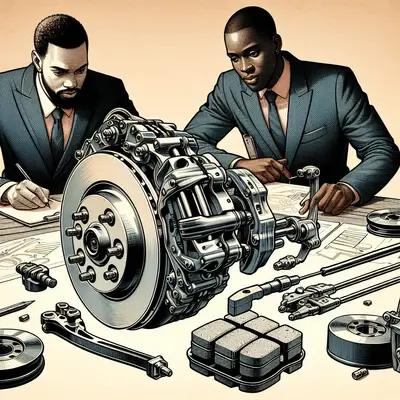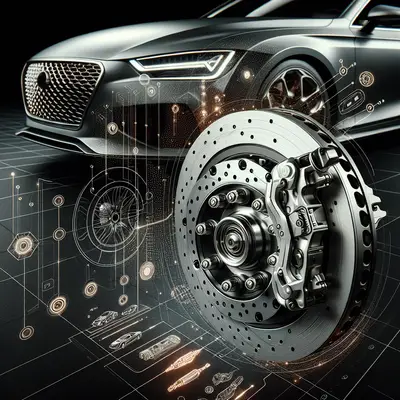
Even among attentive drivers, brakes are often treated as a simple on/off switch: press the pedal, the car stops. In reality, every smooth deceleration is a quiet collaboration between hydraulics, friction materials, electronics, and heat management. Understanding this inner geometry of braking reshapes how you evaluate safety, how you speak with your service advisor, and how confidently you approve — or decline — recommended work.
This refined overview of brake systems is designed for drivers who expect more than “it passed” from their service visits. Below, you’ll find a clear structure of how modern systems function, plus five exclusive insights that discerning car owners can use to elevate their brake safety above the ordinary checklist.
How a Modern Brake System Really Works
At its core, every hydraulic brake system translates the modest force of your foot into substantial clamping power at each wheel. When you press the pedal, a pushrod moves the master cylinder piston, increasing hydraulic pressure in the brake lines. Because brake fluid is (ideally) incompressible, this pressure is transmitted almost instantaneously to calipers or wheel cylinders at each wheel.
Disc brakes, the prevailing design on modern vehicles, use calipers to squeeze brake pads against a rotating rotor, transforming kinetic energy into heat through friction. Drum brakes, still common on some rear axles, use shoes pressed outward against a drum. Anti-lock braking systems (ABS) monitor wheel speed and pulse pressure at individual wheels to prevent lockup during hard stops, preserving steering control. Additional layers — electronic brake-force distribution (EBD), stability control, and automatic emergency braking — sit on top of this foundation, continuously recalibrating how much braking each wheel receives to maintain control and shorten stopping distances on imperfect surfaces.
The elegance of this system lies in its orchestration: every component, from caliper piston seals to ABS valves, must perform flawlessly under heat, pressure, and contamination risk. Appreciating how everything interlocks is the first step toward making superior maintenance decisions.
Beyond “It Stops Fine”: Why Subtle Changes Matter
Many drivers wait for dramatic symptoms — grinding, pulling, or a warning light — before investigating their brakes. For a more exacting standard of safety, the threshold should be much lower. Brakes rarely fail suddenly without having “whispered” in advance through texture, feel, or consistency.
A slightly longer pedal travel during a cold morning drive, for example, can suggest early moisture absorption in the brake fluid or minor caliper piston retraction. A faint vibration when braking from highway speeds might signal rotor thickness variation long before it becomes an obvious pulsation. Even a delicate change in the way the pedal firms up in stop‑and‑go traffic can hint at heat‑related fade in lower‑quality pads or fluid. When you frame these nuances as early data points rather than annoyances, you give yourself more options: scheduling service on your terms, choosing higher-grade parts, and avoiding urgent, high‑stress repairs.
Cultivated brake care is, fundamentally, attention to the gradient — not just the extremes.
Exclusive Insight #1: Brake Fluid as a Precision Component, Not a Line Item
Many service invoices list “brake fluid flush” as a routine add‑on, lumped alongside coolant or power steering fluid. For a safety‑focused driver, brake fluid deserves more respect than that. It is the medium through which every instruction from your foot reaches the wheels; its condition directly shapes pedal feel, ABS performance, and emergency stopping distance.
Brake fluid is hygroscopic — it absorbs moisture over time. This lowers its boiling point and can introduce microscopic corrosion inside calipers, ABS pumps, and lines. Under repeated heavy braking, contaminated fluid can boil, creating compressible vapor pockets that manifest as a soft, spongy pedal and reduced braking power when you need it most. Even if you rarely drive aggressively, long downhill stretches, towing, or a heavily loaded vehicle can push marginal fluid past its limits.
Refined practice is to treat brake fluid as a precision component with a measurable life, not a vague “when it looks dark” item. Ask your service provider:
- Whether they test brake fluid boiling point or just inspect color
- What specification fluid they are using (e.g., DOT 3, DOT 4, or DOT 5.1)
- How often your manufacturer recommends replacement, and under what conditions
This transforms a generic flush into a targeted, data‑backed safety decision.
Exclusive Insight #2: Pad Compound Choice Shapes More Than Just Dust
Brake pads are often discussed in shorthand: “ceramic,” “semi‑metallic,” or “performance.” In reality, the friction compound is a sophisticated recipe of fibers, binders, and additives, and the wrong choice can undermine both comfort and safety for your specific driving profile.
Ceramic pads typically offer quieter operation, less visible dust, and stable friction at moderate temperatures — a combination many premium street drivers appreciate. Semi‑metallic pads generally provide stronger bite at higher temperatures and are often favored in heavier vehicles or more spirited driving, albeit sometimes with more noise and dust. Low‑metallic and organic formulations fall in between, each with trade‑offs in fade resistance, rotor wear, and cold‑stop performance.
A refined approach is not to chase a label, but to match compound characteristics to your actual use:
- City‑heavy, stop‑and‑go commuting: prioritize low‑noise, consistent cold performance
- Frequent highway and mountain driving: value fade resistance and high‑temperature stability
- Towing or carrying heavy loads: consider higher‑friction, temperature‑resistant pads
By asking your service advisor which pad compound is being installed and why it suits your vehicle and driving style, you move from passive replacement to curated component selection.
Exclusive Insight #3: Rotor Quality and Finish Influence More Than Longevity
Rotors are often framed as either “turnable” or “replaceable,” but discerning drivers should evaluate them as engineered heat sinks and friction partners, not mere wear items. Rotor quality directly influences how evenly pads contact the surface, how heat dissipates, and whether your braking remains smooth over time.
Subtle imperfections in rotor thickness (known as rotor thickness variation) or lateral runout can, over thousands of miles, lead to pedal pulsation and uneven pad deposits. Budget rotors with inconsistent metallurgy may be more prone to hot spots, warping under heavy use, or noisy interactions with higher‑end pad compounds. Conversely, well‑specified rotors — with precise balancing, appropriate ventilation design, and stable material properties — support both smooth stops and predictable ABS operation.
When replacing rotors, a more sophisticated conversation might include:
- Whether the new rotors meet or exceed OEM specifications
- If the hub surface will be cleaned and checked for runout before installation
- Whether the rotor design (vented, slotted, coated) matches your driving and climate
Treating rotors as carefully selected partners to your pads, rather than the cheapest part that fits, pays dividends in comfort and confidence during every deceleration.
Exclusive Insight #4: Calipers and Hardware as the Guardians of Even Braking
Pads and rotors may be visible, but calipers, guide pins, and hardware quietly dictate how evenly those pads engage the rotor. A sophisticated brake job is as much about how components move as about what they’re made of.
Sticking caliper slide pins, fatigued anti‑rattle clips, or corroded pad abutment surfaces can cause subtle drag on one wheel, uneven pad wear, and even minor steering pull under braking. These symptoms often develop gradually and may be dismissed as “just how the car feels now.” Yet they represent mechanical bias in your stopping system — the opposite of the even, controlled deceleration you want in an emergency.
Refined practice during any brake service should include:
- Removal, cleaning, and proper lubrication of caliper slide pins with high‑temp, brake‑specific grease
- Inspection and replacement of pad hardware (clips, shims, boots) rather than reusing fatigued pieces
- Visual confirmation that pads move freely in their brackets without binding
By looking beyond pad thickness to the integrity and freedom of motion in calipers and hardware, you secure a more balanced, predictable brake response at every wheel.
Exclusive Insight #5: Reading ABS and Stability Systems as a Brake Health Barometer
Modern vehicles deploy ABS, electronic stability control (ESC), and traction control to correct for unexpected traction loss. While their warning lights usually signal electronic faults, their behavior in day‑to‑day driving can also provide subtle insight into the mechanical health of your brakes.
For instance, if ABS activates frequently during moderate stops on dry pavement, it may be compensating for an underlying inequality in braking force between wheels — perhaps from uneven pad wear, contamination on a rotor, or a dragging caliper. Similarly, ESC interventions during straightforward cornering might mask issues such as mismatched tire grip, degraded shocks, or brake bias anomalies that become more dangerous in emergency situations.
Rather than dismiss ABS pulsation or ESC activity as mere “nanny systems,” take note of when and where these interventions occur. If they appear premature or inconsistent with conditions, mention this pattern to your technician. A sophisticated diagnosis will examine both the electronic logs and the mechanical contributors, ensuring that the safety net is not compensating for problems that should be addressed at their source.
Integrating These Insights Into Your Service Routine
Brakes are not simply a pass/fail item on an inspection sheet; they are a continuum of performance that can be managed with as much care as any other premium aspect of your vehicle. By elevating brake fluid to a precision component, curating pad compounds, specifying rotor quality, insisting on meticulous caliper and hardware service, and reading ABS/ESC behavior as useful feedback, you move beyond routine maintenance into intentional safety stewardship.
At your next service visit, bring these concepts into the conversation. Ask how your shop measures fluid condition, what pad compounds they recommend for your driving, and how they ensure even caliper operation. The goal is not to overcomplicate but to refine: to align the sophistication of your understanding with the sophistication of the system that stops your car.
In the end, the measure of a truly well‑maintained vehicle is not just how it accelerates, but how quietly, predictably, and decisively it comes to rest — every single time.
Sources
- [National Highway Traffic Safety Administration (NHTSA) – Brakes and Safety Systems](https://www.nhtsa.gov/equipment/brakes) - Overview of brake system safety, ABS, and related regulations
- [U.S. Department of Transportation – Federal Motor Vehicle Safety Standards](https://www.nhtsa.gov/laws-regulations/fmvss) - Official standards that govern brake performance and testing in vehicles
- [AutoCare.org – Understanding the Brake System](https://www.autocare.org/news-blog/where-the-rubber-meets-the-road/understanding-the-brake-system) - Consumer-focused explanation of basic brake system components and function
- [Bridgestone Tire – Types of Brake Pads](https://www.bridgestonetire.com/learn/maintenance/types-of-brake-pads/) - Detailed discussion of ceramic, semi-metallic, and organic pad compounds and their trade-offs
- [MIT School of Engineering – “Why Don’t Car Brakes Fail More Often?”](https://engineering.mit.edu/engage/ask-an-engineer/why-dont-car-brakes-fail-more-often/) - Engineering perspective on brake system reliability, heat, and design considerations
Key Takeaway
The most important thing to remember from this article is that this information can change how you think about Brake Systems.