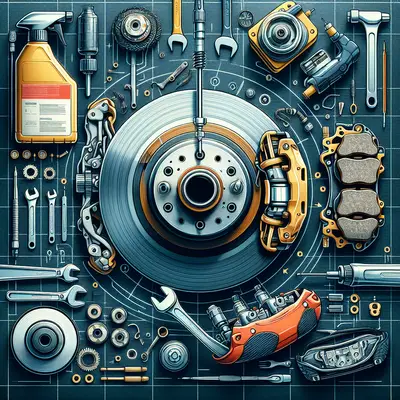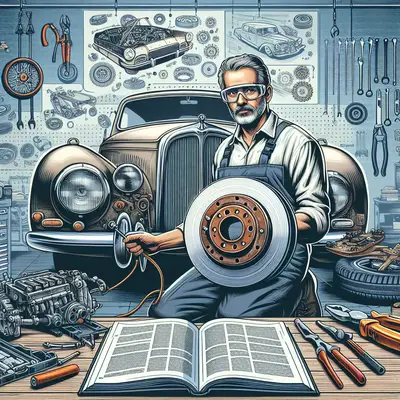
For drivers who see their vehicle as more than transportation, brake care is not merely a chore—it is an expression of standards. An impeccably maintained braking system transforms every stop into an act of quiet assurance, where safety, precision, and refinement intersect. This guide is designed for owners who prefer to understand what is happening behind the wheel, not just pay the invoice and hope for the best.
Below, you’ll find a structured framework for approaching brake repair decisions with clarity, plus five exclusive insights that discerning, safety‑focused owners consistently rely on—but that most quick-stop shops never mention.
Establishing a Clear Brake Repair Baseline
Before you can make refined choices about brake service, you need a baseline: a clear understanding of how your brakes perform when they’re healthy.
Begin with the essentials: pedal feel, stopping distance, and noise. A well‑maintained system delivers a firm, progressive pedal, consistent stopping power, and near‑silent operation in normal conditions. Make a habit of evaluating these characteristics on the same familiar stretch of road—ideally, a smooth, lightly traveled area—so you can detect subtle changes over time. Note how the vehicle behaves during gentle, moderate, and firm braking. Does it stay straight? Is initial bite prompt or delayed? Is there any vibration through the wheel or pedal? These reference points become your personal “factory standard,” making it much easier to recognize early deviations that warrant inspection long before they escalate into an urgent repair.
A refined baseline also means understanding your vehicle’s specific design. High‑performance sedans, heavy SUVs, and compact hybrids all use different rotor sizes, caliper configurations, and brake pad compounds; what feels “normal” on one platform can be a concern on another. Reviewing your owner’s manual and the service section for brake specifications gives you context to interpret what you feel and what your technician recommends. This baseline—both subjective (feel) and objective (specifications)—becomes the backbone of every repair decision you make.
Understanding the Modern Brake System as a Connected Ecosystem
Today’s braking systems are no longer simple hydraulics; they are tightly integrated with vehicle stability and driver‑assist technologies. Anti‑lock braking systems (ABS), electronic stability control (ESC), traction control, and advanced driver‑assistance systems (ADAS) all rely on accurate, repeatable braking performance to function correctly.
When you authorize brake work, you’re influencing far more than pads and rotors. Incorrect rotor thickness, low‑quality friction material, or improperly torqued components can interfere with wheel speed sensor readings and brake pressure modulation. This, in turn, may reduce the effectiveness of ABS or stability control when you need it most. Owners who prioritize safety insist not only on proper parts but on procedures that respect this system‑level integration—such as correct sensor handling, proper brake fluid specifications, and torque values set to factory standards instead of “shop feel.”
A sophisticated approach also recognizes that software calibrations depend on hardware consistency. Changing rotor size, drastically altering pad compound, or mixing components on opposite axles can introduce inconsistencies that confuse electronic systems calibrated to original equipment performance. When in doubt, select components that meet or exceed original equipment manufacturer (OEM) specifications and retain symmetry between left and right sides. You’re not just maintaining brakes—you’re preserving the calibrated harmony of your vehicle’s entire safety architecture.
Five Exclusive Insights for Safety‑Focused Brake Owners
These are the nuances that highly attentive drivers quietly rely on—details that rarely make it into generic repair advice, yet meaningfully elevate brake safety and longevity.
1. Heat Management Is the Silent Architect of Brake Longevity
Most discussions of brake wear focus on mileage, but heat is often the real culprit. Hard braking from highway speeds, stop‑and‑go traffic on steep grades, and towing all generate intense thermal load. Excessive heat can glaze pads, warp rotors, degrade brake fluid, and accelerate corrosion.
Refined owners learn to “manage heat” with their driving style. They avoid unnecessary late, heavy braking and instead use smoother, earlier deceleration, giving the system time to shed heat between stops. After prolonged braking—such as descending a mountain road—they avoid sitting firmly on the pedal at a complete stop, which traps heat in a single rotor area and can encourage warping. Instead, they shift into neutral or park, apply the parking brake if appropriate, and allow components to cool more evenly. This quiet attention to temperature drastically improves pad and rotor life and preserves consistent pedal feel.
2. Brake Fluid Condition Is a Direct Indicator of System Integrity
Brake fluid is often treated as an afterthought, yet it is the hydraulic backbone of your braking system. Over time, it absorbs moisture from the atmosphere—a process called hygroscopic absorption—which lowers its boiling point and encourages internal corrosion in lines, calipers, and ABS components.
Sophisticated owners pay close attention to fluid replacement intervals, choosing time‑based service (for example, every two to three years) rather than waiting for high mileage. They also insist on the correct specification (DOT 3, DOT 4, DOT 5.1, etc.) and avoid mixing incompatible types. During service, they expect a full professional bleed, not a quick top‑off. A high‑quality shop will be willing to show you the fluid’s appearance and, ideally, provide moisture‑content or boiling‑point test results. Clear, fresh fluid and documented replacement history offer a kind of “x‑ray” of your brake system’s inner health.
3. Precision Torque and Cleanliness Matter as Much as the Parts
Many owners obsess over brands and compounds but overlook installation quality. Brake components are mechanical interfaces—pads to calipers, rotors to hubs, wheels to rotors—and those interfaces are exquisitely sensitive to torque and cleanliness.
Refined brake service always includes thorough cleaning of hub surfaces using appropriate tools (not aggressive grinding that scars metal), removal of rust scale, and careful application of high‑temperature brake lubricant only where specified. Lug nuts and caliper bracket bolts should be tightened using a calibrated torque wrench to the manufacturer’s specifications, not “by feel.” Over‑torqued or unevenly torqued wheel lugs can distort rotors and create brake pulsation, sometimes appearing weeks after service. When you pick up your vehicle, a simple, elevated question—“Were all brake fasteners and wheel lugs torqued to spec?”—signals your expectations and often elevates the technician’s attention to detail.
4. Pad and Rotor Pairing Should Reflect Your Driving Profile, Not Just Price
Brake pads and rotors are often treated as interchangeable commodities, but their characteristics—friction curve, noise behavior, dust production, and temperature tolerance—vary significantly. A heavy SUV used for urban commuting demands a very different friction strategy than a lightweight sports sedan driven primarily on highways. Matching pad compound to rotor design and vehicle use is a hallmark of thoughtful maintenance.
Owners with a safety‑first mindset prioritize consistent, predictable braking in adverse conditions over the lowest possible dust or the cheapest replacement. They seek high‑quality, well‑reviewed components that meet or exceed OEM friction standards and accept that premium pads may produce more visible dust or require a short bedding‑in period to reach full performance. When discussing parts with your shop, ask not just “What brand?” but “What friction characteristics? How does this pad behave when cold, hot, or in the rain compared to OEM?” This level of inquiry ensures the components suit your real‑world needs, not just the shop’s inventory.
5. Subtle Vibrations and Smells Are Early Warning Signals, Not Inconveniences
Most drivers react only when brakes become noisy or obviously weak. Discerning owners pay attention to the subtler cues: a faint steering wheel tremor under light braking from highway speed, a brief burning odor after a moderate drive, or a barely perceptible pull to one side under gentle pedal pressure.
These early signals often indicate minor issues—a slightly sticking caliper slide, nascent rotor thickness variation, uneven pad transfer, or a developing hydraulic imbalance. Addressed early, they can usually be resolved with modest machining, lubrication, or component replacement. Ignored, they may progress into full‑scale vibration, premature pad destruction, or even localized rotor overheating that compromises structural integrity. Taking these subtle signs seriously and scheduling an inspection at the first hint of irregularity is one of the most effective ways to avoid emergency brake repairs and maintain an uninterrupted standard of safety.
Collaborating with Your Technician Like a Well‑Informed Partner
Brake repair is at its best when it becomes a collaboration between a knowledgeable owner and a conscientious technician. Instead of passively accepting vague descriptions—“your pads were low” or “your rotors were bad”—you can request specific measurements and explanations.
Ask for pad thickness in millimeters and rotor condition notes (thickness, runout, and whether they’re above the minimum specification stamped on the rotor hat or listed in manufacturer data). Request that replaced components be kept for your review; a quick look at uneven wear patterns, hot spots, or edge crumbling can be highly revealing. A shop that welcomes these questions is more likely to perform careful work; one that resents them is signaling something equally important.
This elevated dialogue extends to scheduling. Rather than waiting for a crisis, set preventative brake inspections at defined intervals—often aligned with tire rotations or seasonal checks. Regular, documented assessments position you to approve modest, timely interventions instead of facing abrupt, expensive overhauls.
Conclusion
Immaculate braking performance doesn’t happen by accident; it is the outcome of informed decisions, attuned observation, and respect for precise workmanship. By treating your brakes as a finely integrated safety system rather than a set of disposable parts, you create a driving environment defined by quiet confidence: predictable stops, composed control, and a margin of safety that remains intact even when circumstances are not.
The five insights above—heat management, fluid integrity, precise installation, tailored component selection, and attentive listening to early warning signs—form a discreet but powerful framework for owners who expect more from their vehicles and from their service providers. In adopting them, you elevate brake repair from a reactive expense into a deliberate practice that protects what matters most every time you touch the pedal.
Sources
- [National Highway Traffic Safety Administration (NHTSA) – Brakes](https://www.nhtsa.gov/equipment/brakes) – Federal guidance and safety information on vehicle braking systems and related components.
- [U.S. Department of Transportation – Brake System Requirements (FMVSS)](https://www.ecfr.gov/current/title-49/subtitle-B/chapter-V/part-571) – Official federal motor vehicle safety standards governing brake performance and design.
- [AAA – Vehicle Braking Systems Explained](https://exchange.aaa.com/automotive/automotive-trends/vehicle-braking-systems/) – Clear technical overview of modern braking systems, including ABS and stability control integration.
- [University of Nebraska – Brake Fluid and Hydraulic Systems Basics](https://transportation.unl.edu/brake-fluid-and-hydraulic-systems) – Educational material explaining brake fluid behavior, moisture absorption, and maintenance implications.
- [Consumer Reports – Car Brakes: A Guide to Brake Maintenance and Repair](https://www.consumerreports.org/cars/car-repair-maintenance/car-brakes-guide-to-brake-maintenance-and-repair-a3609836956/) – Practical, research‑based advice on pads, rotors, and choosing quality brake service.
Key Takeaway
The most important thing to remember from this article is that this information can change how you think about Repair Guides.