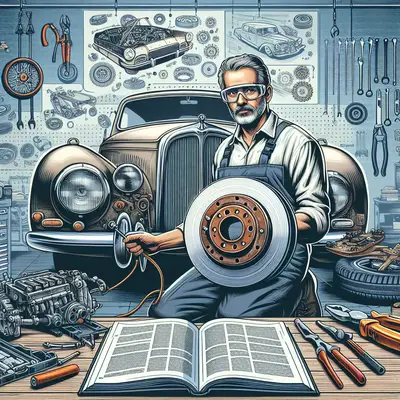
For the driver who values composure as much as control, brake repair is not a chore—it is a discipline. A finely tuned braking system transforms every deceleration into a quiet assertion of confidence, turning crowded commutes and long descents into moments of calm predictability. This guide is designed for owners who want more than “good enough,” and who recognize that attentive brake care is one of the most powerful ways to protect passengers, vehicles, and peace of mind.
Below, you’ll find a refined, practical roadmap to understanding, planning, and overseeing brake repairs—plus five exclusive insights that discerning, safety-focused owners consistently leverage but rarely talk about.
Seeing Brake Repair as a System, Not a Single Job
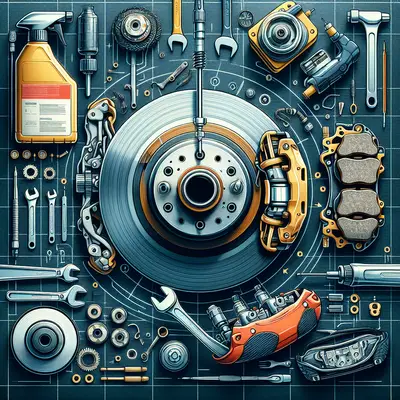
Brake service is often reduced to a simple phrase: “I need new pads.” In practice, the system is an orchestra of components that must work in quiet harmony: pads, rotors, calipers, hoses, hardware, brake fluid, and electronic aids such as ABS and stability control.
When one element is neglected, the others are forced to compensate, and performance degrades in ways that may not be immediately obvious. Slightly corroded caliper slide pins, for example, can cause a subtle pull under braking that you instinctively correct with the steering wheel. A marginally contaminated fluid can lengthen stopping distances only under hard emergency stops, hiding in plain sight during normal city driving.
Approaching brake repair as a system means insisting on a comprehensive assessment rather than a single-part replacement. That includes pad thickness measurements, rotor runout checks, caliper movement, hose condition, and a thoughtful review of driving patterns. It’s a more sophisticated conversation—but it leads to service that enhances both safety and feel, not just short-term quiet.
Five Exclusive Insights for Safety-Focused Brake Owners
These five insights reflect how meticulous owners think about brake repair. They go beyond basic “change your pads on time” advice and aim at the nuanced decisions that translate into higher safety margins and a more composed driving experience.
1. Evaluating Brake Feel Is as Important as Checking Pad Thickness
Most owners look only for visual wear: how much pad is left, how worn the rotor looks. The more revealing indicator is brake feel—particularly how the pedal behaves under varied conditions.
Refined owners pay attention to:
- Initial pedal response: Does braking begin crisply at the top of the pedal travel, or is there a vague, spongy phase before the car really slows?
- Consistency: Does the pedal feel the same after repeated stops on a steep downhill as it does in flat-city traffic?
- Linearity: Does pedal pressure translate into a smooth, predictable deceleration, or does it feel “on/off”?
A pedal that gradually becomes softer or needs more travel—even if stopping distances still seem acceptable—is an early warning of moisture-laden fluid, swollen rubber hoses, or air in the system. Sophisticated owners act at the first hint of degradation, well before an urgent safety issue develops.
Practical refinement: When you test-drive the car after service, deliberately perform a series of medium-hard stops from 40–50 mph in a safe, open area. Evaluate not just noise or pulling, but the consistency of pedal feel from the first stop to the last.
2. Matching Brake Parts to Driving Style, Not Just to the Vehicle
Most repair decisions are made on price and availability. Attentive owners tailor parts to how the vehicle is actually used, recognizing that “OEM equivalent” is not always the best, nor are high-performance components automatically an upgrade.
Key considerations include:
- City and family use: Quiet, low-dust, high-friction pads with stable performance at everyday temperatures, paired with rotors designed for durability and low vibration.
- Mountain or towing use: Pads and rotors with better heat tolerance, possibly with higher friction at elevated temperatures, and attention to caliper condition to avoid fade on long descents.
- High-speed or performance driving: Pads with strong high-temperature performance and compatible rotors, recognizing that some compounds may produce more noise or dust as the trade-off for control.
The refined approach is to ask the shop (or research yourself): How does this pad compound behave when it’s cold? When it’s hot? Is it known for quietness, or for performance? The goal is a setup that feels confident under your most demanding realistic driving scenarios, not someone else’s.
3. Insisting on Proper Rotor Service Instead of “Good Enough”
Rotors are often treated as simple discs to be either replaced or “turned” (machined) with minimal discussion. Yet rotors are central to pedal feel, noise, and the car’s ability to deliver repeated, stable stops.
Meticulous owners expect:
- Measurement, not guesswork: Techs should measure rotor thickness and runout, then compare to manufacturer specifications—rather than only eyeballing surface condition.
- Respect for minimum thickness: A rotor that is technically above minimum but close to it may still be a poor candidate for machining, especially on heavier vehicles or those frequently driven on highways or steep grades.
- Attention to mounting surfaces: Rust and debris on the hub face can introduce rotor runout even when the rotor itself is true, leading to pulsation over time.
A truly refined brake job involves cleaning the hub face, torquing wheels with a calibrated torque wrench in the correct pattern, and documenting final rotor measurements. Owners who ask for this level of precision tend to experience dramatically fewer vibrations and comebacks.
4. Treating Brake Fluid as a Wear Item, Not an Afterthought
Brake fluid is one of the most neglected, and most influential, elements in braking performance. It is hygroscopic—meaning it absorbs moisture over time—which lowers its boiling point and increases the risk of vapor bubbles forming under sustained heavy braking.
Discerning owners think of fluid like this:
- Time-based, not just mileage-based: Even a low-mileage car can have degraded fluid if several years have passed.
- Condition-based testing: Some shops use tools to measure moisture content or boiling point. Owners who request this get a clearer picture than a simple “looks dark” assessment.
- System-wide flushing: A premium brake service doesn’t just top off the reservoir. It methodically flushes old fluid from every corner of the system until fresh, clean fluid reaches each caliper.
The reward for this discipline is subtle but significant: a firmer pedal under hard braking, more consistent feel on long descents, and an added safety margin during emergencies—precisely when it matters most.
5. Documenting Brake Service Like an Insurance Policy
Sophisticated owners treat their maintenance records as a curated archive, not a stack of random invoices. With braking in particular, detailed documentation has tangible benefits:
- Stronger resale position: High-quality buyers and dealers respond favorably to well-documented safety-critical maintenance.
- Clear service intervals: Seeing exactly when pads, rotors, calipers, hoses, and fluid were last addressed makes it easier to plan the next service intelligently rather than reactively.
- Pattern recognition: Repeated issues on the same corner of the car—like uneven wear or persistent pulsation—become obvious when you can review a concise brake history.
Aim to keep a dedicated section in your records specifically for brakes, noting brand and model of pads and rotors, rotor measurements (if provided), and fluid change dates. Over time, this quietly elevates your car’s safety profile and simplifies every future service conversation.
Partnering Intelligently With Your Repair Shop
A refined brake repair strategy depends on collaboration, not confrontation. The most effective owners do not attempt to micromanage the technician’s every move; instead, they ask precise questions that frame expectations.
Consider discussing:
- “Please evaluate the brake system as a whole—pads, rotors, calipers, hoses, and fluid—and let me know where we stand now and what you anticipate I will need within the next 12–18 months.”
- “What pad and rotor combination do you recommend for my driving, and why? How will it feel compared to my current setup?”
- “Can you provide rotor measurements and confirm that the brake fluid has been fully flushed, not just topped off?”
This kind of dialogue signals that you value both safety and craftsmanship. The result is typically better communication, more thoughtful part selection, and a repair that feels less transactional and more like precision care.
Turning Every Stop Into a Quiet Assurance
Brake systems rarely ask for attention politely. They squeal, pulse, or fade only after margins have begun to shrink. The truly careful driver, however, doesn’t wait for complaints; they use feel, records, and informed conversation to stay ahead of issues.
By treating brake repair as a system-level discipline, tailoring parts to real-world driving, insisting on precise rotor and fluid service, and documenting work with intention, you elevate each stop from a simple mechanical event to a quiet assurance of safety. It is a subtle form of luxury: not in what others see, but in the confidence you feel every time your foot meets the pedal and the car responds with calm, predictable control.
Sources
- [National Highway Traffic Safety Administration (NHTSA) – Brakes and Safety](https://www.nhtsa.gov/equipment/brakes) - Federal guidance on brake safety, performance, and defect investigations
- [U.S. Department of Transportation – Brake Fluid Safety](https://www.transportation.gov/mission/safety/brake-fluid) - Overview of brake fluid characteristics and safety considerations
- [AAA – Brake System Basics and Maintenance Tips](https://exchange.aaa.com/automotive/automotive-research/understanding-your-vehicles-brake-system/) - Consumer-focused explanations of brake components and maintenance best practices
- [SAE International – Brake Rotor and Pad Performance Research](https://www.sae.org/publications/technical-papers/topic/brake-systems) - Technical papers exploring rotor, pad, and system behavior under various conditions
- [University of Nebraska–Lincoln, Nebraska Transportation Center – Brake System Performance Studies](https://engineering.unl.edu/ntc/) - Research hub including studies on vehicle braking and safety performance
Key Takeaway
The most important thing to remember from this article is that this information can change how you think about Repair Guides.