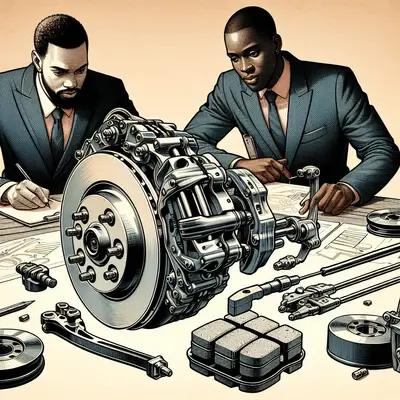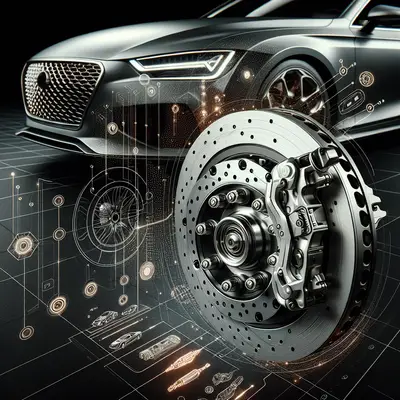
For the attentive driver, a brake system is more than a collection of pads, rotors, and calipers—it is the quiet language your vehicle uses to communicate safety, confidence, and control. While most owners notice only the obvious clues (squeaks, dashboard lights, a soft pedal), a more refined understanding reveals subtler signals long before safety is compromised. By learning to “read” these nuances, you elevate brake care from reactive repair to proactive preservation—protecting not only your vehicle, but also everyone who shares the road with you.
Beyond Pedal Feel: The Subtle Physics Behind Every Stop
Every time you press the brake pedal, a chain reaction unfolds in fractions of a second. Fluid pressure, friction surfaces, temperature changes, and weight transfer all negotiate how, when, and where your vehicle comes to rest. A sophisticated approach to brake care begins with appreciating this choreography.
Under normal conditions, hydraulic pressure builds smoothly as you press the pedal, clamping the pads onto the rotors or drums with controlled force. As your vehicle decelerates, weight shifts forward, increasing the demand on your front brakes. When this balance is disturbed—by air in the fluid, uneven pad deposits on rotors, or compromised components—you feel it as pulsing, pulling, or a pedal that responds unevenly. Recognizing these changes early, rather than waiting for a pronounced fault, allows you to address minor imbalances before they become expensive or hazardous faults.
Exclusive Insight #1: Brake Response Time Is as Important as Stopping Distance
Most drivers think about how far the car takes to stop, but far fewer consider the time between moving your foot and the brakes beginning to work with full authority. This “response time” is a refined, often overlooked metric of brake health.
A slight delay—perhaps half a second between pedal application and firm engagement—might feel like nothing in everyday city traffic, yet at highway speeds it can translate into several extra meters before deceleration truly begins. That delay can be the difference between a near miss and a collision. Causes can include degraded brake fluid, slightly sticking caliper slide pins, swelling rubber brake hoses, or even improper pad fitment. If you notice you must press slightly further or faster than you once did to achieve the same result, that is your signal: the system may still function, but its margin of safety is narrowing. A meticulous owner treats this as a prompt for inspection, not an annoyance to adapt to.
Exclusive Insight #2: Temperature Management Is the Quiet Guardian of Brake Performance
Brakes convert kinetic energy into heat. That heat must be generated, controlled, and then dissipated—gracefully. Excessive or poorly managed heat leads to brake fade, glazing, fluid boil, and accelerated component wear. Yet many owners evaluate brakes only when they are cold, during a quick test drive or short errand.
A premium approach considers performance when components are warm. After a controlled series of moderate stops—never aggressive enough to endanger others—note any changes in pedal firmness, smell, or noise. A spongy pedal after repeated braking can indicate fluid nearing its boiling point, often due to moisture contamination. A sharp acrid odor might suggest pads or rotors operating beyond their intended temperature range. Slight steering wheel vibration when warm, but not cold, may point to uneven thermal loading on the rotors. By paying attention to how your brakes behave in real-world, warmed-up conditions, you gain a much more accurate portrait of their true safety envelope.
Exclusive Insight #3: Brake Fluid Is a Precision Component, Not Just a Service Line Item
To the discerning owner, brake fluid is not a minor consumable—it is the lifeblood of the system. Modern vehicles rely on tightly controlled hydraulic pressure, and brake fluid is engineered with specific boiling points and viscosity characteristics. Over time, however, it absorbs moisture from the atmosphere, even in a “sealed” system, lowering its boiling point and inviting corrosion within calipers, ABS modules, and lines.
Instead of merely asking “Has it been changed recently?” a more sophisticated approach asks, “In what condition is the fluid now?” A professional shop can test brake fluid for moisture content or boiling point, revealing whether it’s still operating within its designed safety margin. For vehicles with advanced driver-assistance systems—such as automatic emergency braking or stability control—healthy brake fluid is especially critical, as these systems rely on rapid, precise hydraulic responses. Treating fluid testing and replacement as a scheduled safety investment, rather than an afterthought, is one of the most understated yet powerful ways to preserve your brakes’ peak performance.
Exclusive Insight #4: ABS and Stability Systems Are Only as Trustworthy as Their Foundations
Anti-lock braking systems (ABS) and electronic stability control (ESC) were engineered to help maintain steering control and vehicle stability during hard braking or on slippery surfaces. Many drivers assume that these systems are a fail-safe, always ready to compensate for marginal mechanical components. That assumption is misplaced.
These electronic systems do not replace a sound brake foundation; they amplify it. Worn pads, compromised rotors, contaminated fluid, or sticky calipers reduce the mechanical grip available to ABS and ESC. While the system can modulate pressure, it cannot create friction where little remains. Moreover, faults in wheel speed sensors or ABS modules may reveal themselves as intermittent warnings rather than permanent dash lights—flickering briefly during wet or cold conditions. A discerning driver does not ignore an ABS light that appears “only sometimes,” nor do they assume a single self-reset means the issue has disappeared. Ensuring that both mechanical and electronic elements are healthy transforms ABS and ESC from theoretical safety features into dependable partners.
Exclusive Insight #5: Brake Noise Is a Language—If You Learn to Interpret the Dialect
Not every brake noise is a crisis, and not all silence is reassuring. Squeaks, clicks, and low grinds each tell their own story. The discerning owner learns to differentiate incidental sounds from genuine warnings.
High-pitched squeals during the first few stops of the day, especially in damp conditions, may simply be surface rust on rotors being cleared. Consistent metallic squealing that appears as you slow, particularly at lower speeds, can indicate wear indicators contacting the rotor—an intentional alert that pad material is nearing its minimum. A faint grinding noise may signal pads worn down to their backing plates or a foreign object lodged between pad and rotor; either demands immediate attention. Even a subtle rhythmic “shhh-shhh” sound that changes with speed might point to slightly warped rotors or uneven pad deposits. Rather than dismissing new sounds as “just age,” a refined approach treats them as a diagnostic starting point, capturing their character, conditions, and timing to share with a trusted technician.
Building a Relationship With Your Brakes, Not Just a Service History
For owners who value composure, predictability, and absolute confidence behind the wheel, brake care becomes an ongoing conversation rather than an occasional transaction. Observing response time, temperature behavior, fluid health, electronic system feedback, and acoustic cues allows you to anticipate needs long before warning lights or visible damage appear.
This level of attentiveness does more than extend component life; it preserves the integrity of the entire driving experience. When you trust your brakes implicitly—cold or warm, in the city or at speed—every journey becomes calmer, more controlled, and fundamentally safer. In that sense, understanding the hidden grammar of braking is not a technical indulgence; it is one of the most elegant safety practices a driver can adopt.
Sources
- [National Highway Traffic Safety Administration (NHTSA) – Brakes and Safety Systems](https://www.nhtsa.gov/equipment/brakes) - Overview of brake safety, ABS, and related vehicle safety systems
- [U.S. Department of Transportation – ABS and Stability Control Information](https://www.transportation.gov/mission/safety/abs-and-esc) - Explains how ABS and electronic stability control enhance vehicle safety
- [AAA Exchange – Brake System Basics and Maintenance](https://exchange.aaa.com/automotive/automotive-repair/brake-system/) - Consumer-focused guidance on brake components and maintenance practices
- [Brake Fluid Information – NAPA Auto Parts](https://www.napaonline.com/en/knowhow/brake-fluid-101) - Detailed explanation of brake fluid types, contamination, and replacement intervals
- [Federal Trade Commission – Motor Vehicle Maintenance & Repair](https://consumer.ftc.gov/articles/motor-vehicle-maintenance-repair) - Advice on working with repair shops and understanding recommended services
Key Takeaway
The most important thing to remember from this article is that this information can change how you think about Brake Systems.