For discerning drivers, brakes are not merely components; they are the quiet arbiters of control, confidence, and composure on the road. Understanding how your brake system truly behaves—beyond dash lights and dealership scripts—elevates safety from a basic obligation to a personal standard. This is an exploration of the refined details inside your braking system, and the subtle practices that protect its performance long before an emergency stop ever tests it.
The Architecture of Confidence: How Your Brake System Actually Works
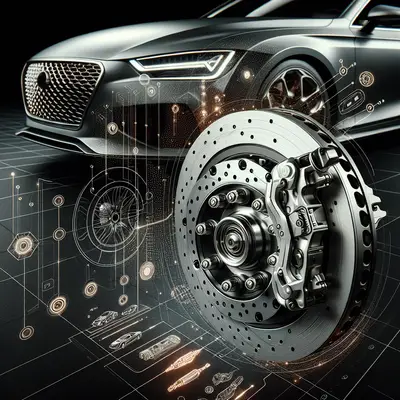
A modern brake system is a network of precisely coordinated parts, each with a distinct role in how the vehicle comes to a halt. When you press the pedal, you’re moving a piston inside the master cylinder, which converts that mechanical effort into hydraulic pressure. That pressure travels through brake lines to calipers (disc brakes) or wheel cylinders (drum brakes), which then press friction material—pads or shoes—against a spinning surface, rotor or drum.
Layered over this basic hydraulic system are several technologies that work in the background. Anti-lock braking systems (ABS) rapidly pulse brake pressure to prevent wheel lockup, allowing you to steer while braking hard. Electronic brake-force distribution (EBD) subtly adjusts how much braking each wheel receives, compensating for load shifts and road conditions. On many vehicles, brake assist systems detect emergency pedal application and apply maximum braking force faster than most drivers can.
For a safety‑focused owner, the key insight is that your brakes are not a single part you “fix” once; they are an orchestrated system whose weakest link can compromise the entire ensemble. A premium approach to maintenance treats pad thickness, fluid condition, hardware integrity, and electronic assistance as interconnected, not isolated line items on an invoice.
Insight 1: Pedal Feel Is a Diagnostic Language, Not a Vague Sensation
Most drivers think of pedal feel as “soft” or “firm,” then stop there. For a careful owner, pedal feel becomes a diagnostic tool—an early‑warning language you can learn to interpret.
A gradually softening pedal over months often points to aging brake fluid absorbing moisture, reducing its boiling point and compressibility. A suddenly spongy pedal after heavy braking may suggest fluid boiling or air in the lines. A pedal that feels firm initially but then slowly sinks under steady pressure can indicate an internal leak in the master cylinder. A high, very hard pedal that requires significant effort may be associated with a failing brake booster or vacuum issue.
Pay attention to how your pedal behaves when the car is cold versus fully warmed, in dry versus wet weather, and in city traffic versus highway driving. A refined safety practice is to mentally “log” any evolution in pedal behavior. If the feel changes and remains changed for more than a few drives, it warrants inspection—even if there are no warning lights or obvious noises. You are often the first and best sensor in your brake system.
Insight 2: Brake Fluid Is a Critical Safety Component, Not a Casual Top-Off
Brake fluid is frequently treated as something that’s “fine until the reservoir is low.” In reality, it’s a highly engineered, safety‑critical fluid whose condition has a direct impact on stopping performance, especially under stress.
Most modern cars use glycol‑based DOT 3, DOT 4, or DOT 5.1 brake fluid, all of which are hygroscopic—they absorb moisture from the air over time. That absorbed water lowers the fluid’s boiling point and increases the risk of vapor forming in high‑temperature braking situations (descending long hills, repeated hard stops, spirited driving). Vapor is compressible, which translates into a soft pedal and reduced braking force exactly when you need maximum confidence.
A premium safety standard is to treat brake fluid replacement as non‑negotiable preventive care, not reactive repair. Following the manufacturer’s interval is a minimum; for vehicles driven in humid climates or with frequent stop‑and‑go use, more frequent changes can be justified. If your shop can measure brake fluid boiling point or moisture content, ask for the numbers, not just a yes/no judgment. Think of fresh, high‑quality fluid as the invisible foundation of consistent, predictable pedal response.
Insight 3: Heat Management Is the Quiet Guardian of Brake Consistency
Brakes convert kinetic energy into heat. The more demanding the driving—heavy vehicles, high speeds, steep descents—the more heat is generated and the more critical it becomes to manage that heat effectively.
Rotors must be thick enough and of good quality to absorb and dissipate heat without warping prematurely. High‑performance or heavy‑use environments may justify slotted or drilled rotors, but for most refined daily driving, properly specified solid or vented OEM‑quality rotors provide all the thermal management needed. What matters more is quality material, correct installation torque on wheel lugs (to avoid rotor distortion), and ensuring that cooling airflow around the brakes is not obstructed by debris or poorly chosen accessories.
Driving technique also shapes heat load. Resting a foot lightly on the pedal on long descents keeps the brakes continuously engaged, building more heat than short, firm applications with cooling gaps in between. When descending a long grade, using lower gears and engine braking reduces reliance on the friction brakes, preserving both pad life and thermal stability. Proper heat management isn’t just for performance driving—it directly influences fade resistance and brake longevity for any driver who values composure under pressure.
Insight 4: Brake Hardware and Caliper Health Matter as Much as New Pads
It is tempting to think of “a brake job” as new pads and rotors and assume the rest is incidental. A more sophisticated view recognizes that the supporting hardware—caliper slide pins, pad shims, anti‑rattle clips, and dust boots—plays a decisive role in how smoothly and evenly your brakes perform.
If slide pins are corroded or poorly lubricated, the caliper may not move freely, causing uneven pad wear, pulling to one side under braking, or vibration. Worn or missing shims and clips can cause noisy operation and uneven pad loading, which affects both comfort and performance. Caliper pistons with deteriorated seals may begin sticking, leading to dragging brakes that overheat one wheel, cause a steering pull, or produce a burning smell.
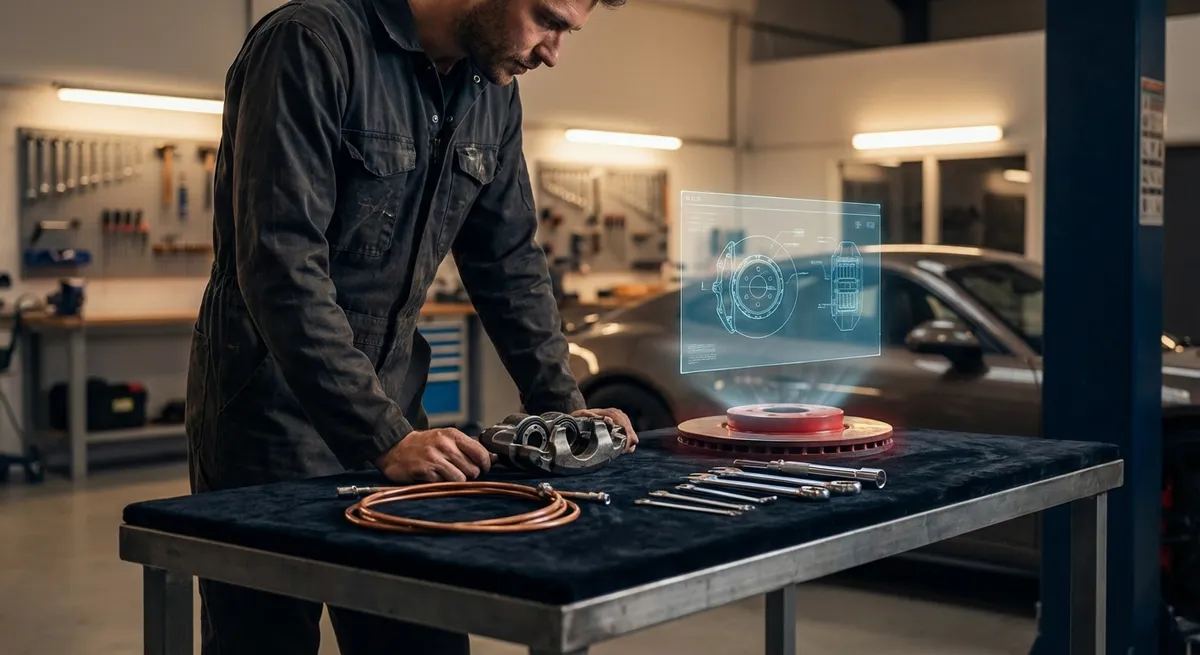
An elevated brake standard insists that any major brake service includes inspection, cleaning, and appropriate lubrication of hardware—not just parts replacement. Ask your service provider whether slides were removed and serviced, whether new hardware was installed with the pads if recommended, and whether there is any sign of fluid seepage at the calipers. This is where a “basic” brake job and a truly meticulous brake service part ways.
Insight 5: Your Tires and Suspension Quietly Complete the Brake System
Even the most advanced brake system can only work with the grip and stability that your tires and suspension allow. Brakes stop wheels; tires stop the car. Owners who are serious about braking performance treat tires and suspension as integral parts of the braking equation.
Tires with adequate tread depth and even wear patterns maintain more predictable grip in both dry and wet conditions. Uneven wear—cupping, feathering, or significant inner/outer edge wear—may indicate alignment or suspension issues that compromise both braking stability and steering feedback. Underinflated tires can lengthen stopping distances and reduce stability during ABS events; overinflated tires may reduce contact patch and grip, particularly in poor weather.
Suspension components—shocks, struts, bushings, and control arms—govern how weight transfers under braking. Worn dampers allow excessive dive and body motion, making it harder for ABS and stability control to manage grip at each wheel. A refined safety practice is to consider tire condition, alignment, and suspension health as part of every major brake conversation. When all three systems are in harmony, the car stops not just quickly, but with a composure you can feel in the steering wheel and seat.
Conclusion
True brake safety is not achieved by reacting to squeals and warning lights; it is built quietly over time by understanding how your system behaves, how its components age, and how seemingly minor details influence performance under duress. When you listen to pedal feel as a language, treat brake fluid as a safety asset, respect heat management, insist on hardware integrity, and see tires and suspension as part of the same safety ecosystem, your vehicle’s stops become more than routine. They become deliberate, consistent, and confidently repeatable.
For the attentive owner, this is where peace of mind comes from—not just knowing the brakes “work,” but knowing why, and knowing you’ve given them every advantage to perform at their best when it matters most.
Sources
- National Highway Traffic Safety Administration (NHTSA) – Brake Safety - Federal guidance on brake safety, system components, and defect information
- U.S. Department of Energy – How Regenerative Braking Works - Explains braking energy, heat, and braking systems in modern vehicles, especially hybrids and EVs
- Car and Driver – How Your Car’s Brakes Work - Detailed yet accessible breakdown of hydraulic brakes, ABS, and modern brake technology
- University of Nebraska–Lincoln – Brake System Fundamentals - Educational overview of brake system components and maintenance considerations
- Continental Teves (Continental Automotive) – Brake Fluid Basics - Technical perspective on brake fluid types, hygroscopic properties, and service intervals
Key Takeaway
The most important thing to remember from this article is that this information can change how you think about Brake Systems.