Modern vehicles hide their most critical safety system behind wheels, dust shields, and plastic trim. Brakes work out of sight, and too often, out of mind—until they don’t. For drivers who value refinement, control, and absolute predictability at every stop, brake maintenance is not a chore; it is a quiet, recurring ritual of stewardship.
This guide explores a more elevated approach to brake care—one that goes beyond pad thickness and dashboard lights. Below are five exclusive, detail-focused insights that discerning owners can adopt to keep their stopping power as composed and confident as the rest of the driving experience.
1. Reading the Brake Pedal as a Precision Instrument
A premium driver treats the brake pedal like a stethoscope for the entire system. The way it feels underfoot offers nuanced feedback long before a warning light appears.
A healthy system delivers a consistent, progressive pedal: initial firmness that deepens smoothly as you press harder. Any change in that texture is worth attention. A pedal that softens over time, requires more travel, or feels “springy” can indicate air in the lines, fluid degradation, or subtle caliper issues. A pedal that suddenly becomes unusually firm may point to vacuum-assist concerns (in vehicles with traditional brake boosters) or electronic brake assist faults.
Pay attention to pedal behavior in three specific scenarios: first start of the day, after prolonged highway driving, and after a series of firm stops. Variations between these conditions can reveal issues like moisture-laden brake fluid (spongy when hot), slight rotor warping (vibration under moderate pressure), or dragging calipers (a firmer pedal and slight pull). Treating the pedal as a precision instrument transforms everyday driving into a continuous health check of your braking system.
2. Elevating Brake Fluid from Afterthought to Priority
Brake fluid is the most underappreciated component in the system, despite being responsible for translating pedal effort into clamping power at the wheels. Over time, brake fluid absorbs moisture from the air—even in sealed systems. This reduces its boiling point and increases internal corrosion risk, both of which degrade performance long before obvious failures occur.
A refined maintenance routine doesn’t wait for symptoms. Instead, it respects time and conditions: brake fluid is typically inspected every service visit and replaced every 2–3 years, or sooner for vehicles frequently driven in mountainous terrain, heavy traffic, or high humidity. The color of the fluid can be a clue, but don’t rely on appearance alone; professional shops use test strips or meters to assess moisture content and boiling point.
For premium vehicles, ensure the shop uses fluid that meets or exceeds the manufacturer’s exact specification (DOT 3, DOT 4, DOT 5.1, or approved equivalents). Mixing incompatible types, or using low-grade fluid, can subtly degrade pedal feel and ABS performance. Treat brake fluid with the same seriousness given to engine oil—both dictate how precisely your car responds to your input.
3. Choosing Brake Components That Match Your Driving Character
Not all brake pads, rotors, and hardware are created—or intended—for the same experience. A premium approach to maintenance aligns component choice with the way you actually drive, rather than opting blindly for the cheapest or most aggressive option available.
For urban and mixed driving, a high-quality ceramic or low-dust semi-metallic pad from a reputable brand often delivers the best blend of smooth stopping, minimal noise, and clean wheels. Performance-focused pads can offer superior fade resistance, but some formulations are noisier, dustier, and less effective when cold—compromises that may not suit a refined daily driver.
Rotor selection also deserves nuance. Standard solid or vented rotors from OEM or OEM-equivalent brands are perfectly appropriate, and often preferable, for everyday driving. Cross-drilled or slotted rotors can improve gas and water evacuation in high-demand scenarios, but they are not inherently “better” for all drivers, and some designs may increase pad wear or noise.
The sophisticated owner asks the service advisor direct, informed questions: which brands are being used, what compounds, and how they compare with original equipment in terms of bite, longevity, dust, and noise. The goal is a braking personality that matches the vehicle’s character—and your own.
4. Designing an Annual Brake Inspection Ritual, Not a Reaction
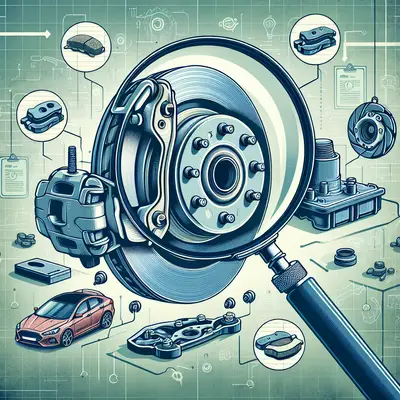
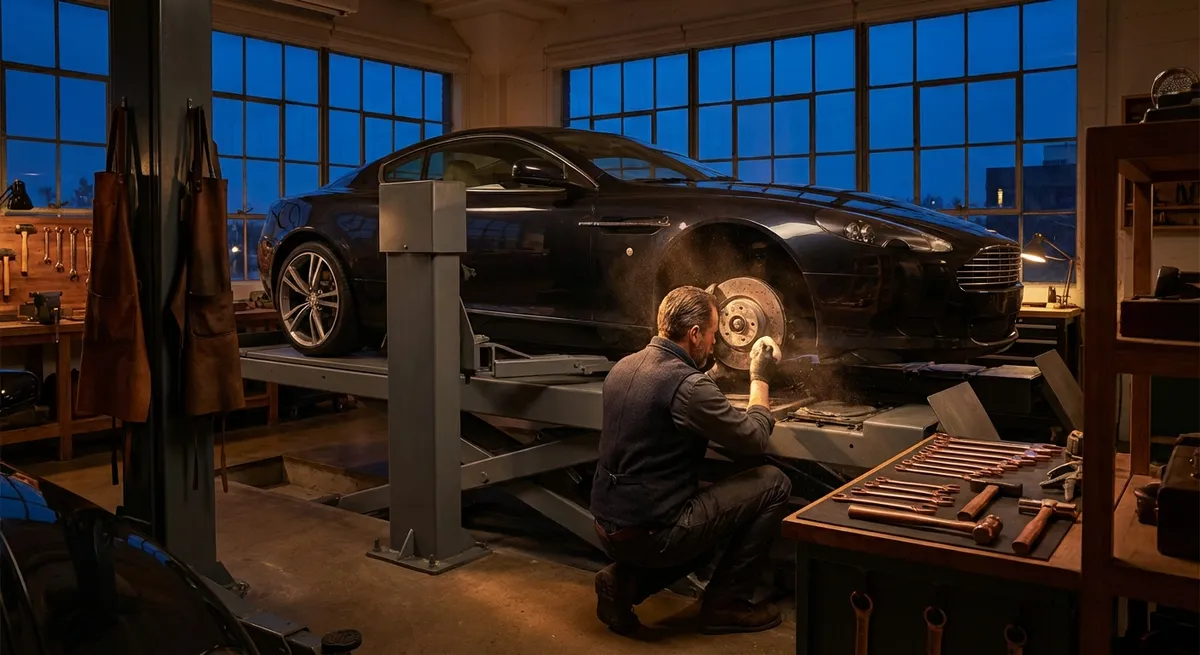
Brake problems reward early detection. Instead of waiting for squeals, grinding, or dashboard warnings, establish a deliberate inspection ritual at least once per year, or every 10,000–12,000 miles, whichever comes first. Think of it as an annual health check for your most critical safety system.
A properly executed inspection goes beyond a quick glance at pad thickness. It should include:
- Measuring pad thickness at multiple points to detect uneven wear.
- Inspecting rotor surfaces for scoring, heat spots, ridges, or “lip” formation at the edges.
- Checking for flexible hose cracking, swelling, or abrasion.
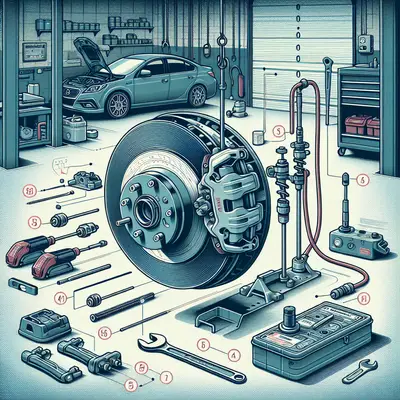
- Examining caliper slide pins and boots for smooth movement and intact seals.
- Evaluating parking brake cables and mechanisms for smooth engagement and full release.
Even if no parts are replaced, this ritual documents the system’s trajectory—slight trends in wear patterns, corrosion, or rubber aging can be watched and planned for instead of emerging as disruptive emergencies. A premium ownership experience is defined not by never needing repairs, but by never being surprised by them.
5. Mastering the Art of Quiet, Safe Bedding-In After Service
The first drives after a brake service are more than a shakedown; they’re an opportunity to optimize how new pads and rotors work together. This process, often called “bedding-in,” transfers an even layer of pad material onto the rotor surface, improving bite, reducing noise, and minimizing vibration over time.
While specific procedures vary by pad formulation and manufacturer, a refined, general approach looks like this (always confirm with your technician or product instructions):
- Choose a safe, low-traffic area with room to decelerate.
- Perform a series of moderate stops from varying speeds—firm, controlled braking, not panic-level.
- Avoid coming to a complete stop and holding the pedal hard for long periods immediately after hard braking; this can imprint uneven pad material on hot rotors.
- Allow time for gentle driving and cooling between cycles to prevent overheating new components.
This is not about aggressive performance driving; it is about controlled, deliberate stops that allow the friction surfaces to marry smoothly. Drivers who skip this stage may still be safe, but those who respect it typically experience quieter operation, better pedal feel, and more consistent performance—hallmarks of a truly premium braking experience.
Conclusion
Brake maintenance, when approached with intention, becomes more than replacement intervals and warning lights. It becomes a composed, ongoing dialogue with your vehicle: listening through the pedal, respecting the chemistry of brake fluid, choosing parts that align with your driving style, scheduling inspections before problems arise, and treating post-service driving as a crucial final step rather than an afterthought.
By adopting these five refined practices, you elevate your brake care from reactive to anticipatory, from basic to discerning. The reward is not only enhanced safety, but a quieter, more confident, and more controlled driving experience—every time you ask your car to stop.
Sources
- [National Highway Traffic Safety Administration (NHTSA) – Brakes and Safety](https://www.nhtsa.gov/equipment/brakes) – Federal guidance on brake safety, system components, and recall information.
- [U.S. Department of Transportation – Brake Fluid Guidance](https://www.transportation.gov/) – General DOT information and standards regarding vehicle safety and fluids.
- [AAA – How to Know When You Need Brake Service](https://www.aaa.com/autorepair/articles/how-to-know-when-you-need-brake-service) – Consumer-focused overview of brake symptoms, inspection practices, and service considerations.
- [Car Care Council – Brake System Maintenance](https://www.carcare.org/service-straight-talk-brakes/) – Educational resource on proper brake maintenance intervals and inspection procedures.
- [YourMechanic – Brake Pad and Rotor Inspection Basics](https://www.yourmechanic.com/article/how-to-tell-if-your-brakes-need-servicing) – Practical discussion of signs of wear, inspection points, and when to replace brake components.
Key Takeaway
The most important thing to remember from this article is that this information can change how you think about Maintenance.