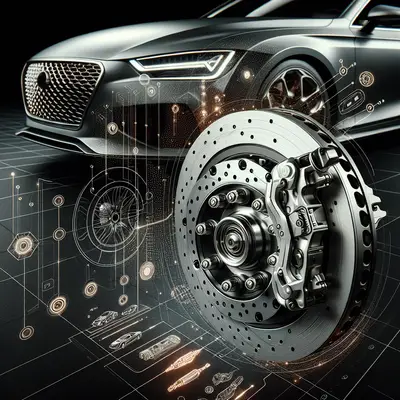
Brake systems are often spoken of in the language of utility—pads, rotors, and the occasional warning light. Yet for a discerning driver, the brake system is nothing less than the car’s primary safety instrument, comparable to a finely tuned timepiece: unnoticed when perfect, unforgiving when neglected. Understanding not just what the components do but how they behave under stress, temperature, and time elevates brake care from a chore to a considered discipline. This article explores brake systems with a refined lens—and offers five exclusive insights that safety‑minded owners rarely hear from a typical service counter.
The Brake System as a Unified Safety Architecture
A modern brake system is not a collection of isolated parts; it is a single, coordinated safety architecture. At its heart are the hydraulic components—master cylinder, brake lines, calipers, and wheel cylinders—translating pedal pressure into controlled clamping force at each wheel. Rotors and drums convert kinetic energy into heat, while pads and shoes provide the friction interface that makes this transformation both predictable and repeatable.
What separates an average system from a truly confidence‑inspiring one is how consistently it behaves under varied conditions: repeated hard stops, long descents, wet roads, and emergency maneuvers. Anti-lock braking systems (ABS), electronic brake-force distribution (EBD), and stability control are layered on top of the hydraulic core, monitoring wheel speeds and vehicle attitude to maintain traction. When properly maintained, each component works in subtle balance—minimal pedal travel, linear response, and controlled deceleration. When neglected, that balance is the first thing to erode, often long before any warning light appears.
Exclusive Insight #1: Pedal Feel Is a Precision Indicator, Not a Vague Impression
Most drivers think of “pedal feel” as subjective, but it is in fact one of the most precise early indicators of brake health. A premium approach treats every change in pedal response as data.
A firm, stable pedal that engages confidently at the same height each time suggests that the hydraulic system is sealed, the pads are properly bedded, and the caliper slides are moving freely. A gradually softening pedal—or one that “sinks” when held under steady pressure—may hint at internal seal wear in the master cylinder or a small fluid leak that has not yet left a telltale spot on the garage floor. A pedal that feels spongy often signals microscopic air in the lines or brake fluid that has absorbed moisture and is starting to boil under heat.
The refined habit is simple: periodically test your brakes on a quiet, straight road at low speed. Note the exact point where the pedal begins to bite. Repeat this ritual every few weeks. If the engagement point or firmness changes, even slightly, it’s not “just how it feels today”—it is an early‑stage safety message that warrants attention.
Exclusive Insight #2: Brake Fluid Aging Is a Silent Risk Multiplier
Engine oil gets all the attention, yet brake fluid quietly ages in the background with far more direct influence on your ability to stop precisely. Brake fluid is hygroscopic—it attracts and absorbs moisture over time, even in a closed system. This moisture lowers the fluid’s boiling point and accelerates corrosion inside critical components such as calipers, ABS modules, and master cylinders.
Under light, everyday driving, this degradation may go unnoticed. Under repeated hard stops or during a steep downhill descent, superheated fluid can approach its lowered boiling point, forming vapor bubbles that compress under pedal pressure. The result: a suddenly soft pedal and reduced braking authority at the very moment you need maximum control.
A sophisticated maintenance strategy treats brake fluid replacement not as an afterthought, but as a scheduled safety upgrade. Many manufacturers recommend a full flush every two to three years, regardless of mileage. For drivers who frequently tow, drive in hilly regions, or own performance‑oriented vehicles, more frequent fluid service is justified. Request that your shop measure brake fluid moisture content or boiling point, rather than relying solely on visual inspection. Clear fluid can still be functionally compromised; color alone is not an adequate indicator.
Exclusive Insight #3: Brake Balance Matters More Than “Plenty of Pad Left”
Service conversations often revolve around how many millimeters of friction material remain. While pad thickness is important, the more refined and safety‑critical question is symmetry. Imbalance side‑to‑side or front‑to‑rear alters your car’s stopping character in ways you may not immediately detect in casual driving.
Uneven pad wear from left to right can cause the vehicle to pull subtly during braking, particularly in emergency stops where you apply the pedal decisively. An overworked front axle with neglected rear brakes can extend stopping distances, even when the front pads appear “fine.” On vehicles with electronic brake‑force distribution and stability control, chronic imbalance can force electronic systems to work harder than intended, masking underlying mechanical issues until they become severe.
When reviewing a brake inspection, ask not only “How much pad is left?” but “Are wear patterns and measurements even across all wheels?” A premium standard seeks consistent pad thickness, similar rotor condition, and balanced braking contributions between axles. Addressing slight imbalances early—sticking caliper slides, partially seized rear calipers, or imprecise hardware installation—keeps the system’s behavior calm, predictable, and symmetrical under stress.
Exclusive Insight #4: Rotor Quality and Finish Shape the Character of Every Stop
Rotors are often treated as generic discs of metal, but their quality and surface finish substantially influence brake refinement and safety. Rotors manage enormous thermal loads; they must absorb, distribute, and shed heat without warping, developing hot spots, or losing structural integrity. The quality of the casting, the precision of machining, and even the cooling vane design all influence how the system behaves during prolonged or repeated braking.
Inferior rotors may work acceptably in routine city driving, then exhibit pedal pulsation, noise, or fade during high‑demand events—long highway descents, high‑speed emergency stops, or heavy towing. Even a well‑built rotor can lose its composure if installed without proper cleaning of the hub surface. Minor rust or debris behind the rotor can introduce runout, which in turn leads to uneven pad deposits and the familiar “warped rotor” feeling.
A discerning brake strategy favors rotors that meet or exceed original equipment specifications, with attention to metallurgy and machining quality. During installation, insist on proper hub preparation, torqueing wheel lugs with a calibrated torque wrench, and verifying runout where appropriate. The result is not only smoother operation, but a more linear and reassuring response when you transition from gentle braking to maximum deceleration.
Exclusive Insight #5: ABS and Stability Systems Are Only as Trustworthy as Their Mechanical Foundation
It is tempting to view advanced driver assistance systems as a safety net that will correct any misstep, but they are fundamentally dependent on a healthy mechanical brake foundation. ABS can modulate pressure, but it cannot compensate for air‑contaminated fluid, seized calipers, or glazed pads that have lost friction capability. Stability control can command brake force at individual wheels, yet it relies on accurate wheel speed signals, consistent pad contact, and rotors that respond predictably.
Subtle warning signs—an intermittent ABS light that disappears after a restart, a brief vibration under hard braking on a wet surface, or a slight delay before ABS engagement during a test stop—can indicate deeper issues with wheel speed sensors, tone rings, or hydraulic modulator valves. These are not merely electronic quirks; they are early indicators that your last line of defense in an emergency may not behave as engineered.
The refined approach is to periodically validate that ABS and stability systems are not just “on” but effective. In a safe, low‑traffic environment, conduct controlled test stops on dry and, when safely possible, slightly slick surfaces. Familiarize yourself with how your vehicle feels when ABS activates—and notice if that sensation changes over time. If your car’s behavior under maximum braking begins to feel inconsistent, pursue a thorough diagnostic, not just a quick code clear.
Conclusion
A brake system maintained to a premium standard feels unremarkable in the best possible way: silent, linear, and utterly predictable, no matter the circumstance. The discerning driver understands that the most important aspects of brake safety are often invisible—moisture in the fluid, subtle imbalance between corners, the quality of rotor metallurgy, and the true effectiveness of ABS and stability control.
By treating pedal feel as a precise indicator, respecting the aging of brake fluid, insisting on balance rather than just “plenty of pad,” selecting quality rotors, and validating your electronic safety systems, you move beyond routine maintenance into a realm of deliberate, informed care. The reward is not only shorter stopping distances, but a deeper confidence that, when the unplanned happens, your car’s most critical safety instrument is prepared to perform with quiet authority.
Sources
- [National Highway Traffic Safety Administration (NHTSA) – Brake Systems Overview](https://www.nhtsa.gov/equipment/brake-systems) - Explains fundamental brake system components and safety considerations
- [U.S. Department of Transportation – ABS and Stability Control Information](https://www.nhtsa.gov/equipment/antilock-brakes-abs) - Details how ABS and related electronic systems function and enhance safety
- [SAE International – Brake Fluid and Hydraulic System Considerations](https://www.sae.org/news/2019/06/brake-fluid-flush-importance) - Discusses brake fluid aging, moisture absorption, and performance implications
- [AAA – Brake Maintenance and Safety Tips](https://exchange.aaa.com/automotive/maintenance/brake-system/) - Provides guidance on routine brake inspections, pad wear, and service intervals
- [University of California, Berkeley – Vehicle Dynamics and Braking Research](https://escholarship.org/uc/item/6n44w1x7) - Offers technical insights into braking performance, balance, and stability control behavior
Key Takeaway
The most important thing to remember from this article is that this information can change how you think about Brake Systems.