For the driver who expects more than merely “roadworthy,” brake maintenance becomes less of a chore and more of a personal standard. It is the quiet discipline behind every composed stop, the invisible craft that separates a routine commute from a controlled, confident drive. When tended with intention, your brake system doesn’t simply prevent accidents—it shapes how poised and predictable your vehicle feels in every deceleration.
This guide explores brake maintenance as a refined routine rather than a reactive repair. Within it are five exclusive, detail-oriented insights that speak directly to drivers who care deeply about both safety and feel at the pedal.
Seeing Brakes as a System, Not Just Parts
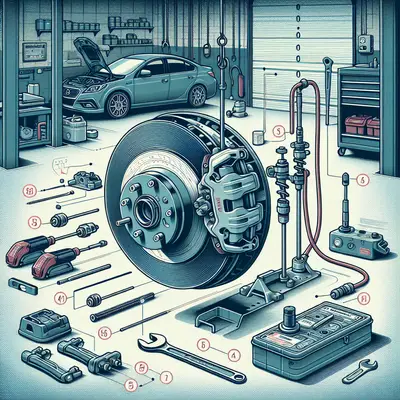
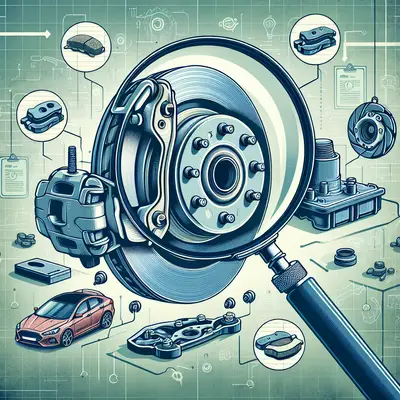
Most service conversations reduce brakes to pads and rotors, but a discerning approach begins with understanding the system as a synchronized whole. Pads, rotors, calipers, brake lines, fluid, master cylinder, ABS module, and even tires collaborate to produce a single outcome: stable, repeatable stopping power. When one element is neglected, others quietly overcompensate—until something finally shows up as noise, vibration, or fading performance.
A more elevated perspective asks: how is the system aging together? Are the pads wearing evenly across the axle? Are the rotors developing micro-cracks or heat spots that suggest aggressive use or improper bedding? Is the brake fluid aging in a way that compromises pedal feel? Each service visit becomes an opportunity to read the story your system is telling rather than simply swapping worn components.
This systems mindset leads to more intelligent maintenance decisions: pairing pad compounds appropriately with rotor material, respecting the interaction between brake bias and tire grip, and confirming that ABS and stability control have the clean, consistent hydraulic pressure they rely on. The result is not just shorter stopping distances—it’s stability under duress and composure in emergencies.
Exclusive Insight #1: Reading Pedal Feel Like a Diagnostic Instrument
For most drivers, brake pedal feel is either “fine” or “not fine.” The attentive driver treats it as an instrument—subtle, but remarkably revealing when you know what to look for. Over time, small changes in pedal response can signal underlying issues long before warning lights illuminate.
A gradually softening pedal that still stops the car might indicate moisture-laden fluid boiling earlier under heat, or a tiny amount of air in the system that compromises firmness. A pedal that feels firm but requires more leg effort than before can hint at glazed pads, rotor surface hardening, or an overly aggressive pad compound that underperforms when cold. A pedal that intermittently changes height or feel can point to a sticking caliper, contaminated pad surfaces, or a master cylinder beginning to fail.
Train yourself to notice three things regularly: how quickly the pedal firms up, how much travel is needed before engagement, and whether the feel remains consistent across different temperatures and driving conditions. Treat deviations as an early advisory, not a late-stage emergency. This quiet attentiveness is one of the most sophisticated—and cost-effective—brake maintenance habits you can cultivate.
Exclusive Insight #2: Treating Brake Fluid as a Performance Component, Not an Afterthought
Brake fluid is too often ignored until a technician mentions it on an invoice. For the safety-conscious driver, fluid is not a background detail—it is the medium that translates intent from your foot into clamping force at the rotor. As it ages and absorbs moisture, its boiling point drops, allowing vapor bubbles to form under heat. The effect is insidious: a pedal that feels increasingly vague during repeated stops or spirited driving, even though “nothing looks wrong.”
Rather than waiting for a problem, adopt an age-and-usage mindset. Many manufacturers suggest brake fluid replacement every two to three years, but if you frequently drive in mountains, stop-and-go traffic, or tow, a more assertive interval can be wise. Selecting fluid that meets or exceeds the specification in your owner’s manual (DOT 3, 4, or 5.1 for most modern vehicles) ensures proper compatibility while preserving performance under demanding conditions.
A premium approach also includes checking fluid color and clarity during routine inspections. Darkened, murky, or particle-laden fluid is not just unsightly—it’s a sign of internal corrosion and rubber degradation. Flushing and bleeding the system thoroughly, rather than merely “topping off,” helps restore a firm pedal and preserves the longevity of expensive components like ABS pumps and master cylinders. In a refined maintenance regimen, brake fluid is treated with the same respect as engine oil—critical, frequent, and non-negotiable.
Exclusive Insight #3: Listening for Micro-Signs Before the Squeal
Many drivers wait for the unmistakable squeal of wear indicators or the grinding scrape of metal-on-metal contact. A more sophisticated approach catches the story earlier, when signs are quieter and less obvious. Subtle new noises—an occasional light chirp at low speed, a faint rasp when braking gently, or a soft clunk when transitioning from reverse to drive—are all worth attention.
These sounds often appear intermittently at first, making them easy to dismiss. Yet they can indicate pad hardware beginning to loosen, shims losing their effectiveness, or early-stage rotor irregularities. A rust ridge forming at the rotor’s outer edge may only occasionally kiss the pad, but left unresolved, it can evolve into vibration, uneven pad wear, or premature rotor replacement.
Pay attention to the conditions under which sounds occur: cold vs. warm brakes, dry vs. wet roads, light vs. firm pedal application. Documenting patterns—mentally or in a simple note—equips your technician with far better information and can turn an exploratory inspection into a targeted, efficient maintenance visit. In short, your ears become part of the diagnostic toolkit, catching small issues before they become safety or comfort compromises.
Exclusive Insight #4: Managing Heat so Brakes Age Gracefully, Not Abruptly
Heat is the silent architect of brake wear. Every stop converts kinetic energy into thermal energy, and how your system absorbs, distributes, and sheds that heat largely determines its longevity and reliability. Hard, repeated braking without recovery time can cook pads, glaze friction material, and create localized hot spots on rotors that manifest as pulsation or steering wheel shake.
A premium maintenance mindset includes modest but meaningful driving adjustments to manage heat. On long descents, instead of lightly riding the brakes, use lower gears to assist in slowing the vehicle, reserving the brakes for controlled, deliberate applications. In urban stop-and-go, anticipate traffic flow so you can use one firm, clean stop instead of repeated shallow brake taps that constantly warm but never cool the system.
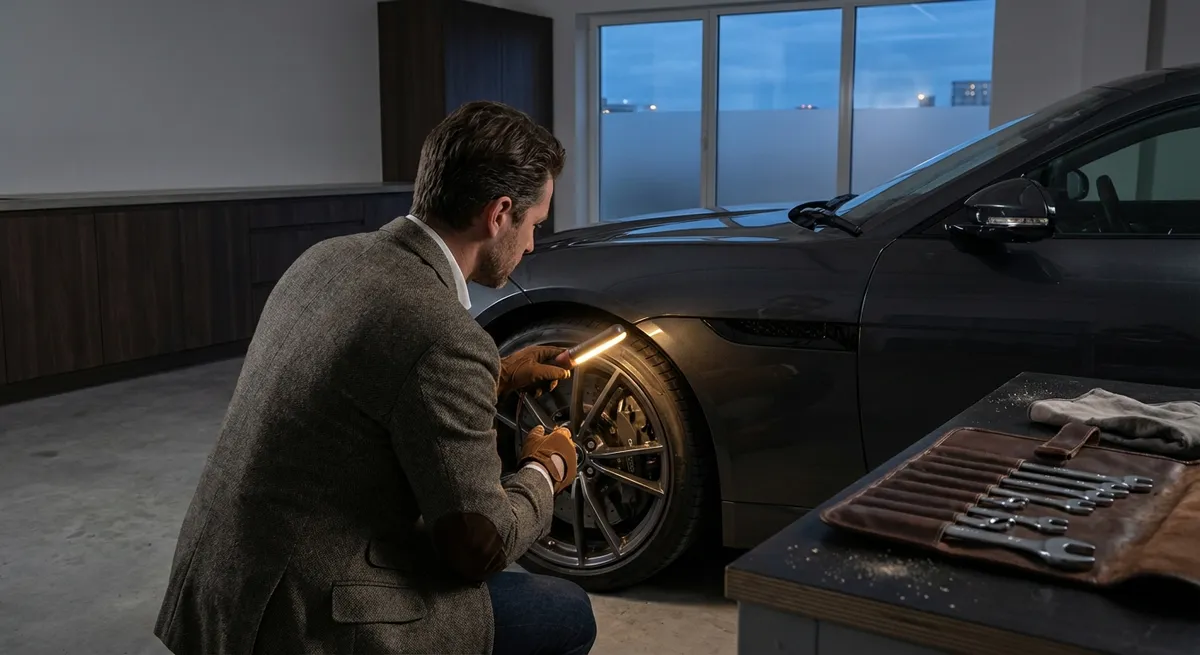
During inspections, be alert to visual signs of excessive heat: discolored rotors with blue or purple tinting, pad surfaces that look glassy rather than slightly textured, or a lingering hot smell after modest drives. Addressing heat issues at the pad-and-rotor level, and verifying proper caliper operation, preserves the brake system’s reserve capacity—the margin you rely on when you suddenly need maximum stopping power.
Exclusive Insight #5: Aligning Tires, Suspension, and Brakes for Cohesive Control
Brake maintenance is often discussed in isolation, but your brakes cannot outperform the grip and stability provided by your tires and suspension. A truly refined approach recognizes that impeccable braking is the product of three pillars working together: braking force, tire adhesion, and chassis stability.
Worn or mismatched tires can dramatically lengthen stopping distances, even if your pads and rotors are pristine. Uneven tire wear patterns—from misalignment, tired shocks, or neglected rotations—may show up as pulling under braking or inconsistent traction between wheels. The ABS and stability control systems simply cannot compensate for inadequate tire contact with the road.
Integrated maintenance means scheduling tire rotation, alignment checks, and suspension inspections alongside brake evaluations. When a technician notes inner-edge tire wear, consider how that might influence braking feel and emergency maneuvers. When pads are replaced, it’s an ideal moment to confirm that shocks, struts, and bushings are maintaining consistent tire contact patch pressure. For the driver who values composed stops, thinking in terms of “brake dynamics” rather than “brake parts” is a quiet but meaningful upgrade in safety philosophy.
Conclusion
Refined brake maintenance is not defined by how often you replace parts, but by how precisely you observe, anticipate, and preserve the system as a whole. Reading pedal feel as an early warning, elevating brake fluid to a primary safety fluid, listening for micro-signs, managing heat with intention, and aligning your tires and suspension with your braking goals—these are the habits that distinguish merely maintained brakes from confidently curated ones.
When you treat your brake system as an instrument of control rather than a set of consumables, every stop becomes an affirmation of your standards. The reward is not only shorter distances and quieter operation, but a calm, predictable, and dignified driving experience—mile after carefully considered mile.
Sources
- [National Highway Traffic Safety Administration (NHTSA) – Brake Safety](https://www.nhtsa.gov/equipment/brakes) – Federal insights on brake function, safety, and regulatory considerations
- [U.S. Department of Energy – Braking and Vehicle Efficiency Basics](https://www.energy.gov/eere/vehicles/articles/fotw-1042-march-4-2019-braking-can-recover-energy-otherwise-lost-heat) – Explains how braking converts kinetic energy to heat and why that matters for system performance
- [CarTalk – How Often Should You Change Brake Fluid?](https://www.cartalk.com/blogs/car-talk-service-advice/brake-fluid-flush) – Practical discussion on brake fluid aging, moisture absorption, and recommended service intervals
- [AAA – Brake System Inspection and Maintenance](https://exchange.aaa.com/automotive/automotive-research/understanding-your-vehicles-braking-system/) – Overview of key brake components and guidance on inspection and care
- [Bridgestone Tire – How Tires Affect Braking and Stopping Distance](https://www.bridgestonetire.com/learn/maintenance/how-tires-affect-your-stopping-distance/) – Explores the critical relationship between tire condition, grip, and braking performance
Key Takeaway
The most important thing to remember from this article is that this information can change how you think about Maintenance.