For the discerning driver, confidence at speed is earned long before the pedal is pressed. It is engineered into every line of the brake system: the calipers that clamp, the rotors that resist heat, the fluid that silently transfers intent into stopping power. This is not merely mechanical function—it is the quiet architecture of control. In a world that celebrates horsepower and acceleration, the refined driver understands that true luxury is the ability to stop with composure, precision, and absolute predictability.
Below, we explore the brake system as a complete, integrated safety instrument—and reveal five exclusive, often-overlooked insights that elevate routine maintenance into an exacting standard of protection.
Understanding the Modern Brake System as a Complete Ecosystem
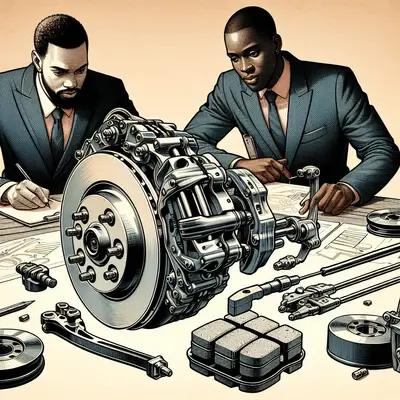
A modern brake system is less a collection of parts and more a tightly integrated ecosystem. Rotors, pads, calipers, brake fluid, hoses, ABS modules, wheel speed sensors, and electronic stability systems all work in concert to turn a light press of your foot into a measured, controlled reduction in speed. When one element falls out of calibration—whether from wear, heat, moisture, or neglect—the system still functions, but often with a degraded margin of safety you may not notice until you need it most.
Premium brake performance is not just about “stopping distance” as published in glossy brochures. It’s about consistency from the first stop of the morning commute to the last stop after a long downhill descent, about stability during evasive maneuvers, and about preserving full control on imperfect surfaces—wet asphalt, chipped concrete, or uneven, patched tarmac. Viewing your brakes as a single, interconnected system reframes maintenance from an occasional expense into an ongoing investment in predictable control.
Insight 1: Heat Management Is the Hidden Currency of Brake Safety
Behind the composed stop you feel at the pedal lies a violent conversion of kinetic energy into heat. In spirited driving, steep descents, or frequent stop‑and‑go traffic, the heat generated at the rotor–pad interface can exceed hundreds of degrees Celsius. In this environment, safety is largely dictated by how well your system manages and sheds that heat.
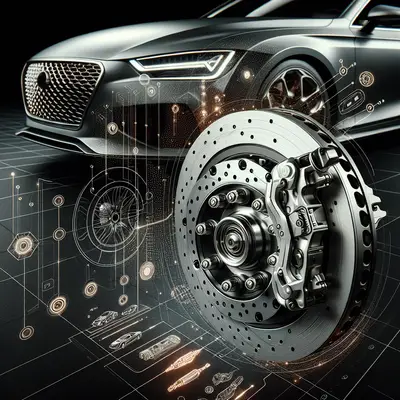
Rotors act as heat sinks, pads as both friction partners and thermal buffers, and brake fluid as a medium that must resist boiling. Once fluid begins to boil, compressible vapor pockets can form, leading to a long, spongy pedal or momentary loss of braking authority. Drivers who value refinement should pay close attention to visible indicators of heat distress: blued or heavily glazed rotors, pads with cracked or crumbling friction material, or a distinct burning smell after a downhill drive. Choosing quality rotors (often with improved vane designs for cooling) and premium pads that maintain a stable friction coefficient under high temperature can transform your stopping performance from adequate to reassuringly composed, even under demanding conditions.
Insight 2: Brake Fluid Is a Perishable Safety Asset, Not a Lifetime Fill
Brake fluid is often treated as an afterthought, yet it is arguably the most elegant part of the system: a clear, nearly invisible medium translating your intention into hydraulic force. Most modern vehicles use glycol‑based DOT 3, DOT 4, or DOT 5.1 fluid, all of which are hygroscopic—they actively absorb moisture from the air over time. As water content rises, the fluid’s boiling point drops, corrosion risk inside lines and calipers increases, and pedal feel can deteriorate gradually.
In a premium maintenance regimen, brake fluid is tested and replaced on time, not simply “when the brakes are done.” A basic moisture test or brake fluid boiling point test can reveal whether your system still meets its original performance targets. For drivers who demand consistent pedal feel on hot days, mountain roads, or during repeated hard stops, periodic fluid replacement is non‑negotiable high‑level safety practice. Treat brake fluid not as a consumable to be ignored, but as a perishable safety asset whose condition directly defines your braking consistency.
Insight 3: Pedal Feel Is a Diagnostic Language—Learn to Listen
Most drivers register only two states of the brake pedal: “works” or “doesn’t.” The meticulous driver reads the pedal more like a stethoscope, using subtle changes as early warning signals. A properly functioning system offers a firm, progressive pedal: short initial travel as clearances are taken up, followed by a smooth, linear increase in resistance as hydraulic pressure builds.
A pedal that slowly sinks under steady pressure can hint at an internal master cylinder leak. A suddenly soft, long pedal after heavy braking may indicate overheated fluid or a line issue. A hard, unyielding pedal with poor stopping power can be a sign of vacuum assist problems or a failed booster. Pulsation underfoot may signal rotor thickness variation or uneven pad deposits. By being attuned to these nuances, you transform everyday driving into a continuous, refined diagnostic process—catching issues while they are still subtle, long before they become hazardous.
Insight 4: Precision in Pad and Rotor Pairing Defines Your Stopping Character
Brakes are often “repaired” with whatever pad and rotor options are most convenient or economical at the moment. For the safety‑conscious driver, this approach is insufficient. Different pad compounds—ceramic, semi‑metallic, low‑metallic—offer distinct trade‑offs in noise, dust, cold‑bite, fade resistance, and rotor wear. Rotors, too, vary widely in metallurgy, vane design, and machining tolerances.
A premium approach treats pad and rotor pairing as a carefully tailored decision. For mostly urban driving with frequent light stops, a quieter, low‑dust ceramic pad on a high‑quality plain rotor may provide the most refined experience. For heavier vehicles, frequent highway braking, or trips through hilly terrain, a more temperature‑resistant semi‑metallic pad paired with robust, well‑vented rotors may be wiser. The goal is not simply to fit “new parts,” but to curate a combination that preserves stable friction, predictable bite, and quiet, confident stops in your particular driving environment.
Insight 5: ABS and Stability Control Are Only as Good as the Hardware Beneath Them
Modern vehicles rely on ABS (anti‑lock braking systems), traction control, and electronic stability control to maintain composure when grip is uncertain. These systems are extraordinary, but they are not magic. They modulate braking force based on what wheel speed sensors, yaw sensors, and other inputs report—yet their ultimate effectiveness is bounded by the mechanical reality of your brake hardware and tires.
Worn pads, corroded calipers, contaminated fluid, or unevenly worn rotors can all degrade the fine control these electronic systems rely on. Likewise, a mismatched set of tires with varying grip levels can confuse the algorithms tasked with keeping the vehicle stable. Drivers who assume “the computer will save me” while neglecting brake system fundamentals are relying on a safety net frayed from beneath. A truly elevated safety philosophy recognizes ABS and stability control as partners, not replacements, for impeccable mechanical maintenance and high‑quality consumables.
Conclusion
An exceptional brake system is not defined by a single impressive stop; it is defined by its ability to deliver the same calm, predictable response on the hundredth stop as on the first—through rain and heat, city congestion and open highway. For the refined driver, brake care is less about reacting to warning lights and more about anticipating the subtle ways performance can drift from factory standards.
By respecting heat management, treating brake fluid as a perishable safety component, reading pedal feel as an early diagnostic language, curating intelligent pad–rotor pairings, and respecting the mechanical foundation beneath ABS and stability control, you move beyond basic maintenance into a higher standard of safety. The return on this attention to detail is measured every time you press the pedal and feel not uncertainty, but composed, engineered assurance.
Sources
- National Highway Traffic Safety Administration (NHTSA) – Brake Safety Information - Federal guidance on brake systems, safety expectations, and component function
- U.S. Department of Transportation – Brake Fluid Safety Advisory - General DOT safety resources, including discussions of maintenance practices and brake fluid considerations
- SAE International – Brake System Technology Overview - Professional engineering perspectives on brake design, performance, and heat management
- Car and Driver – How Your Car’s Brakes Work - Accessible yet technical explanation of modern braking systems and components
- University of Michigan Engineering – Vehicle Dynamics and Control - Academic material on braking, stability control, and the interaction between mechanical and electronic safety systems
Key Takeaway
The most important thing to remember from this article is that this information can change how you think about Brake Systems.