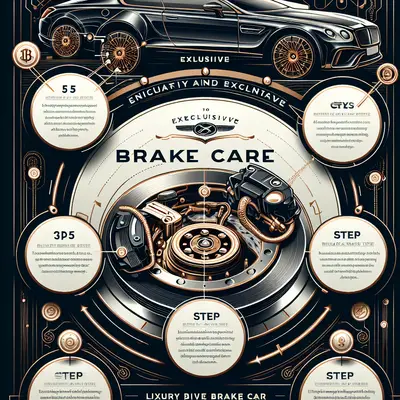
In refined driving, true confidence comes not from power under the hood, but from the quiet certainty that you can stop—precisely, predictably, and without drama. Brake safety is not a single action; it is a discipline, a series of small, intelligent choices that protect you, your passengers, and everyone sharing the road. For the driver who values both composure and control, elevating brake safety becomes a natural extension of a more thoughtful way of driving.
Below are five exclusive, practice-ready insights that move beyond the obvious and into the realm of attentive, premium brake care.
1. Treat Pedal Feel as an Early-Warning Language
Most drivers notice their brakes only when they misbehave. A more refined approach is to “read” the brake pedal as you would a delicate instrument—subtle changes in feel often speak well before obvious problems emerge.
Under normal conditions, the pedal should feel firm, with a consistent response every time you apply light to medium pressure. A slowly softening pedal over weeks—not just overnight—can indicate developing air in the system, a tiny fluid leak, or early master cylinder wear. A pedal that feels slightly “springy” or bouncy can hint at moisture-contaminated brake fluid, which lowers the fluid’s boiling point and can compromise braking under sustained use, such as long downhill drives.
Once a month, perform a brief “pedal check” in a safe, empty area: at low speed, apply progressively firmer pressure and note the smoothness, resistance, and travel. Log anything that feels different from your norm, and have it inspected before it becomes urgent. Discerning drivers do not wait for a warning light; they listen to the brake pedal’s quiet vocabulary.
2. Curate Your Braking Temperatures, Not Just Your Speeds
We tend to think of braking in terms of speed reduction, but the more sophisticated lens is temperature management. Every stop converts kinetic energy into heat. How you introduce that heat—abruptly or gradually—has a profound effect on brake longevity and reliability.
Heavy, frequent braking from high speeds, especially on highways or steep grades, can push pads and rotors into excessive temperature ranges. This can lead to glazing (a hardened, less effective pad surface), rotor hot spots, and in extreme cases, brake fade. A premium safety habit is to practice “thermal moderation”: anticipate stops earlier, apply the brakes smoothly and progressively, and avoid riding the brakes down long hills.
On extended descents, use engine braking by selecting a lower gear (or an appropriate drive mode in automatic and hybrid vehicles) to reduce the burden on the friction brakes. This practice not only preserves braking power for when you truly need it but also helps maintain more consistent, predictable pedal behavior over time. You are not merely slowing the vehicle—you are curating the heat profile of your braking system.
3. Align Tire and Brake Care as One Safety System
Brakes do not stop the car alone; tires do. The brakes reduce wheel speed—traction translates that into deceleration. Treating tire and brake care as separate categories is a subtle but consequential mistake.
Underinflated tires increase stopping distances and can cause the ABS system to intervene more frequently. Uneven tire wear can mimic or mask brake issues, such as pulling to one side under braking. Even premium brake components cannot overcome worn or poorly maintained tires.
Set a disciplined rhythm: whenever your vehicle has a brake inspection or brake-related service, insist on a parallel tire review—pressure, tread depth, and wear pattern. Conversely, when purchasing or rotating tires, request a brief brake visual check if the wheels are off anyway. This integrated mindset treats stopping not as a brake problem or a tire problem, but as a unified traction-and-braking ecosystem. The result is a more honest picture of your true stopping capability.
4. Elevate Your “Wet-Weather Protocol” Beyond Slower Speeds
Most careful drivers reduce speed in the rain. The more sophisticated driver refines an entire wet-weather braking protocol that recognizes how water reshapes friction and visibility.
In the first minutes of rainfall, road surfaces are coated with a thin film of water, oil, and debris. During this period, add an extra layer of gentleness to your braking: longer following distances, no abrupt pedal stabs, and careful avoidance of standing water where hydroplaning is more likely. Consider turning off cruise control in heavy rain so you remain directly engaged with throttle and brake modulation.
After driving through deep puddles, lightly tap the brakes several times in a safe, straight line. This generates a bit of heat and friction to help dry the pads and rotors, restoring consistent bite. In vehicles with advanced driver-assistance systems (ADAS), keep sensors and cameras clean; many of these systems influence how your car behaves under hard braking in adverse conditions. Wet-weather safety is not just about avoiding speed—it's about actively preserving your brakes’ ability to respond exactly as you expect.
5. Reserve a Private “Brake Proving Ground” Moment Each Season
Most owners only discover a brake limitation under duress. A more composed strategy is to explore your car’s braking behavior in a controlled, low-risk environment before you ever need its full capability.
Once per season, visit a large, empty, dry parking lot. Begin at low speeds (15–20 mph) and perform a series of firm but smooth stops, noting pedal feedback, sound, and vehicle stability. Gradually increase to moderate speeds (30–40 mph), always ensuring there is ample space and no pedestrians or obstacles nearby. If your vehicle has ABS, you should learn how it feels and sounds when it engages—the pulsation in the pedal, the vibration, the slight noise—so the sensation will not surprise you in a real emergency.
Use this session to confirm that the car remains straight and composed under hard braking, without pulling to one side, shimmying, or making grinding noises. Treat this as a private “brake proving ground,” a controlled rehearsal that refines both your understanding of the vehicle and your confidence in its behavior when you ask for maximum deceleration.
Conclusion
Refined brake safety is less about reacting to problems and more about cultivating a quiet, consistent attentiveness to how your car slows, stops, and feels. By treating pedal feedback as an early-warning language, managing brake temperatures intelligently, integrating tire and brake care, refining your wet-weather protocol, and periodically testing your brakes in a safe setting, you build a safety margin that is both practical and elegantly intentional.
For the discerning driver, this is the real luxury: not just the ability to go, but the assured, composed ability to stop—whenever and wherever it matters most.
Sources
- [National Highway Traffic Safety Administration (NHTSA) – Brake Safety](https://www.nhtsa.gov/equipment/brakes) - Federal guidance on brake systems, maintenance considerations, and safety information
- [U.S. Department of Transportation – Tire Safety Basics](https://www.nhtsa.gov/tires) - Explains how tire condition and inflation affect stopping distance and overall vehicle safety
- [AAA – The Impact of Weather on Driving Safety](https://exchange.aaa.com/safety/driving-advice/wet-weather-driving-tips/) - Details how rain and wet roads influence braking and provides best-practice guidance
- [Car & Driver – How to Use Engine Braking Safely](https://www.caranddriver.com/features/a26952039/engine-braking/) - Discusses engine braking techniques and their role in managing brake temperatures on descents
- [Bridgestone – Understanding Anti-Lock Brake Systems (ABS)](https://www.bridgestonetire.com/learn/maintenance/antilock-braking-system-abs/) - Explains ABS operation, feel, and what drivers should expect during hard braking
Key Takeaway
The most important thing to remember from this article is that this information can change how you think about Safety Tips.