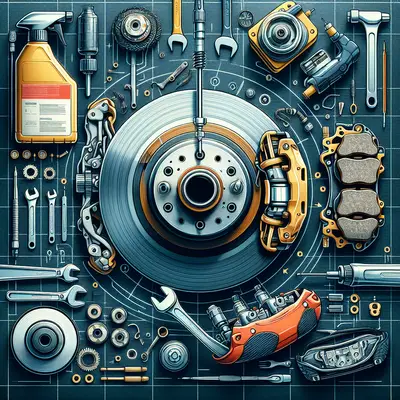
Brake repair, when approached thoughtfully, is far more than a necessary errand—it is an expression of how seriously you take precision, control, and the safety of those who travel with you. For the attentive owner, every visit to the shop is an opportunity to refine the car’s most important safety system rather than merely “fix what’s wrong.” This guide is crafted for drivers who want to move beyond basic maintenance and into a more deliberate, elevated approach to brake care—one grounded in technical clarity, subtle observation, and uncompromising standards.
Understanding What “Good Brakes” Actually Feel Like
Most drivers only notice their brakes when something feels obviously wrong: a grinding noise, a pulsing pedal, or a warning light. The discerning driver, however, cultivates a very specific sense of what properly performing brakes feel, sound, and even smell like.
In a well-maintained system, the brake pedal offers a firm, consistent response with minimal travel before engagement and no sponge-like softness. Braking should occur smoothly and predictably, without the vehicle pulling to either side or requiring “extra” pressure at low speeds. A refined driver also notes the quietness of operation—no rhythmic squeaks, no scraping, no metallic rasps—just a subtle, uniform deceleration. Even the smell after a spirited downhill drive is a cue; a faint odor of heated material is expected, but a strong, acrid scent of burning is a sign of excessive heat and potential fade. By consciously registering this baseline of normal behavior, you can detect deviations early—often before they become safety risks or expensive repairs.
Exclusive Insight #1: Treat Brake Feel as a Diagnostic Instrument
Many owners rely on mechanics or dashboard lights to signal problems. A more sophisticated approach treats your own observations as the first line of diagnosis. Brake feel is a living metric, and the way it changes over time tells a story.
Subtle increases in pedal travel, a gradually softening pedal, or a delay between pedal application and bite can point to air in the hydraulic lines, aging fluid, or early master cylinder issues. A gentle shimmy in the steering wheel when braking from highway speeds often hints at front rotor irregularities long before severe warping is visible. A pulsing sensation felt more through the seat than the steering wheel can suggest rear braking irregularities. By noticing which part of the vehicle “speaks” to you—pedal, steering wheel, or seat—you can give your technician targeted feedback, saving time and avoiding guesswork. Over the life of the car, this precise awareness helps maintain a consistently high standard of brake performance rather than waiting for a dramatic failure to prompt action.
Exclusive Insight #2: Elevate Brake Fluid from Afterthought to Priority
Among all brake components, fluid is the one most often neglected by otherwise careful owners. Yet this modest, amber liquid is the nervous system of the entire braking assembly—and it quietly degrades with time and heat.
Brake fluid is hygroscopic: it naturally absorbs moisture from the air, which lowers its boiling point and invites internal corrosion. Under hard stops or repeated downhill braking, overheated, moisture-laden fluid can begin to boil, introducing compressible vapor into a system designed to be utterly solid. The result is a soft pedal and, in the worst cases, a perilous loss of braking force. Rather than waiting for symptoms, refined owners adopt a time- or mileage-based schedule for fluid replacement, often every two to three years, or sooner for vehicles driven in mountainous regions or stop‑and‑go urban conditions. Some go further and request a boiling-point test or moisture-content assessment during service. Approaching brake fluid as a performance consumable—not a lifetime fill—keeps your braking response crisp, consistent, and ready for emergencies.
Exclusive Insight #3: Specify Parts Quality with Intent, Not by Default
Not all brake pads, rotors, or hardware are created equal, and “good enough” is not a satisfying standard for the safety-conscious driver. A sophisticated brake repair conversation begins with parameters: braking style, vehicle weight, environment, and expectations around noise and dust.
Premium ceramic pads, for example, often provide quieter operation and less dust, making them attractive to drivers who value a clean wheel and refined road manners. However, certain semi-metallic or hybrid formulations may offer better performance under repeated high-heat conditions, such as mountain driving or towing. Rotors also vary in metallurgy, machining quality, and even protective coatings that reduce corrosion on exposed surfaces. While drilled or slotted rotors are often marketed enthusiastically, they may be unnecessary—or even counterproductive—for normal luxury commuting, introducing added noise or wear without meaningful benefit. By discussing pad compound, rotor quality, and hardware kits with your technician, you shape the character of your braking system: smooth and quiet, fade-resistant under load, or subtly performance-biased, all while maintaining uncompromising safety.
Exclusive Insight #4: Align Brake Service with Tire and Suspension Strategy
Brakes do not operate in isolation; they are one element in a tightly connected trio with tires and suspension. Even the finest pads and rotors cannot compensate for worn shocks or imprecise tires. A truly polished approach considers the entire stopping system together, especially at service intervals.
Uneven tire wear, for example, can magnify minor braking inconsistencies into pronounced pulls or instability under hard stops. A tired suspension may allow excessive weight transfer, causing the front brakes to work harder, overheat sooner, and wear faster. Conversely, a well-matched combination—fresh, appropriately rated tires, properly aligned wheels, and a stable suspension—allows the braking system to work within its design envelope, improving both performance and longevity. Many refined owners coordinate tire replacement, brake inspections, and alignment checks on a shared schedule, ensuring that each component supports the others. This integrated perspective transforms brake repair from episodic fixes into part of a cohesive vehicle dynamics strategy.
Exclusive Insight #5: Use Heat Management as Your Hidden Safety Edge
Brake systems are fundamentally thermal systems; they convert kinetic energy into heat, which must be managed and dissipated. Drivers who understand this treat heat not as an abstract concept, but as a practical factor in both daily driving and repair decisions.
Repeated aggressive stops from high speeds, descending long grades in “drive” rather than using engine braking, or riding the brakes lightly instead of applying them firmly then releasing—all of these behaviors load the system with unnecessary heat. Over time, this accelerates pad glazing, rotor discoloration, and premature fluid degradation. When discussing repairs, thoughtful owners often ask about rotor thickness, signs of heat spotting, and whether any fade has been documented during test drives. They also pay attention to the choice of pads and rotors in environments where heat is a recurring issue, such as hilly cities or towing scenarios. On the road, they adjust techniques: downshifting on long descents, leaving space to brake more decisively and briefly, and allowing cooling intervals when practical. This deliberate relationship with thermal management gives you a quietly powerful safety margin when you need it most—those rare, critical moments that test the entire system at once.
Turning Routine Brake Repair into a Personal Safety Standard
Brake repair, when viewed through a refined lens, stops being a series of reactive fixes and evolves into a curated practice: attentive observation, informed choices, and deliberate driving habits that all converge on one goal—predictable, authoritative stopping power in any situation.
By treating pedal feel as a diagnostic tool, elevating the importance of brake fluid, specifying parts with intent, aligning brake care with tires and suspension, and respecting heat as a central design constraint, you craft a personal standard that goes beyond typical maintenance. The result is not only safer driving, but also a calmer, more confident presence behind the wheel. Every quiet, controlled stop becomes a small confirmation that you have taken your role in the braking equation seriously—and that your car is prepared to respond with the precision and composure you expect.
Sources
- [National Highway Traffic Safety Administration (NHTSA) – Brake Safety Information](https://www.nhtsa.gov/equipment/brakes) - Federal guidance on brake safety, performance, and defect investigations
- [U.S. Department of Transportation – “Brake Systems” Overview](https://www.transportation.gov/mission/safety/brake-systems) - High-level discussion of brake system components and safety considerations
- [University of Nebraska–Lincoln – “Brake System Basics”](https://extensionpublications.unl.edu/assets/pdf/g1840.pdf) - Educational publication explaining brake components, operation, and maintenance fundamentals
- [Brembo Technical Articles – Brake System Insights](https://www.brembo.com/en/company/news) - Manufacturer’s technical content on pads, rotors, heat management, and performance considerations
- [AAA – Car Brake System Basics and Maintenance](https://www.ace.aaa.com/auto/repair/brakes.html) - Consumer-focused guidance on recognizing brake issues, service intervals, and repair best practices
Key Takeaway
The most important thing to remember from this article is that this information can change how you think about Repair Guides.